OMM Newsroom

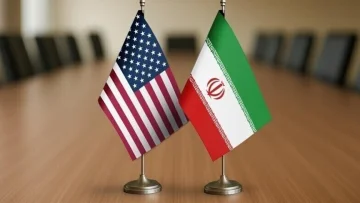
Iran’s existing two-day proposal to the United States remains a practical roadmap for restoring security in the Strait of Hormuz, Foreign Ministry spokesman Esmaeil Baqaei said on Monday, according to Anadolu Agency.
Speaking at his weekly press conference, Baqaei said Tehran had not submitted a new proposal to Washington and that its existing plan remained on the table. He described it as a clear, time-bound framework for resolving tensions in the strategic waterway, according to the semi-official Tasnim news agency.
Baqaei said the proposal underscored Iran’s central role in maintaining security in the Strait of Hormuz and the Gulf. He said restoring security to global energy routes required the United States to show genuine political willingness to overcome the diplomatic deadlock.
He said Iran’s demands included lifting the US naval blockade, ending the war, releasing frozen Iranian assets and removing sanctions imposed in recent months. Baqaei claimed Washington had already accepted these demands under the 14-point Islamabad memorandum, but accused the United States of later violating its commitments.
The spokesman said Tehran would sign and implement only an agreement that fully protected Iran’s national interests and legal rights. He added that Iran held regular consultations with mediators Pakistan and Qatar and praised their diplomatic efforts.
On maritime security, Baqaei said vessels passing through the Strait of Hormuz must coordinate with Iranian authorities to ensure safe navigation. He blamed recent insecurity in the waterway on US and Israeli military actions and said Iranian forces remained prepared to respond to threats.
Baqaei said Iran remained a member of the Nuclear Non-Proliferation Treaty (NPT) and had not suspended its obligations to the International Atomic Energy Agency (IAEA). He said US and Israeli attacks on Iranian nuclear facilities had disrupted the normal implementation of safeguards arrangements, making cooperation with the agency under ordinary conditions impossible.
He criticised the IAEA Board of Governors and Director General Rafael Grossi for what he described as their failure to respond appropriately to the attacks. Baqaei also confirmed that IAEA inspectors had visited Iran’s Bushehr nuclear facility several days earlier, and said Tehran’s diplomatic mission in Vienna maintained regular professional contact with the agency.
The remarks come amid diplomatic efforts to revive an understanding between Iran and the United States reached through Pakistani mediation after the military conflict began with US and Israeli strikes on Iran on Feb. 28.
The 14-point Islamabad memorandum, reached in June, set out a framework for de-escalation, including arrangements for maritime security in the Strait of Hormuz, sanctions relief and a halt to hostilities. Disagreements over its implementation and renewed military confrontations have prevented a lasting settlement, leaving shipping through the strategic waterway subject to continuing restrictions.