OMM Newsroom

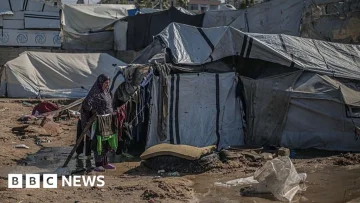
Hamas leader Khalil al-Hayya on Saturday called for an emergency international campaign to provide shelter for Palestinians in Gaza, where heavy rains have flooded displacement camps and damaged thousands of shelters, Anadolu Agency reported.
In letters to Arab and Muslim countries, al-Hayya urged governments to facilitate the entry of tents, heating supplies, fuel and equipment to repair sewage and rainwater drainage networks, Hamas said.
He blamed the worsening humanitarian emergency on Israeli restrictions on aid and reconstruction materials, alongside the destruction of homes and essential infrastructure. Al-Hayya said the situation in Gaza could no longer be treated merely as a temporary relief crisis or an inevitable consequence of war.
He called for international pressure on Israel to fully implement the ceasefire agreement, including a complete withdrawal from Gaza and compliance with the humanitarian protocol signed in Sharm el-Sheikh.
Al-Hayya also demanded unrestricted access for UN agencies and humanitarian organizations, as well as the entry of the Palestinian national committee tasked with administering the territory. His appeal included funding for safe shelters, infrastructure repairs and reconstruction efforts.
He urged the UN Security Council to convene an emergency public meeting to address the worsening humanitarian crisis. Hamas said al-Hayya had contacted officials from countries mediating the ceasefire over the previous two days to press for urgent relief and implementation of the agreement.
Flooding affects more than 200,000 Palestinians
Heavy rains have flooded tents and temporary shelters across Gaza, exposing displaced families to cold weather amid shortages of protective supplies.
The UN Office for the Coordination of Humanitarian Affairs said Friday that flooding had affected more than 200,000 Palestinians and damaged shelters housing over 40,000 families.
The World Health Organization warned that 950,000 displaced Palestinians were living in flood-prone areas, including more than 400,000 in high-risk locations.