OMM Newsroom

Leaders of Germany, France, the UK and Ukraine on Thursday called on Russia to agree to an “energy ceasefire” throughout the winter as a first step toward ending hostilities, Anadolu Agency reported.
In a joint statement after the Coalition of the Willing summit in Berlin, they also said a ceasefire was needed to allow food exports from the Black Sea region.
“Given the importance of safe passage and freedom of navigation in the Black Sea for sustaining global food security,” the statement said, the leaders “emphasised the necessity to also agree on a ceasefire to allow for food exports from the region.”
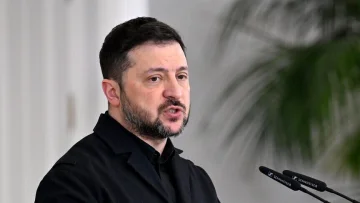
German Chancellor Friedrich Merz hosted Ukrainian President Volodymyr Zelenskyy and US special envoys Jared Kushner and Steve Witkoff. French President Emmanuel Macron and British Prime Minister Andy Burnham were among leaders from around 40 countries attending the summit.
The four leaders reaffirmed their long-term, comprehensive support for Ukraine, including political, diplomatic, military, financial and civilian assistance.
“Russia will not be able to outlast the steadfast support of the Coalition’s members and Ukraine’s resilience,” they said.
They identified strengthening Ukraine’s air defence capabilities, particularly systems able to intercept ballistic missiles, as a priority to protect civilians and critical infrastructure. “Ahead of the winter, the leaders will make extra efforts, along with third countries, to provide Ukraine with additional missile defence,” the statement said.
The leaders said any future ceasefire must include robust, legally binding security guarantees for Ukraine. The guarantees would be defensive in nature and closely coordinated with the US, in line with commitments made in Berlin in December 2025 and Paris in January 2026, they said.
On peace negotiations, the leaders reaffirmed support for a comprehensive, just and lasting peace in Ukraine, building on ongoing US diplomatic efforts. They praised Zelenskyy’s continued willingness to agree to an immediate ceasefire and engage in meaningful negotiations, and backed “direct dialogue” between Ukraine and Russia with US and European participation.
“The first priority for talks remains the goal to end the hostilities in Ukraine,” the leaders said. They stressed that international borders must not be changed by force and that Ukraine’s sovereign right to choose its own security arrangements and alliances must be fully respected.
The leaders said agreements on broader European security issues would not be possible while Russia continues to violate fundamental international law, including the UN Charter, the Helsinki Final Act and the Paris Charter.
“Elements of any negotiation related to the EU and NATO would need the consent of the EU and its Member States and NATO Allies respectively,” they said.