OMM Newsroom
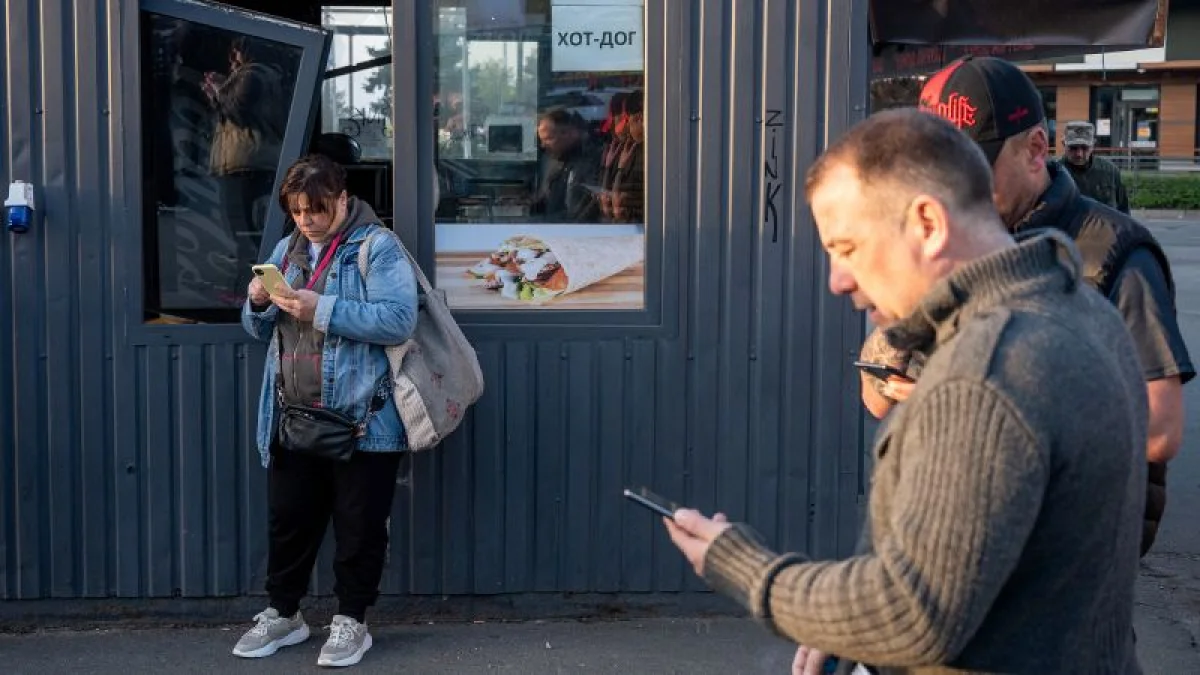
Emergency warning apps in Russia and Ukraine were hacked on Sunday, with false alerts posted to users, authorities in both countries said. It is not clear whether the incidents were linked, CNN reported.
The apps are used to warn the public about missile, drone and other threats. The fake messages appeared to cause little alarm among civilians, some of whom responded with memes.
False nuclear and chemical alerts in Ukraine
Messages posted late Sunday on Ukraine’s public air raid app claimed that Kyiv and other areas faced nuclear and chemical alerts, as well as the threat of street fighting. Another false alert said Russia’s hypersonic Oreshnik missile had been deployed.
“The air alert app appears to have been subjected to enemy influence,” Ukraine’s air force said on Telegram. “There is no radiation threat! Stay calm and follow our updates on our channel!”
The app had recently been updated to show the movement of drones in real time. Stepan Tanasiychuk, who leads Ukraine’s Air Raid Alert project, said on Monday that the service was being gradually restored, with new yellow and red alert levels available on the map.
“The team is taking additional measures to secure the app in order to prevent similar situations in the future,” Tanasiychuk said on Instagram. “We realise how much unnecessary worry and inconvenience this has caused.”
Russia’s emergencies ministry reports cyberattack
Separately, the mobile app of Russia’s emergencies ministry, “Emercom,” was hit by a “massive cyberattack” that led to false information being sent to the public, the ministry said, according to state news agency TASS.
One fake message, shown in the Moscow region and other parts of Russia, claimed that “NUCLEAR WARHEADS ON P1-SUN DELIVERY SYSTEMS have been launched across ALL regions of Russia.” It was followed by a warning containing expletives.
The ministry said efforts were under way to fix the vulnerability and restore normal operation. It played down the incident, saying alerts are also distributed through regional and municipal systems, including sirens and loudspeakers, SMS messages and media broadcasts.
“All electronic resources belonging to our government agencies are under constant threat of cyberattacks,” Kremlin spokesman Dmitry Peskov said on Monday. “As technologies, including AI, continue to evolve, the threat of cyberattacks is growing.”
Few people appeared to believe the false alerts, although some users said the incident had weakened their trust in official warnings. One Russian user said they had deleted the “Emercom” app and would not install anything similar again, asking how such apps could be left vulnerable.
In Instagram comments, one Russian user said the fake alert “was written in such a way that it’s impossible to believe it’s real.” Another wrote: “It was hard to believe such nonsense. … How did (the Emergencies ministry) even let this happen.. let themselves get hacked.”
“You wake up, open Threads and see tons of posts like this,” another user wrote. “BUT THANKFULLY IT’S FAKE!”
Some joked that they had not received the warning. “This information was reserved for the chosen ones, don’t worry, you’re not important enough to be hacked,” one user wrote.
A Kyiv resident responded to the alert about street fighting by posting: “Good thing our mayor is a boxer.”
Another social media post listed additional invented threats, including a cat invasion, a shortage of pancakes, a clown attack and an alien invasion.