A total of 7,830 organizations have registered in the Digital Public Finance Information System (DPFIS), bringing the number of users to 14,819.
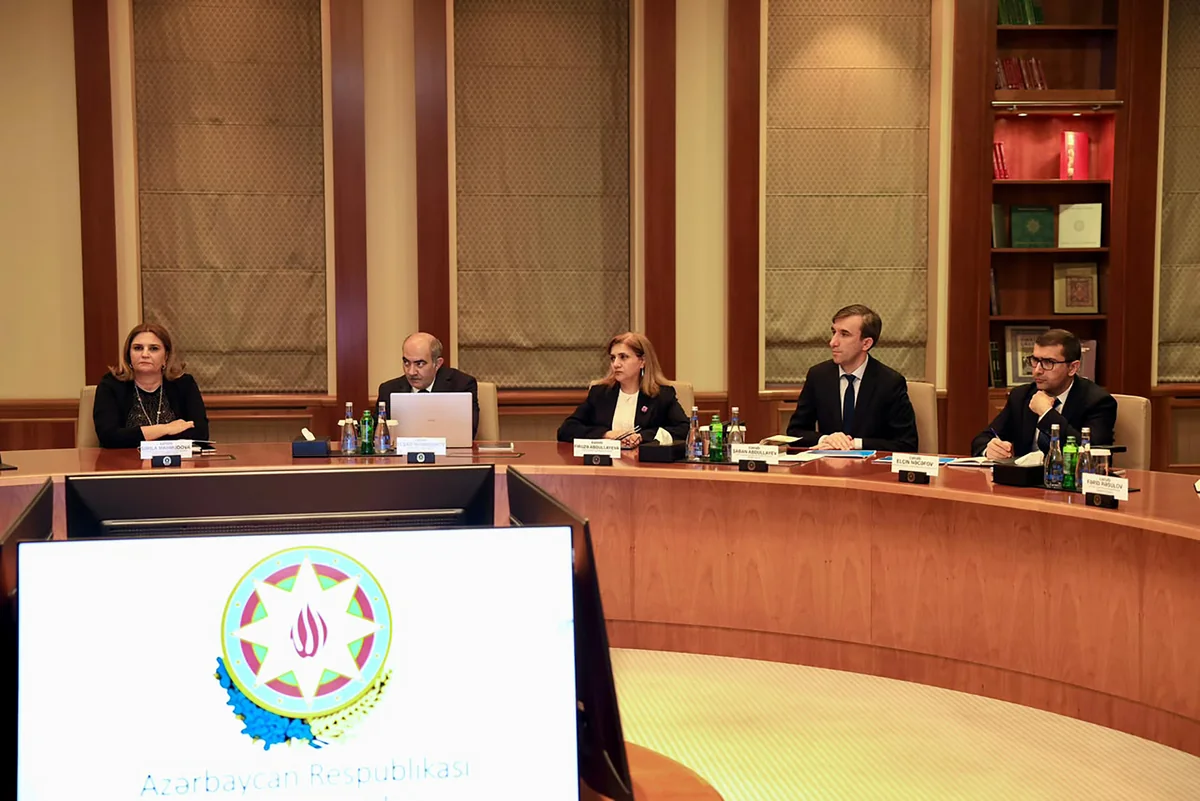
Operative Information Center-OMM reports, citing the Ministry of Finance, that Minister Sahil Babayev made the announcement at a meeting of the Working Group on improving activities in digital governance and electronic information systems.
“The system is integrated with 19 bodies and provides access to data from 52 information systems. In the e-contract subsystem, 1,525 purchasing organizations and 3,324 supplier companies have registered to date, and 10,662 electronic contracts have been signed. The total value of the contracts exceeds 3.9 billion manats. The system’s functionality has been expanded, integrations with the State Customs Committee and the Central Bank of Azerbaijan have been completed, and 14 banks have joined the system,” the minister said.
He noted that DPFIS was established by a decree signed by President Ilham Aliyev on Aug. 25, 2025, to manage public finance processes through a unified digital platform, integrate financial data, automate operations and expand data-driven decision-making. “Significant work has been done to establish and develop DPFIS. New functions have been introduced across its key components, and important progress has been made in integrating existing information systems and expanding the reach of digital services.”
Sahil Babayev emphasized the strategic importance of digitalization in public financial management, saying modern technologies play a key role in making management processes more efficient and ensuring transparency and responsiveness. Projects in this area enable the creation of a unified digital ecosystem, integration of data, and more flexible, timely and evidence-based decisions. He said the continued improvement of existing systems, stronger cybersecurity and a resilient technological infrastructure are also among the main priorities.
The meeting included a presentation on the Ministry of Finance’s digitalization projects, results achieved and work planned for the next stage. The operation of several information systems was demonstrated in live environments.
Participants were briefed on work to establish a new Treasury Information System, including electronic accounting of payment contracts, electronic document processing and mechanisms for handling transactions involving multiple creditors.
The meeting also reviewed work completed and new functions introduced for e-Accounting, the Digital Monitoring System for State-Owned Enterprises, the Budget Information Management System, the Investment Project Appraisal System, e-Duty and the Centralized Internal Management Portal.
The Working Group discussed upcoming tasks, identifying the completion of integrations between information systems, standardization of data flows, development of new functional modules, expansion of reporting and analytics capabilities, stronger cybersecurity measures, user training and ensuring the stable operation of the systems as key priorities.
The minister assigned relevant tasks, stressing the need to coordinate work in these areas, monitor project implementation and ensure that priority tasks are completed on time and to a high standard.