OMM Redaksiyası

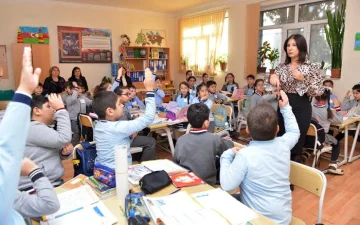
Some teachers in Azerbaijan can work at two different schools at the same time to increase their teaching hours. Authorities are discussing expanding this option to as many as three schools to address teacher shortages in rural areas.
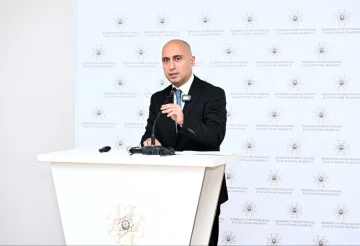
“Operative Information Center-OMM” reports, citing ITV, that Eshgi Baghirov, chairman of the State Agency for Preschool and General Education, said teachers in rural schools could in some cases be allowed to work at three schools.
Teachers and experts say the approach could offer a solution in certain cases, but stress that workloads and the distances between schools must be taken into account.
“A teacher can become physically and mentally exhausted”
Narmine Jafarova, a teacher at School No. 9 in Jalilabad, said having one teacher work at several schools could provide some relief for institutions facing teacher shortages.
She said the distances between schools and the teacher’s timetable must first be considered.
“If it is possible for the teacher to arrive at work on time and teach classes as scheduled, why not? But it could also create difficulties for the teacher, both physically and in getting to work. You become mentally and physically tired. In that situation, a teacher may not be able to devote all their energy to education,” the teacher said.
Expert: “This should not be achieved by increasing teachers’ workloads”
Education expert Elchin Afandi said having one teacher work at several schools could partly address the shortage of educators.
However, he said the main issue was how vacant teaching hours are structured.
He said that advertising some vacancies with a low number of teaching hours during teacher recruitment discourages applications and ultimately contributes to shortages.
According to the expert, vacancies should offer at least 18 teaching hours. When teachers choose to take fewer hours, such as five or six, some vacancies end up being listed with a low teaching-hour allocation.
Afandi said the problem should not be addressed by requiring one teacher to work at three schools.
“Because we could see teachers’ performance decline, along with the quality of education,” the expert said.
“This can only be a short-term solution”
Elchin Mirzabeyli, a member of the Milli Majlis (National Assembly) Committee on Science and Education, also said having teachers work at several schools was not a long-term solution.
He said one of the main reasons for teacher shortages in rural schools was internal migration. People move from villages to cities for work and other reasons, leaving rural schools short of educators.
The lawmaker said encouraging people to return to villages and creating suitable job opportunities there could help address the problem at its roots.
“Under the current circumstances, having one teacher work in several places can only be considered a short-term solution,” Mirzabeyli said.
A single-staff-position teacher model proposed
Experts have also proposed introducing a single-staff-position teacher model as an alternative.
Under this model, a teacher works an eight-hour schedule and receives a salary accordingly. Experts say this approach could make vacant positions in rural schools more attractive and help provide a more sustainable response to staffing shortages.
Allowing teachers to work at three schools could therefore be considered a short-term response to staffing problems in rural schools. However, experts say the long-term goal should be to make rural schools more attractive workplaces, rather than increase teachers’ workloads.