OMM Newsroom

China has concluded the 33rd APEC Economic Leaders’ Meeting in Shenzhen, bringing its year-long chairmanship of the organization to an end. The summit featured calls for greater regional economic integration, open trade and technological cooperation, AnewZ reports.
Representatives of APEC’s 21 member economies attended the two-day meeting on November 18-19. The summit was held under the theme “Building an Asia-Pacific Community for Shared Prosperity.”
Chinese President Xi Jinping, who chaired the meeting, called for stronger cooperation amid global economic uncertainty, trade tensions and technological competition.
One of the summit’s main outcomes was the consensus adoption of the 2026 APEC Leaders’ Declaration. The document sets out the Shenzhen Vision for building an Asia-Pacific community. Three additional outcome documents on trade, connectivity and innovation were also adopted.
Xi proposed strengthening cooperation in four key areas: the economy and trade, connectivity, innovation and inclusive development. He said China would allocate $20 million to support APEC’s practical cooperation and establish a center in Shenzhen to study the Asia-Pacific community.
Participants also discussed digital technologies, artificial intelligence, cross-border data flows, clean energy and support for small and medium-sized enterprises.
APEC chairmanship handed over to Vietnam
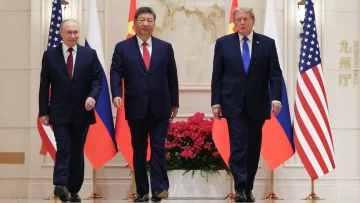
Alongside economic issues, the summit provided a platform for diplomatic contacts among major powers. Xi held bilateral talks with leaders attending the meeting.
The next APEC chairmanship was handed over to Vietnam, which will host the 2027 meeting.
While the summit adopted a joint declaration and commitments to deepen cooperation, turning those goals into tangible results amid geopolitical fragmentation, protectionist pressures and global technological competition remains a challenge.
For China, the conclusion of APEC 2026 provides an opportunity to strengthen its role in regional economic cooperation and promote its vision of an Asia-Pacific region built on openness, connectivity and shared prosperity.