A newly drafted bill on encouraging and protecting people who report corruption-related offences has passed its first reading.
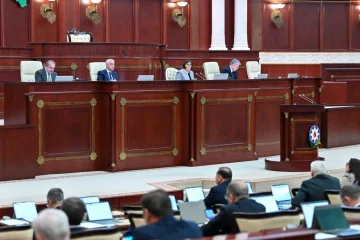
“Operative Information Center-OMM” reports that the document was discussed at today’s plenary session of the Milli Majlis (National Assembly).
Under the bill, a person who reports corruption may receive a reward of up to 25 times the minimum wage. The reward would be exempt from income tax.
The document says that, if the information is confirmed, the organization’s head will decide on a reward, which must be paid within 10 working days from the organization’s budget. For budget-funded organizations, the payment will come from their operating costs and extrabudgetary funds.
The reward may not exceed 25 times the minimum wage. Its amount will be determined by taking into account the nature and number of the corruption-related offences, the importance of the information in uncovering them, the damage caused and the value of assets recovered.
The document also states that, where criminal proceedings result in a conviction or another final decision on the merits, or are terminated on grounds other than exoneration, the whistleblower will receive a payment under the Criminal Procedure Code. The payment will amount to 5% of proceeds from the sale, lease or management of property confiscated in the criminal case, or of specially confiscated funds, after eligible costs and other payments established by law are deducted. It may instead be 5% of the amount payable to the state under criminal law or of the material damage recovered for the state.
In other words, the person who provided the information will receive 5% of the funds returned to the state or the material damage recovered as a result of the criminal case.
The bill also provides for a one-time payment of 20,000 manats to a person’s family if the whistleblower or their relatives are killed because of the report.
If a whistleblower, their close relative or another relative suffers bodily injury in connection with reporting corruption-related offences, a one-time payment of 10,000 manats will be made from the budget of the organization where the person performs work or services under an employment contract, civil-law contract or other arrangement. For budget-funded organizations, the payment will come from operating costs and extrabudgetary funds.
According to the document, providing information about corruption-related offences will not be considered unlawful disclosure if it includes professional, commercial, investigative or judicial secrets whose disclosure is restricted, or information about private and family life.
At the same time, knowingly providing false or defamatory information to protect personal interests or unlawfully obtain material or other benefits, privileges or advantages for oneself or others will not be considered reporting a corruption-related offence.
Proposed amendments to the Tax Code would exempt rewards received by people reporting corruption from income tax.
In line with the new bill, related amendments are also proposed to the Labor Code and Criminal Procedure Code, as well as the laws on state protection of participants in criminal proceedings, advocacy, combating corruption, access to information, personal data and citizens’ appeals.
After discussion, the bill was put to a vote and passed its first reading.