 OMM Redaksiyası

President Ilham Aliyev’s announcement at the 8th Congress of the New Azerbaijan Party that minimum wages, pensions and social benefits would increase next year has raised expectations of a new social package in 2027.
“Operative Information Center-OMM” reports that particular attention is focused on how much the monthly minimum wage could rise. The minimum wage sets not only the lowest pay threshold but also affects the calculation of wages and other payments in several sectors.
How much could the minimum wage increase?
The monthly minimum wage was last raised at the start of 2025, reaching 400 manats.
Average annual inflation stood at 5.6% in 2025. In January-August 2026, average annual inflation was 5.7%. The figure could exceed 6% by the end of the year.
In addition, the average monthly wage rose by 9.3% in 2025. It increased by 7.2% in the first seven months of 2026.
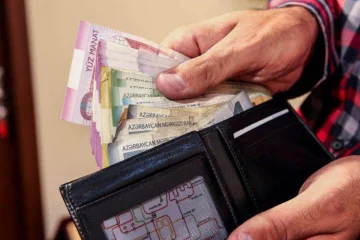
Taking these indicators into account, expectations are building for a minimum wage increase of at least 10% in 2027. If that happens, the minimum wage of 400 manats could rise to 440 manats.
It should be noted that this figure is currently only an estimate. The exact minimum wage for 2027 will be set by an official decision.
Whose wages could increase?
Under the law, the minimum wage is a social standard that sets the lowest monthly pay for unskilled work and services.
The monthly wage of a person who works the full standard hours and performs their job duties may not be lower than the minimum wage.
An increase in the minimum wage could also affect the salaries of people paid under the Unified Tariff Scale (UTS). The lowest pay grade on the scale is equal to the minimum wage.
Those paid under the UTS include employees in social services, science, culture, youth and sports, agriculture, ecology and environmental protection, housing and utilities, and other sectors funded by the state budget.
Under the law, use of the Unified Tariff Scale is mandatory for budget-funded institutions, agencies and organizations, except for state administration and government authorities, defense bodies and law enforcement agencies.
For this reason, a rise in the minimum wage could provide grounds for updating salaries at other levels of the Unified Tariff Scale as well.
Other payments could also increase
A change in the minimum wage affects more than salaries.
The minimum wage is also used to calculate mandatory state social insurance contributions for people earning income from activities that are not classified as employment.
In addition, monthly mandatory health insurance contributions for individuals registered for tax purposes are linked to the minimum wage.
Therefore, if a decision is made to raise the minimum wage in 2027, it could affect not only people earning the minimum wage but also employees paid under the Unified Tariff Scale and a range of payments calculated on the basis of the minimum wage. (Qafqazinfo)