 OMM Redaksiyası

Artificial intelligence was a major theme at the opening of the 81st UN General Assembly, where world leaders warned about autonomous weapons, disinformation, job disruption and the concentration of technological power.
However, leaders offered sharply different views on how the rapidly developing technology should be governed, according to the source report. US President Donald Trump rejected global controls, while leaders from Türkiye, Brazil, the United Kingdom, France and Finland called for international rules, safeguards or cooperation.
UN Secretary-General Antonio Guterres issued one of the strongest warnings, saying humanity was increasingly transferring power to machines and insisting that decisions over life and death must remain under human control.
Trump rejects global AI controls
In his September 22 address, Trump rejected international efforts to establish global controls on artificial intelligence. He said US government documents would refer to the technology as “super intelligence”, arguing that the term “artificial” understated its importance.
Trump presented AI development as a strategic competition, saying the country that won the race would gain a major advantage. He claimed the United States was ahead of China and intended to remain so.
“I’m not going to stifle growth of something that will be bigger than the Industrial Revolution,” Trump said, adding that Washington would encourage the development of “superintelligence” rather than restrict it. He also said the technology would be monitored by the Justice Department and other law enforcement agencies and developed “safely and responsibly”.
Calls grow for international rules
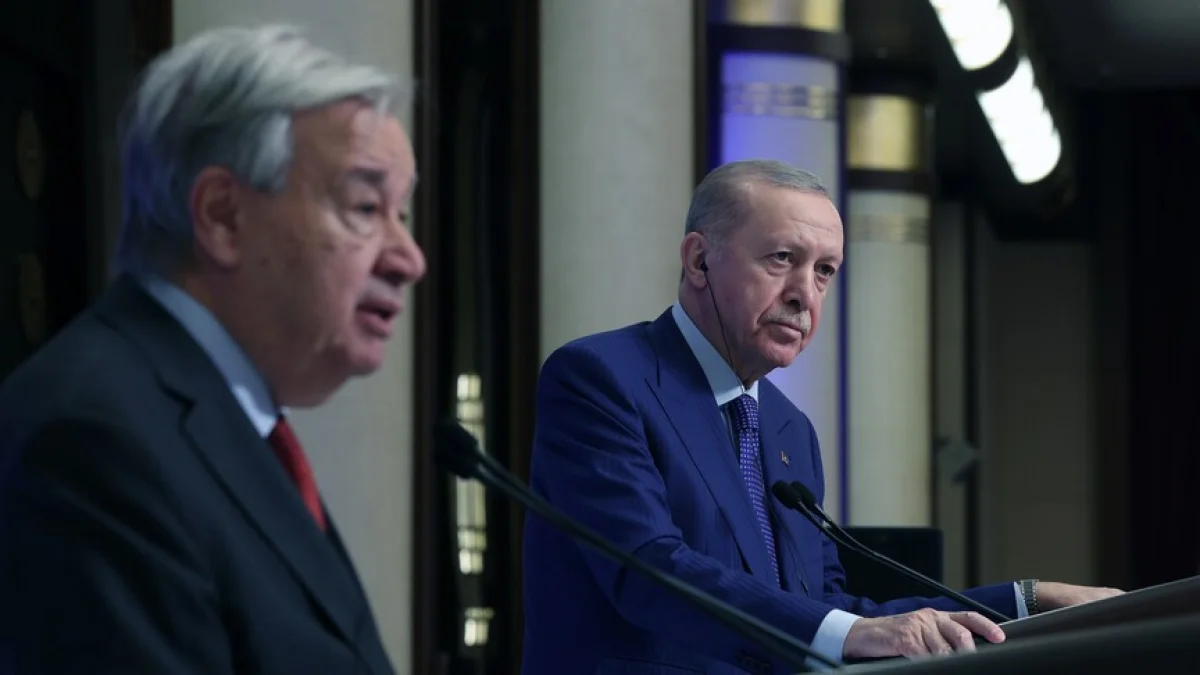
Turkish President Recep Tayyip Erdogan said the time had come to establish a common international legal framework for AI. He called for accelerated work on a UN international convention that would regulate the technology.
British Prime Minister Andy Burnham said AI was already helping speed up cancer diagnosis in the United Kingdom and could transform healthcare, education and the economy. At the same time, he warned that it could disrupt work and multiply security risks.
“Fundamental decisions on this technology are too important to be left to chance,” Burnham said, arguing that elected governments should remain responsible for key choices. He said Britain would place AI at the centre of its G20 presidency in 2027 and work towards global principles and standards covering transparency, access, preparedness and safe development.
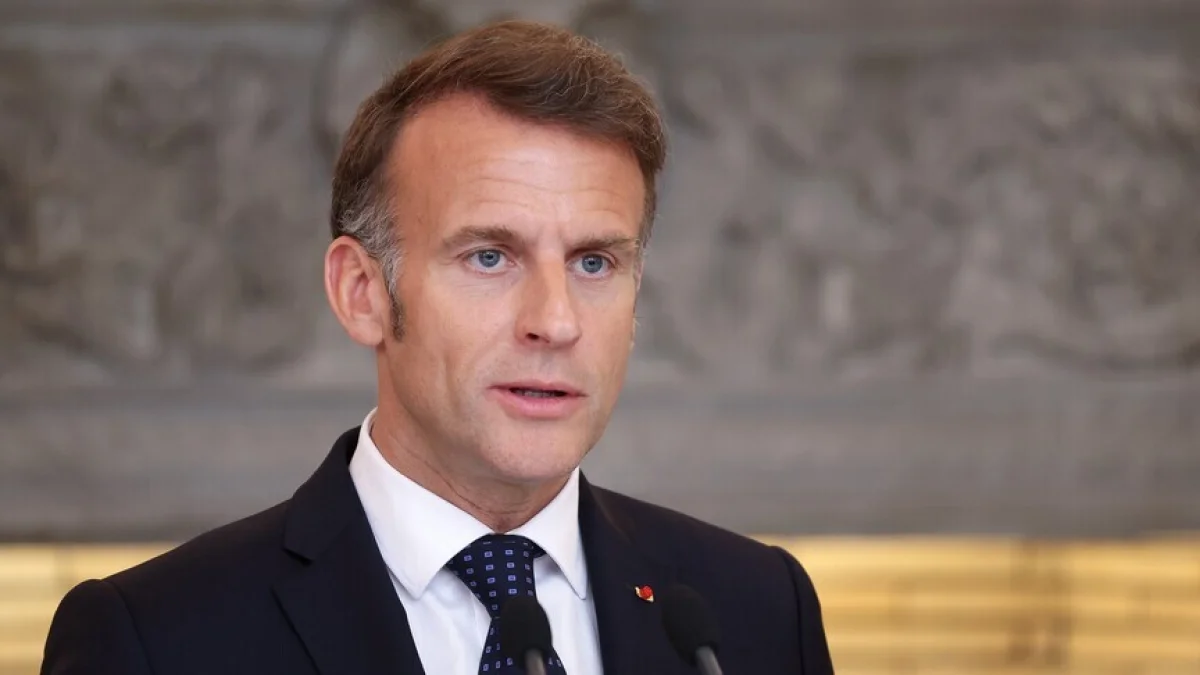
French President Emmanuel Macron warned against allowing the United States, China or a small group of technology companies to dominate decisions on AI. He called on countries to build their own capabilities and supported the development of an open-source frontier model that could be shared internationally.
Macron also pointed to Europe’s efforts to establish rules and principles for AI as a possible alternative to a system dominated by a few powers or private companies.
Leaders warn of risks and dependence
Brazilian President Luiz Inacio Lula da Silva called for stronger regulation of Big Tech and artificial intelligence. He said failing to address the challenge would be an “unforgivable historical omission” and accused a small group of “techno-oligarchs” of pursuing a race without ethical limits.
Finnish President Alexander Stubb described AI as a technology capable of reshaping science, the economy, politics and security. “Humans can and should be in the driver’s seat,” he said, advocating cooperation over competition or slowing down.
Stubb said Finland and Norway, together with other countries, had launched a call for companies, governments, regional organisations and the UN to develop mechanisms for controlling frontier AI models.
Guterres called for countries with the greatest AI capabilities to share information about emerging safety risks, cooperate on testing and evaluation, and develop common safeguards. He also urged the creation of a multilateral AI risk-management framework with credible and independent oversight.
“The danger is not technology. The danger is technology without accountability,” Guterres said. He added that children should never be used as test subjects for unregulated systems and that “life-and-death decisions must never be surrendered to machines”.
Kenyan President William Ruto highlighted concerns about technological dependence. Speaking at a high-level AI Middle Powers Coalition meeting on the sidelines of the General Assembly, he said African countries needed to move beyond consuming AI products and develop systems reflecting their own languages, economies and societies.
Ruto called for increased investment in Africa’s computing infrastructure, skills, research and governance capacity. “Africa cannot provide the minerals, energy, data, content and talent of the AI revolution, only to import the resulting intelligence at a premium,” he said.