OMM Newsroom

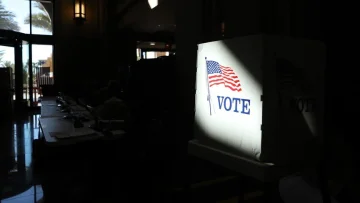
Americans head to the polls on Tuesday in midterm elections that could shape the final two years of Donald Trump’s presidency. The vote will decide control of Congress and comes at a difficult time for the Republican Party, the BBC reports.
Voters say the cost of living is their leading concern. Food and fuel prices have risen, in part because of Trump’s tariffs and the war with Iran, and have become a central issue in the campaign.
Trump has held dozens of rallies despite record-low approval ratings in recent months. He also campaigned in Iowa and Kansas during the final weekend, in states that Republicans have generally considered safe.
Republicans have spent hundreds of millions of dollars on campaign advertising in traditionally strong territory, including the Kansas Senate race. Carrie Dann, managing editor of the Cook Political Report, told the BBC that heavy spending in a state Republicans expect to win suggests they believe the race is in trouble. She said spending in Kansas would far exceed what Republicans had anticipated, reflecting a defensive approach to the elections.
At rallies, Trump has urged voters to act as though he were on the ballot. “In this election, I’m asking you to pretend, please, that I’m on the ballot,” he said last month, repeating the appeal in Iowa on Sunday.
Trump returned to the White House after a decisive victory in the 2024 presidential election, when his approval ratings were stronger. In the 2022 midterms, Republicans had sought his endorsement, viewing it as important to their chances. His standing has since fallen as the war with Iran has continued and affected household budgets.
Diesel, which cost $3.75 a gallon before the war began in February, reached a record $6.52 in September. Inflation has risen from 3% when Trump took office to 3.7%, while economists estimate it would have been lower without his broad global tariffs.
Republicans are concerned about their prospects in traditionally safe states, including Texas, Ohio and Kansas. Stephen Hawkins, global director of research at pollster More in Common, said competitive Senate races were now unfolding in the South, the Midwest and the American heartland. States Trump won by 10, 12 or 15 percentage points in 2024 could offer Democrats a viable chance to capture Senate seats, he said.
Some Iowa voters said Trump could hurt Republican candidates. Paul Ross, a Republican, said the current climate might make voters less likely to support the party and could be detrimental. Zach Shimp said Trump put some voters off and could lift Democratic support. Rose Heming blamed Trump for the war and said prices for groceries and fuel were “sky high”.
Many voters, including in Republican strongholds, are feeling financial pressure, and polls suggest some may express their dissatisfaction at the ballot box. But that does not necessarily mean a sweeping Democratic victory in House, Senate and gubernatorial races.
Some Republicans are unhappy with Trump but do not intend to vote for Democrats. Pre-election polls put Trump’s approval rating at about 38%, while a national NBC poll released on Sunday found that only 29% of voters viewed the Democratic Party positively.
Tim McKinnon, an Iowa Republican who voted for Trump in 2024, said he disliked the president’s repeated interventions on the world stage. His wife, Michelle, said they had voted for what Trump stood for, despite not expecting him to be perfect. McKinnon said higher fuel prices would not change their beliefs, and the couple said they did not think Democrats represented their Christian and conservative values.
Democrats cannot assume that voters frustrated with Trump will switch sides, but a significant win could come because voters dislike them less, rather than because they support them. The party is also looking ahead to the 2028 presidential election, when it will have to unite behind one candidate. Divisions have surfaced during the current election cycle, including in Michigan.
Democrats will assess whether they can win in Texas, attract rural voters in Republican strongholds and build on the profiles of rising figures such as Jon Ossoff in Georgia and James Talarico in Texas. Hawkins said the elections could give the party an opportunity to expand its influence and change perceptions of where it can compete.
In Detroit, Michigan, hair salon owner Nicole Williams said she wanted lower living costs, regardless of whether a candidate was labelled socialist. Voter Gwen Jackson said people were tired of what she described as disrespect towards Americans, referring to Abdul El-Sayed, the state’s left-wing Democratic Senate candidate whom Trump has repeatedly attacked. Jackson said voters were ready for change.
Democratic strategist Mary Anne Marsh said the cost of living and the undeclared war were key issues, adding that Republicans who had not stood up to Trump would face consequences for believing he was invincible.
Democrats are confident they can win the House of Representatives, in part because the party of a sitting president typically loses seats in midterm elections. A Democratic-controlled House could block legislation sought by Trump and launch investigations. Democrats could also seek to impeach members of his cabinet; Defence Secretary Pete Hegseth is seen as a likely target because of the war in Iran.
Taking the Senate will be harder. Thirty-five seats are being contested, and Democrats need a net gain of four to secure control. If they lose in Michigan, a battleground seat they already hold, they will need a net gain of five. Key races are in Michigan, Texas, Ohio, Iowa, Maine, Alaska and North Carolina, with several contests close enough to fall within polling margins of error.
Polls have historically overestimated Democratic support and underestimated Trump. He has repeatedly questioned the integrity and security of elections, and may do so again while votes are being counted or after results are announced. If polls accurately reflect a rise in Democratic support, Republicans could suffer losses in states that have backed them for decades.
The midterms are the final electoral test before the 2028 presidential election and an opportunity for voters to judge Trump and his party. As Trump seeks to shape his legacy over the next two years, a key question is whether a change in control of Congress would constrain a presidency that has often bypassed the legislature.