OMM Newsroom
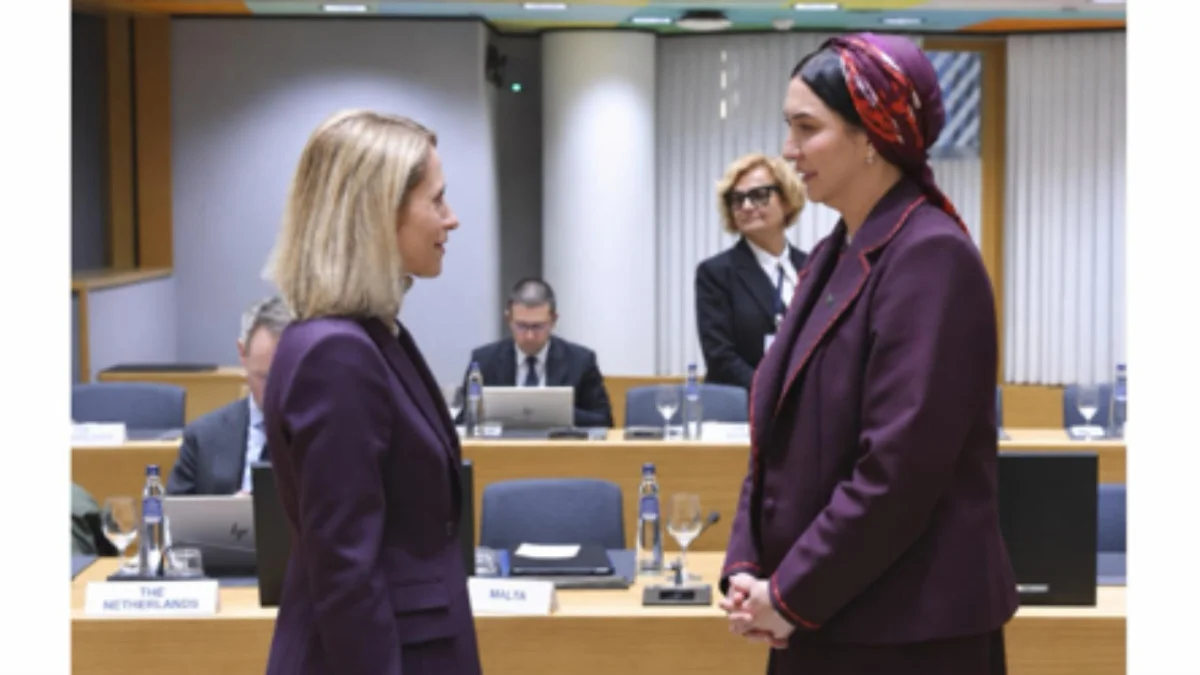
Turkmenistan and the European Union (EU) have reaffirmed plans to strengthen political dialogue and expand cooperation in several areas following high-level meetings in Brussels, AnewZ reported.
A delegation led by Turkmenistan’s Deputy Foreign Minister Myakhri Byashimova took part in the second ministerial meeting on interregional security and connectivity, held within the framework of the EU Foreign Affairs Council.
On the sidelines of the meeting, Byashimova also held bilateral talks with Audrone Perkauskiene, acting managing director for Europe and Central Asia at the European External Action Service. The sides discussed the current state of relations and prospects for future cooperation.
The talks highlighted the importance of continuing regular political dialogue, strengthening institutional ties and improving the effectiveness of existing cooperation mechanisms. The sides also confirmed their intention to maintain high-level contacts and expand direct cooperation between Turkmen government agencies and EU institutions.
Cooperation under Global Gateway
The talks took place against the backdrop of broader EU efforts to strengthen ties with Central Asia. The EU’s 2019 strategy identified resilience, prosperity and regional cooperation as key priorities.
Through its Global Gateway strategy, the EU aims to improve connectivity with Central Asia by investing in transport, energy and digital infrastructure. Potential areas of cooperation with Turkmenistan include improving transport links along the Trans-Caspian Corridor, developing renewable energy, increasing energy efficiency and strengthening digital connectivity.
The EU has allocated 18 million euros ($19.7 million) for its partnership with Turkmenistan under its 2021–2027 multiannual indicative programme. The programme’s priorities include water management, climate and energy, digital connectivity, transport, the green economy and improving the business environment.
Trade and economic ties
Trade and economic relations are governed by an Interim Trade Agreement that has been in force since August 2010. It applies pending ratification of the Partnership and Cooperation Agreement by the European Parliament.
The sides also cooperate through annual meetings of the Joint Committee, which reviews trade and economic relations as well as development programmes.
The latest talks in Brussels reaffirmed the commitment to maintaining regular contacts and expanding cooperation between relevant institutions. The focus is on strengthening existing mechanisms and translating political dialogue into practical outcomes.