OMM Newsroom

Sweden will reinstate internal border controls for six months, citing threats related to Russia’s war against Ukraine, AnewZ reported. Meanwhile, six people have been arrested in Poland on suspicion of spying for Moscow and illegally sending military components to Russia.
Sweden to maintain border checks for six months
According to a written statement from the Swedish government, the controls will be in force from Nov. 12, 2026, to May 11, 2027. The decision cites serious threats to public order and internal security.
The government listed Russia’s attacks on Ukraine, hybrid threats and the movement of “hostile” actors within the Schengen area among the reasons for the decision. Police will determine how the controls are carried out.
Sweden is joining other Schengen countries that have introduced temporary border checks — France, Germany, Norway and Denmark.
Six arrested in Poland face charges
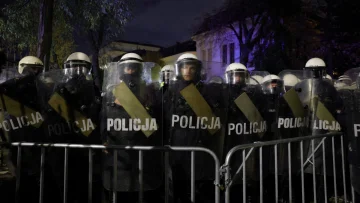
Poland’s Internal Security Agency (ABW) said on Thursday that six people had been arrested on suspicion of working for Russian intelligence and illegally supplying military components to Moscow.
Polish Minister Tomasz Siemoniak, who is responsible for coordinating intelligence services, said the suspects were five Polish citizens aged 25 to 52 and a 37-year-old Russian woman.
Investigators believe the group acted on orders from Russian intelligence and illegally exported large quantities of components used in ammunition and weapons systems. The components could have strengthened Moscow’s military capabilities.
ABW said its officers searched 21 locations between Oct. 21 and Nov. 2 in three regions in northern and western Poland: Warmian-Masurian, Pomeranian and Greater Poland.
All six have been charged with participating in an organized criminal group. Four of them, including the Russian woman, also face espionage charges.
Other charges concern alleged violations of Polish laws regulating international trade in goods and technologies of strategic importance to national defense and international security.
A court ordered the four people facing espionage charges to be held in detention for three months. The other two were placed under non-custodial preventive measures. The investigation is overseen by the National Prosecutor’s Office in Bialystok.
Schengen rules allow temporary checks
Free movement across internal borders is one of the core principles of the Schengen area, Europe’s passport-free travel zone. However, countries can temporarily reintroduce border checks when there is a serious threat to public order or internal security.
Under European Union rules, such measures must be a last resort, limited in duration, necessary and proportionate to the threat.
The European Commission monitors whether temporary border controls comply with EU law. If a country breaches the rules, Brussels can launch infringement proceedings and, if the matter is not resolved, refer the case to the Court of Justice of the European Union. However, the Commission’s assessment does not automatically require a country to end its border checks.
In June, the Commission issued opinions on nine Schengen countries that had maintained internal border controls for extended periods, examining whether the restrictions were necessary and proportionate.