OMM Redaksiyası

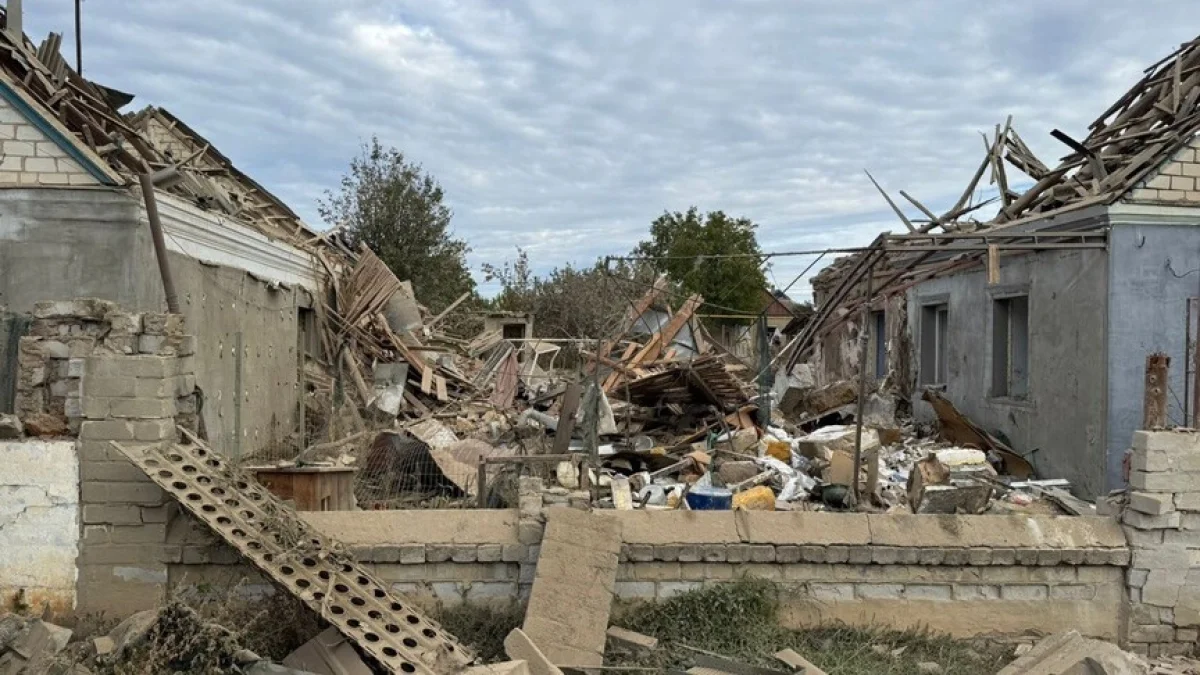
Residents of the Russian-occupied Ukrainian city of Oleshky are risking their lives to obtain food and water as the frontline settlement remains cut off from supplies, according to the BBC.
Halia, a resident whose name has been changed for security reasons, said two civilians were killed by a drone while returning from Radensk, about 23km away, with food. The couple had reportedly been unable to reach Oleshky before a curfew imposed by Russian occupation authorities.
Four separate sources confirmed the deaths, which occurred on 20 September, the BBC reported.
Residents face severe shortages
Oleshky has been under Russian occupation since 2022. Located between the Dnipro River and Russian positions, the city is largely cut off from Ukrainian-controlled territory.
Before Russia’s full-scale invasion, Oleshky had a population of about 24,000. The Ukrainian government estimates that approximately 6,000 people now remain in the city and surrounding areas, including about 200 children.
Residents told the BBC that children face malnutrition, limited medical care and a lack of education. They said only one hospital is partially operating, opening several days a week and carrying out critical amputations.
Oleshky has reportedly been without electricity, gas and water since the destruction of the Nova Kakhovka Dam in June 2023. Ukraine and NATO accused Russia of destroying the dam, while Moscow blamed Kyiv.
With no shops operating, residents have turned to local messaging groups to exchange or share food. Some have also begun cooking garden weeds after exhausting the vegetables they grew during the summer.
“There is no food here in the city,” Halia said, adding that the last delivery arrived in May. She said she now eats once a day, usually plain bread with a tomato or honey and tea.
Deaths difficult to document
Travelling out of the city on foot in search of supplies has become increasingly dangerous because of mines and shelling. Ukraine has attempted to deliver aid, but recent efforts have reportedly failed.
Earlier this week, the Kremlin acknowledged that Oleshky was facing “a critical situation” and problems with food and medicine supplies. It said the Russian military was working to address the situation and blamed Ukraine.
Ukraine’s Foreign Minister Andriy Sybiha described the population as living under a “full blockade” and called on the international community to pressure Russia to allow humanitarian aid into the city.
The UN Human Rights Monitoring Mission in Ukraine has recorded reports of at least 29 civilians killed and 54 injured this year in Oleshky and nearby Hola Prystan. Local volunteers believe the actual figures may be considerably higher.
Ksenia Arkhipova, a volunteer who escaped Oleshky in 2022 and helps coordinate aid and evacuations, said she had recorded the names and dates of birth of around 1,200 people who had died.
She said the list grew by one or two names almost every day, including people killed by drones or landmines. The BBC said it could not independently verify the volunteer’s figures.
Restrictions on burials
A resident identified as Tetiana, also a pseudonym, told the BBC that both of her parents were shot inside their home this summer. She said Russian soldiers had entered the house and wanted to take it.
Residents said Russian occupation authorities restricted the burial of people killed by drones, mines or other violent means. Such deaths reportedly require confirmation through a post-mortem examination by a Russian doctor, which is not available in Oleshky.
As a result, some bodies have allegedly remained in the streets for months. Arkhipova said bodies were either accumulating in the local morgue, which had been without electricity since winter, or being eaten by stray dogs. The BBC said it verified the account using several photographs obtained from residents but did not publish them because of their graphic nature.
Ester Vrataryova, co-founder of the charity Humanity, said the treatment of bodies was being used as a form of psychological pressure. “If you try to bury a dead body, you’ll become the next one,” she said.