 OMM Redaksiyası

Protests are taking place across Spain as tenants and housing campaigners demand stronger protections, a day after parliament rejected emergency legislation proposed by Prime Minister Pedro Sánchez’s government. About 50 marches were planned for Saturday in cities including Madrid, Valencia and Barcelona, according to the BBC.
“There is a lot of anger in the streets,” a spokesperson for the Valencia Tenants’ Union said as a demonstration began in the city.
What prompted the protests?
The government’s proposals followed public anger over the eviction in September of 87-year-old Maricarmen Abascal, who had been unable to afford a sharp increase in her rent. Her case prompted protests across Spain, with demonstrators calling for lower rents, an end to evictions and a ban on investment funds buying homes.
The company that owns Abascal’s flat, Urbagestión, later negotiated her return at a lower rent. Protests have continued despite the agreement.
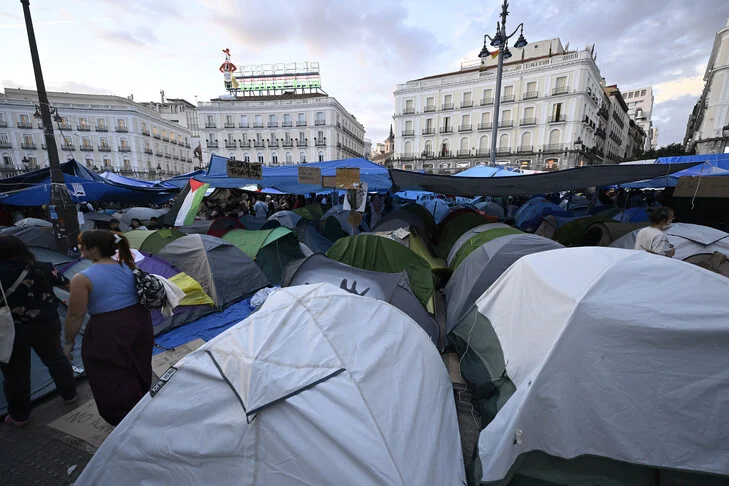
Madrid is expected to host Saturday’s largest demonstration. Protesters have been camping for days in Puerta del Sol, one of the capital’s main squares. “We’re not here for pleasure or comfort. We’re here out of conviction,” one demonstrator, David, told Spanish public broadcaster RTVE.
Which measures did parliament reject?
The legislation put forward on Friday was split into two decrees. The first proposed suspending evictions of vulnerable tenants until 2030, extending by two years rental leases due to expire before 2028, increasing taxes on tourist apartments and restricting residential property purchases by investment funds described by the government as “vulture funds”.
The second decree proposed automatic renewal of rental contracts, a key demand of many left-wing groups and the Tenants’ Union.
MPs rejected the first decree by 178 votes to 172 and voted against the second by 184 to 166. The conservative People’s Party and far-right Vox had said they would oppose both measures. The minority government also needed support from smaller nationalist parties in Catalonia and the Basque Country, but the centre-right, pro-independence Together for Catalonia party signalled opposition to both proposals before the parliamentary session.
Political pressure on Sánchez’s government
The defeat has fuelled speculation that Sánchez could call an early general election, although the next election was not due until next summer. His coalition, formed by the Socialists and junior partner Sumar, does not have a parliamentary majority.
On Friday night, Madrid’s Tenants’ Union said the proposed measures did not go far enough, but warned that their rejection “exacerbates the housing crisis which is costing the working class their lives”. The union has called for a general strike over housing.