OMM Newsroom
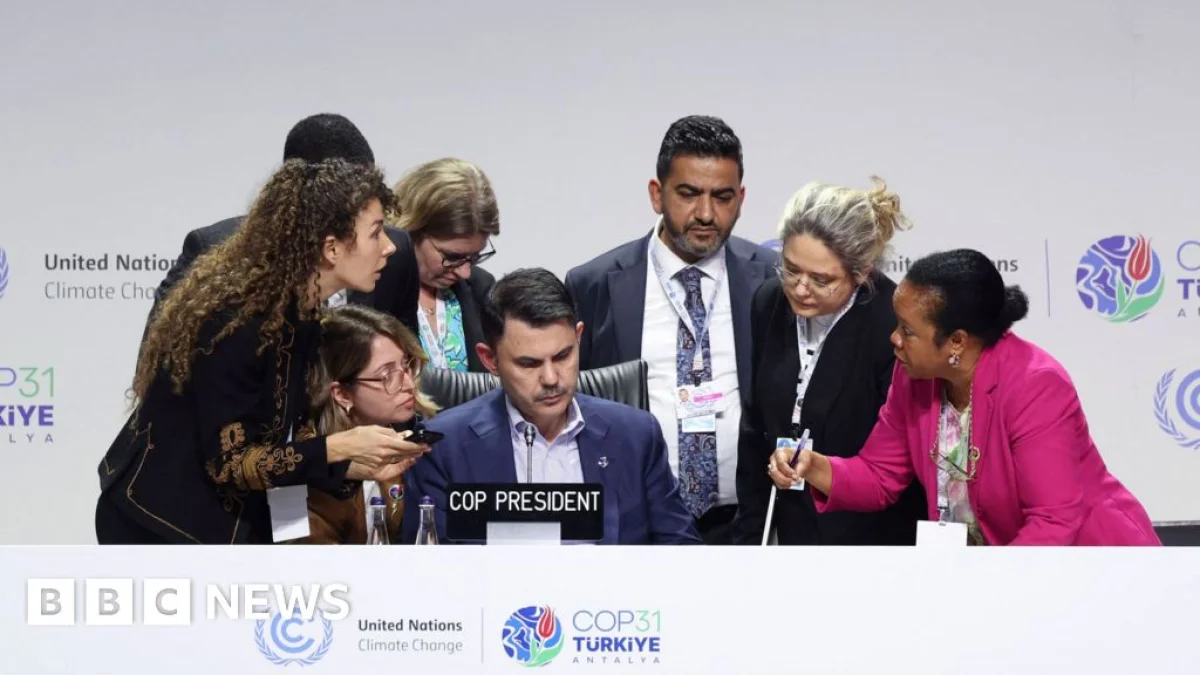
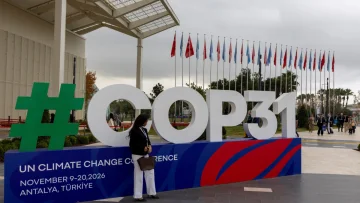
Negotiations at the UN COP31 summit in Antalya were due to resume on Sunday, as countries worked to reach a new global climate agreement. A third and “final” draft was sent to delegates in the early hours of Sunday, with members given until 06:00 local time (03:00 GMT) to raise concerns ahead of a 09:00 meeting to consider approval, according to the BBC.
Countries were deadlocked over how to advance efforts to tackle global warming after the latest draft omitted any reference to reducing global demand for fossil fuels. Under the UN climate talks process, an agreement requires consensus. Without it, negotiations could be suspended and reconvened next year.
An earlier draft, released this week, called for a faster phase-out of fossil fuels. A pared-down version published on Thursday removed all mention of coal, oil and gas, prompting some countries to threaten to walk out.
The dispute pushed the summit beyond its original Friday deadline. On Saturday, negotiating teams with flights scheduled for Sunday morning were rearranging their travel. That raised the prospect that departing delegations could leave the meeting without the numbers needed to pass an agreement.
In a last-minute effort to find acceptable wording, the European Union and Saudi Arabia, which were deeply divided over the future of fossil fuels, were brought together on Saturday to seek a compromise.
COP31 President and Turkish Environment Minister Murat Kurum told delegates early on Sunday that he believed their concerns had been addressed. “We ask you to look at this decision carefully,” he said. “We are closer than ever to agreement on the remaining issues.”
If countries fail to agree, the summit will end without a deal and reconvene next year. This has happened only once before since countries began holding COP climate meetings in 1995.
Fossil fuel language divides countries
Ministers from Panama, the Solomon Islands, Côte d’Ivoire and the EU sought to restore a commitment to move away from fossil fuels in the final agreement. Fossil fuel-producing countries, led by Saudi Arabia, had pushed for its removal.
“It is not acceptable to have a COP or a cover decision that does not even mention fossil fuels and we simply will not put up with it,” Panama’s Environment Minister Juan Carlos Navarro said.
Tuvalu Climate Minister Maina Talia called the issue a “red line” for the low-lying Pacific nation. “We’re talking about the root cause of all of this,” he told reporters.
France’s Minister of Ecological Transition, Monique Barbut, criticised several references in the draft to carbon capture, a technology that captures emissions when they are released and stores them underground. She said it was being used as a licence for other countries to continue burning oil and gas.
“We cannot be announcing to the world that we are now getting to 1.5 increase in the temperature and do business like nothing was happening,” Barbut said.
For the first time at a COP, the agreement, officially known as the Antalya Accords, could acknowledge that the Paris climate accord’s goal of keeping global temperature rise below 1.5C has been missed. The world is entering a period known as “overshoot”. Scientists warn that beyond this point, millions more people will be exposed to rising sea levels and extreme heat.
Australia’s Climate Change and Energy Minister Chris Bowen, who is leading negotiations, argued against including language on fossil fuels. He said the summit was about implementation and should focus on the transition to clean energy sources.
Developing nations seek adaptation funding
Developing nations also raised concerns about a lack of funding. The Africa Group sought commitments for more money to help countries adapt to climate change, but the EU had previously said it would not support the proposal.
Earlier versions of the text included an agreement to increase adaptation funding to $120bn (£91bn) by 2035. That figure was later removed.
“We did not come here to beg, we came here to claim what is rightfully ours for our people who are suffering the brunt of anthropogenic activities of developed countries,” said Ghana’s Environment Minister and chair of the African Group of negotiators, Zanetor Agyeman Rawlings.
Climate activists and environmental groups observing the talks criticised the negotiations. “I can tell you without any doubt that this has been the worst COP ever,” said Mohamed Adow of Powershift Africa.