OMM Newsroom

Israeli Prime Minister Benjamin Netanyahu’s hold on power suffered a setback on Tuesday when the Knesset elected a new speaker, giving the opposition greater control over the legislature’s agenda, according to CNN.
The Knesset elected Matan Kahana of Gadi Eisenkot’s Yashar party as its 26th speaker, replacing Amir Ohana of Netanyahu’s Likud party. Kahana received the support of 66 lawmakers, the Knesset spokesperson said.
Lawmakers voted separately on the candidates rather than in a head-to-head ballot. Likud’s candidate, coalition whip Ofir Katz, received 52 votes in a separate ballot.
The vote was the first significant move by the Eisenkot-led bloc to steer the legislature in a new direction since Netanyahu lost his Knesset majority in the October 27 elections. The prime minister’s coalition of right-wing and ultra-Orthodox parties won 53 seats in the 120-seat parliament.
The opposition holds 67 seats, including 48 across four Jewish parties and a record 19 for two Arab parties, the Joint List and Raam.
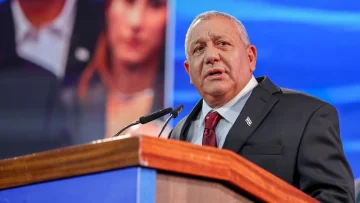
Eisenkot, whom President Isaac Herzog tasked earlier this month with forming the next government, has up to four and a half more weeks to replace Netanyahu, but faces a difficult path to power. His bloc now controls the Knesset plenum, key positions and the legislative agenda, and intends to use those powers to scrutinise and constrain Netanyahu’s caretaker government, which remains in office until a replacement is formed.
Eisenkot said on Tuesday that Kahana’s appointment was a “proper democratic move which reflects the absolute majority who voted for change.”
The bloc has appointed interim chairs to key Knesset committees, including those responsible for finance and defense, expanding its oversight of the budget and strategic affairs. Avigdor Liberman, leader of the opposition Yisrael Beitenu party and now chair of the Foreign Affairs and Defense Committee, has said he will summon all security chiefs for briefings.
Opposition seeks to reverse judicial and media changes
One of the opposition’s main legislative priorities is to reverse judicial overhauls introduced by Netanyahu’s outgoing coalition, which sparked unprecedented nationwide protests in 2023. Critics said the changes weakened Israel’s democratic institutions and judicial oversight of the government.
Special committees have been established to repeal a law that changed how judges are selected and legislation that limits and weakens the attorney general. Another committee was formed to reverse a media regulation overhaul that expanded government control over the communications and news sector.
Eisenkot’s bloc has also pledged to advance the establishment of a state commission of inquiry into the failures that led to the Hamas-led attack on October 7, 2023. Netanyahu has refused to investigate the failures.
Netanyahu and his allies tried to block Kahana’s election and portray it as illegitimate because it depended on support from Arab parties, although they have also repeatedly sought backing from Arab lawmakers in parliament. During the vote, members of Netanyahu’s bloc shouted “shame” at each Arab lawmaker who supported Kahana.
Eisenkot faces hurdles in forming a government
Although Eisenkot and his allies have taken control of the Knesset, his effort to replace Netanyahu faces significant obstacles. Eisenkot has proposed what he calls a “national emergency government”: a minority administration made up of the four Jewish opposition parties, which together hold 48 seats.
Under the plan, the Arab parties would remain outside the coalition but guarantee a Knesset majority to prevent the government from collapsing, in exchange for various concessions.
Other leaders in Eisenkot’s bloc favour different approaches. Liberman has ruled out a government reliant on support from Arab parties and is pushing for talks with the two ultra-Orthodox parties, Shas and United Torah Judaism (UTJ), which have traditionally been allied with Netanyahu.
UTJ, an Ashkenazi ultra-Orthodox party, declined to recommend Netanyahu for prime minister during post-election consultations and has opened the door to informal talks with Eisenkot’s bloc. However, it backed Likud’s candidate rather than Kahana in the speaker vote.
Shas, the other ultra-Orthodox party, remains loyal to Netanyahu, leaving Liberman’s strategy uncertain.
Former Prime Minister Naftali Bennett is another potential obstacle. He reportedly favours talks on a unity government with Netanyahu’s Likud party rather than an alliance with Arab or ultra-Orthodox parties.
Netanyahu, however, has made any talks conditional on his remaining prime minister, a condition Eisenkot has rejected, casting doubt on whether Bennett’s preferred approach can succeed.