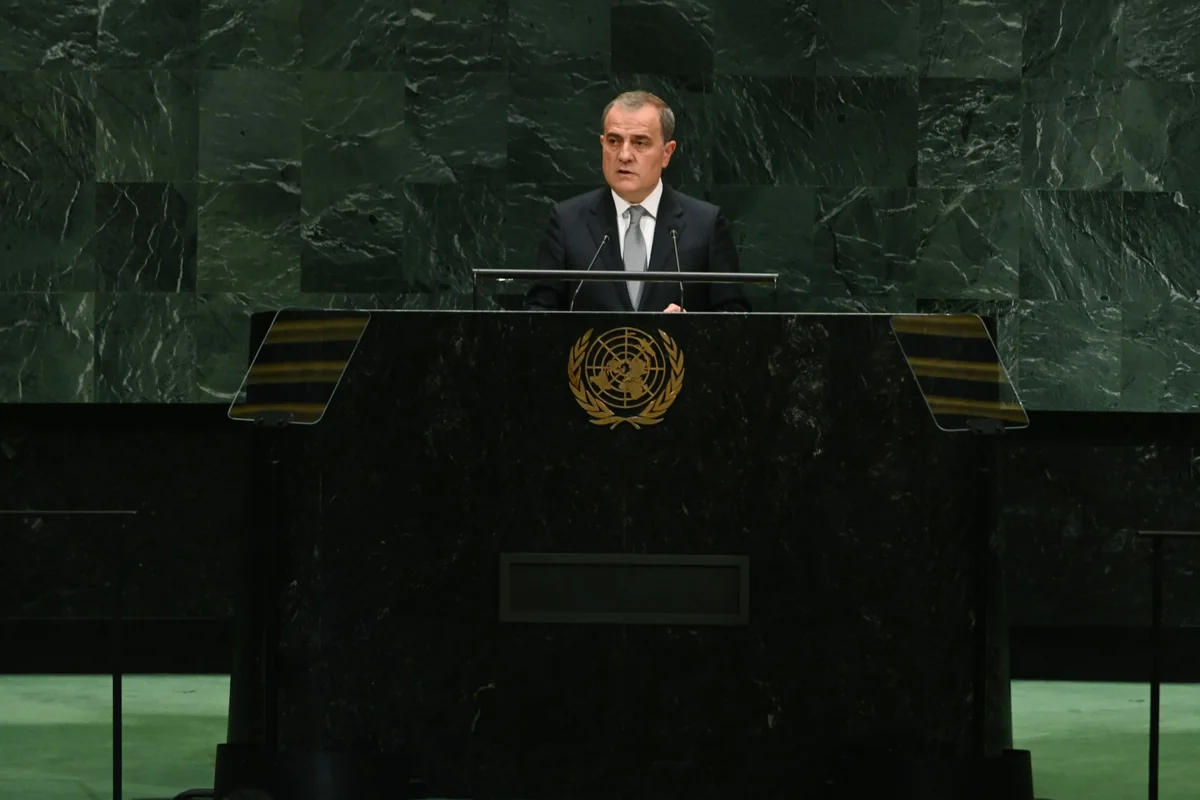
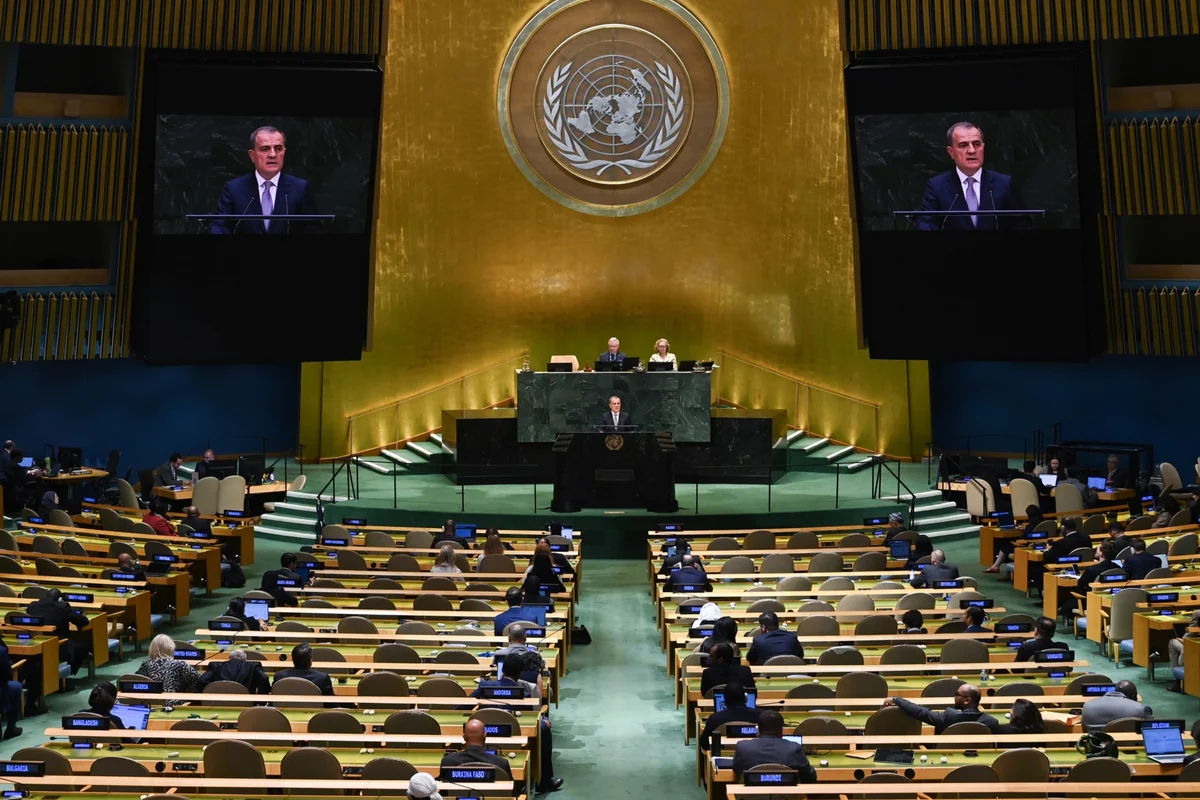
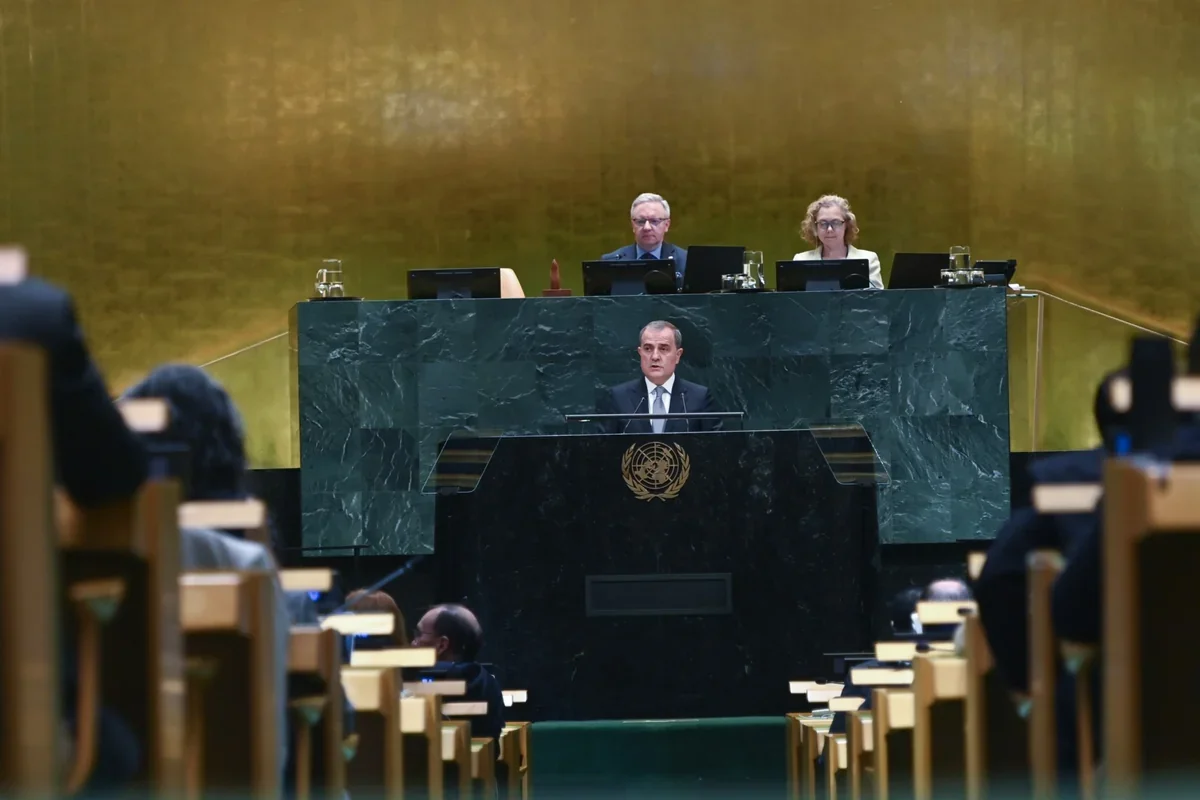
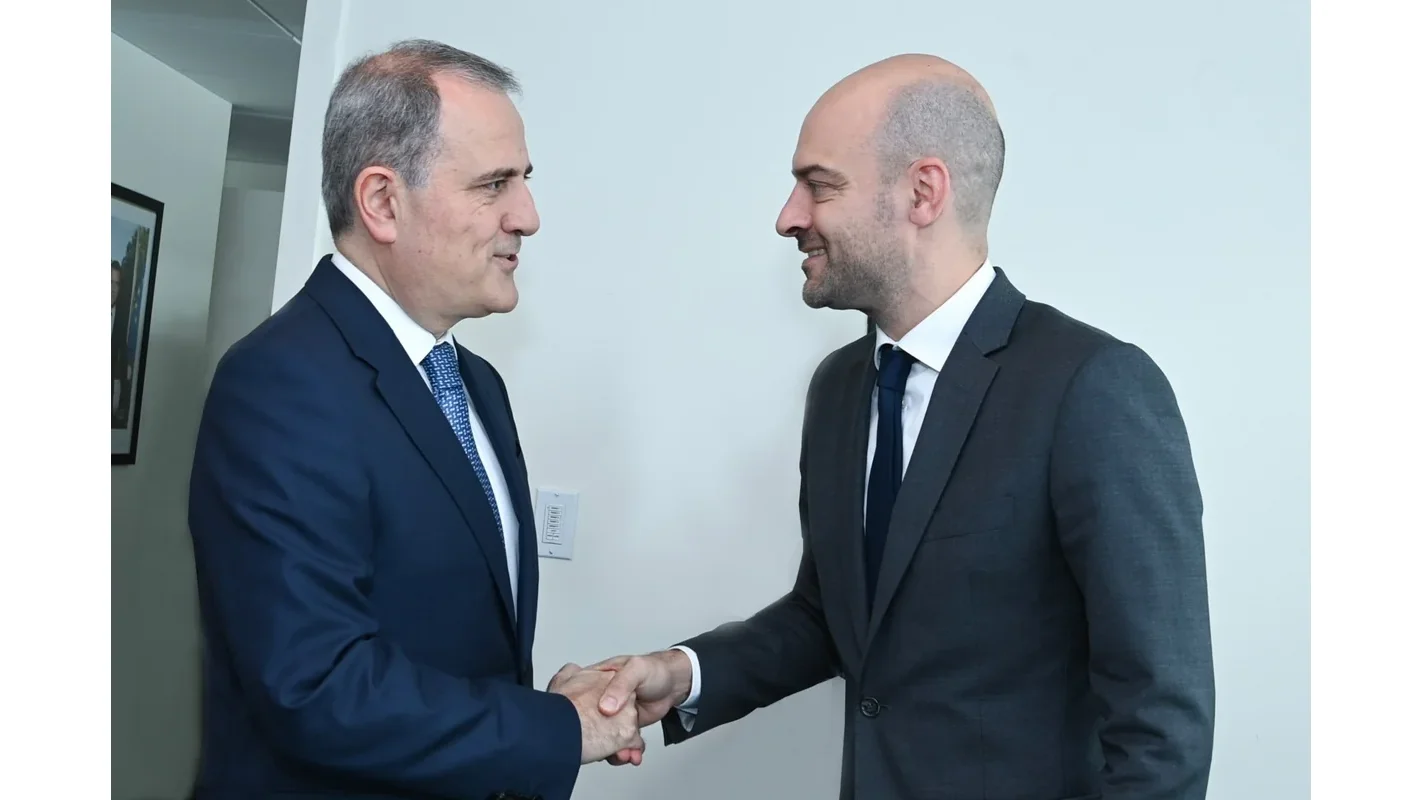
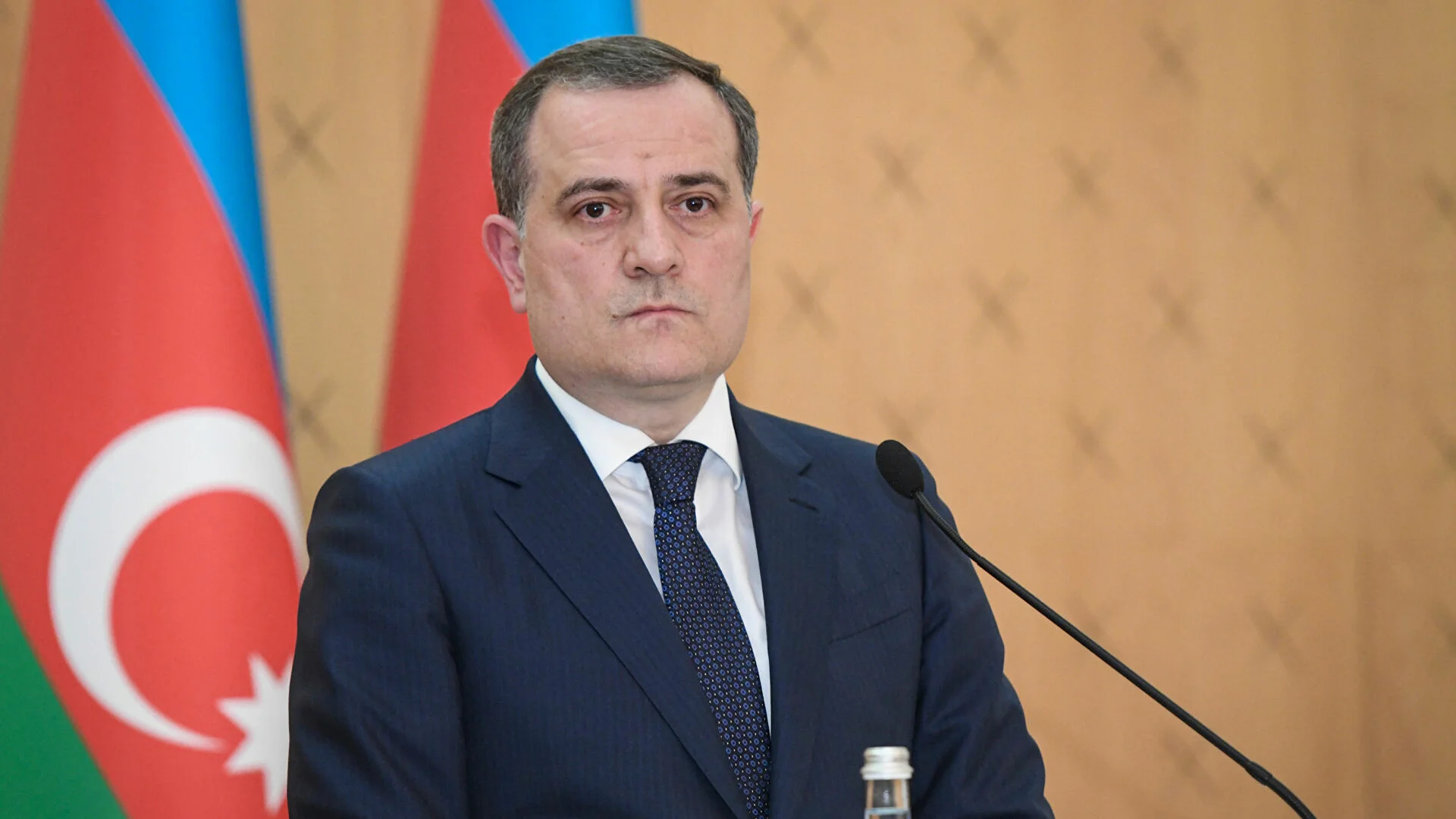
Azerbaijan’s Foreign Minister Jeyhun Bayramov addressed the general debate of the 81st session of the UN General Assembly.
Operative Information Center-OMM reports, citing Azerbaijan’s Ministry of Foreign Affairs (MFA), that Bayramov discussed regional and global issues in his speech.
The minister said that no country could tackle increasingly complex global challenges alone. At the same time, the growing limitations of multilateral mechanisms continued to weaken the collective ability to respond effectively to existing and emerging threats:
“Although confronting these realities requires joint action, genuine transformation cannot take place without first restoring trust in the international order and demonstrating once again that multilateralism can deliver concrete results for all.
At a time marked by fragmentation, growing intolerance and stark double standards, Azerbaijan supports a renewed and reformed multilateral system based on strict adherence to the consistent and non-selective application of the universally recognized norms and principles of international law.
Azerbaijan supports a more effective United Nations capable of delivering concrete results for member states in the areas of peace and security, development, climate resilience and humanitarian action.
Through inclusive multilateralism, all states, regardless of their size, particularly developing countries, should be able to participate on an equal basis in global decision-making.
In this context, reform of the UN Security Council is necessary to ensure broader representation, effectiveness and flexibility.
Restoring global trust begins, above all, with respect for international law, sovereign equality and the principles of peaceful coexistence. Our efforts for peace and stability in the South Caucasus are based precisely on these principles.
Despite the decades-long conflict with Armenia, which caused profound suffering for our people and left deep scars across our territory, Azerbaijan has chosen to look to the future and turn the page on hostility.
We have offered Armenia peace based on the mutual recognition and respect for each other’s sovereignty and territorial integrity, in full conformity with the norms and principles of international law.
As a result of our normalization efforts, historic outcomes were achieved at the Washington Peace Summit in August last year, where the leaders of Azerbaijan and Armenia signed a Joint Declaration in the presence of United States President Donald Trump. Through the declaration, both sides reaffirmed that the conflict had ended and expressed their joint will to build a peaceful and prosperous future. The parties also initialed the Agreement on the Establishment of Peace and Interstate Relations.
We have now achieved de facto peace. In addition, Azerbaijan is unilaterally removing transit restrictions and facilitating the movement of goods to and from Armenia. We have also established bilateral trade ties. Despite growing instability in international markets and rising global demand for such products, Azerbaijan regularly supplies Armenia with strategically important petroleum products.
As we advance the peace agenda initiated by Azerbaijan, our entire region is becoming a promising platform for stability, connectivity and concrete economic dividends.
To make this process irreversible, it is critically important to remove the remaining obstacle and enable the finalization of the normalization process through the signing of the already initialed bilateral agreement.”
Alongside the regional normalization process, Azerbaijan’s post-conflict reconstruction agenda ultimately aims to enable hundreds of thousands of Azerbaijanis to exercise their right to return safely and with dignity to their homes:
“Life is returning to our liberated territories thanks to the large-scale reconstruction carried out by the government. Azerbaijan is rebuilding the entire region through ‘smart cities’ and ‘smart villages’ powered by green technologies. Areas once reduced to ruins and ashes are now reviving as modern settlements. More than 90,000 people now live, study and work in the liberated territories.
Unfortunately, the extensive contamination of Azerbaijan’s territories with landmines and other explosive devices remains a serious obstacle. It significantly complicates the reconstruction and return process. Since the territories were liberated from occupation in 2020, more than 400 people, including women and children, have become mine victims. The total number of mine victims over the past 30 years has exceeded 3,500.
Given the scale of this problem, Azerbaijan considers mine clearance a necessary prerequisite for ensuring human rights and has officially declared humanitarian demining its 18th National Sustainable Development Goal.
Likewise, determining the fate and whereabouts of approximately 4,000 Azerbaijanis who went missing as a result of the conflict is important not only in terms of accountability and the rights of victims and their families, but also from the perspective of post-conflict reconciliation and normalization.
In the face of increasingly complex global challenges, our collective response must be inclusive, fair and universal.
Azerbaijan’s own experience embodies these principles. Our society is inherently multicultural and multi-confessional, rooted in centuries of peaceful coexistence among different ethnic, cultural and religious communities.
This tradition is reflected in Azerbaijan’s international initiatives, including the World Forum on Intercultural Dialogue. Launched in 2008 within the framework of the “Baku Process,” the forum has become an important global platform for promoting intercultural dialogue and cultural diversity and has gained international recognition, including through a series of resolutions adopted by the UN General Assembly.
Based on these values, under the leadership of His Excellency Mr. Ilham Aliyev, President of the Republic of Azerbaijan, Azerbaijan has taken important steps to strengthen international solidarity, build bridges and mobilize collective responses.
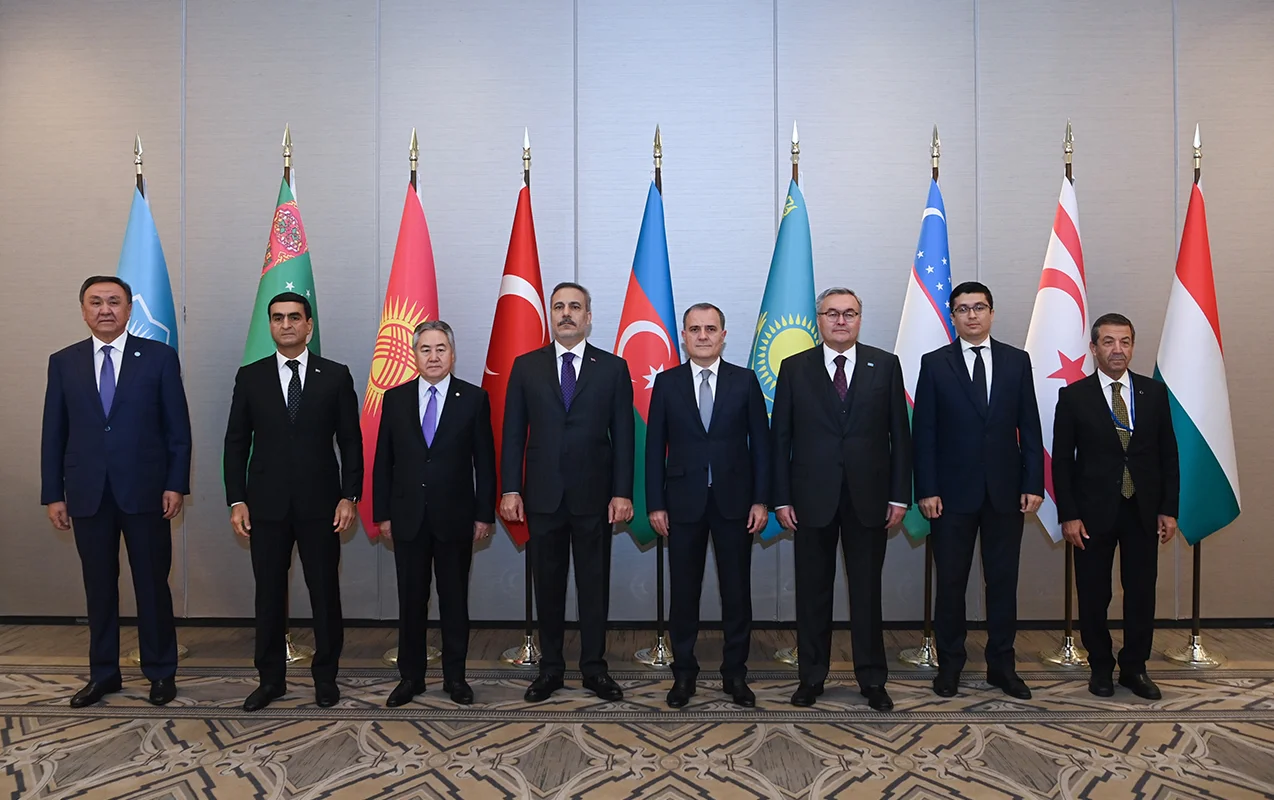
This determined approach has also been demonstrated through Azerbaijan’s successful hosting and stewardship of major global events, including COP29 and the 13th session of the World Urban Forum; its results-oriented chairmanship of the Non-Aligned Movement, the Organization of Turkic States and the Conference on Interaction and Confidence-Building Measures in Asia; and its increasingly active participation in other international platforms. Azerbaijan’s full membership in the Consultative Meeting of the Heads of State of Central Asian countries and the C6 format will further increase our contribution to cooperation and connectivity in the region and beyond.”
The minister said COP29 was an excellent practical example of this approach: “As host and chair, Azerbaijan sought to ensure that all voices were heard while steering negotiations toward targeted and balanced outcomes. The conference produced a number of historic agreements, including tripling the global climate finance goal, making Article 6 carbon-market mechanisms fully operational and further developing mechanisms supporting the Loss and Damage Fund for vulnerable communities affected by climate change.
Our efforts to advance climate action did not end with the organization of COP29. Azerbaijan continues to build on the legacy it created, paying particular attention to translating negotiated outcomes into practical implementation. In September this year, Baku hosted the UN Framework Convention on Climate Change (UNFCCC) Climate Week for the first time, bringing together governments, international organizations, the private sector and other stakeholders to accelerate implementation and advance practical solutions.
Azerbaijan’s commitment to international solidarity and cooperation is likewise reflected in our activities in development and humanitarian assistance. In recent years, Azerbaijan has significantly expanded the scope of its international aid, with particular attention to small island developing states and partner countries in Africa. Since 2020, we have provided approximately $400 million in humanitarian, economic and technical assistance to more than 140 countries.
As we mark the 40th anniversary of the Declaration on the Right to Development, Azerbaijan once again reaffirms its commitment to partnership approaches based on solidarity, mutual respect and shared development priorities.
As 2030 approaches, it is becoming increasingly clear that the world is falling behind in implementing the Sustainable Development Goals.
Azerbaijan remains fully committed to the 2030 Agenda for Sustainable Development by integrating the Sustainable Development Goals into its national development strategies, institutional frameworks and Voluntary National Review processes, with particular attention to connectivity, green development, digitalization and sustainable urban development.
Over nearly the past two decades, Azerbaijan’s GDP has tripled, while the poverty rate has fallen from 49% to approximately 5%. At the same time, Azerbaijan has one of the lowest levels of external public debt in the world.
Our approach also includes advancing sustainable development through effective and accountable institutions. On March 30, 2026, at Azerbaijan’s initiative, the UN Human Rights Council adopted by consensus for the third time a resolution titled “Promoting human rights and the Sustainable Development Goals through transparent, accountable and effective delivery of public services.” Co-sponsored by more than 100 member states, the resolution emphasizes the important role of citizen-oriented, transparent and effective state institutions in advancing human rights and accelerating progress toward the Sustainable Development Goals.
Azerbaijan’s innovative ASAN and DOST models for delivering transparent, accessible and citizen-oriented public services have gained international recognition and are being adopted by an increasing number of partner countries.
Another important pillar of our approach to the 2030 Agenda is sustainable urban development. Sustainable cities are essential for improving quality of life, empowering communities and promoting inclusive economic and social development. In this regard, Azerbaijan’s successful hosting of the 13th session of the World Urban Forum made an important contribution to the global urban agenda. Key documents adopted at the forum, including the “Baku Call to Action” and the “Chair’s Summary,” ultimately contributed to the High-Level Meeting of the General Assembly held in New York in July this year on the midterm review of the New Urban Agenda.
At the same time, environmental protection remains an important national and regional priority. We are particularly concerned about the continued decline in the level of the Caspian Sea, which has serious implications for biodiversity, living conditions and economic activity in the region. This is a common challenge facing all Caspian littoral states and requires a coordinated, collective and sustained response.
While remaining fully committed to our climate goals, we must also recognize that real development cannot be sustained in the near future without conventional energy resources.
Energy security is also closely linked to peace, regional connectivity and sustainable economic development.
As a reliable natural gas supplier to 16 countries, Azerbaijan ranks among the world’s leading suppliers of pipeline gas and plays a strategic role in strengthening energy security and diversifying supply routes in Europe and beyond.
Azerbaijan’s contribution to global energy security is increasingly complemented by its growing role in the clean-energy transition. We are investing in renewable energy, commissioning major solar and wind projects, expanding our hydropower potential and developing new clean-energy initiatives with leading international partners. Agreements already signed envisage the generation of approximately 6 GW of additional solar and wind power by 2030.
By 2030, approximately 40% of Azerbaijan’s electricity is expected to come from renewable energy sources.
The expansion of renewable energy generation will create new opportunities for Azerbaijan to export green electricity to European markets.
Thus, our role as a reliable energy partner is evolving in parallel with the global energy transition.”
Energy connectivity forms part of Azerbaijan’s broader vision of linking regions, markets and economies: “By contributing to major transregional connectivity initiatives, investing in modern transport infrastructure and expanding cooperation with regional partners, Azerbaijan has become a key transport and logistics hub between Europe and Asia.
Since 2022, freight volumes along the Middle Corridor have increased by approximately 90%. Strategic infrastructure projects along the Middle Corridor, implemented at Azerbaijan’s initiative and with its leading role, including the Baku International Sea Trade Port and the Baku-Tbilisi-Kars railway, are helping establish more sustainable, diversified and resilient supply chains between Asia and Europe.
This growth demonstrates the Middle Corridor’s significant potential as a key driver of regional connectivity, trade facilitation and sustainable economic development.
Our connectivity agenda extends beyond energy and transport. Digital connectivity is another important area for regional cooperation. Through large-scale initiatives such as the Digital Silk Road, Azerbaijan is developing new digital links across the region. The project envisages the construction of a modern fiber-optic network across the Caspian Sea, further strengthening Azerbaijan’s role as a regional digital hub and a key gateway between Europe and Asia.
This broader connectivity agenda is also closely linked to the emerging peace architecture in the South Caucasus.
Another important outcome of the 2025 Washington Summit, the Trump Route for International Peace and Prosperity (TRIPP), will provide unobstructed multimodal connectivity between Azerbaijan’s mainland and its Nakhchivan Autonomous Republic and, as part of the Zangazur corridor, open new opportunities for regional trade, economic integration and progress.
In concluding my remarks, I would like to emphasize once again that the common challenges we face require renewed global solidarity, more effective and credible multilateralism based on international law, and a revitalized system of cooperation.
However, trust must be restored through concrete steps. Peace must be secured in reality, commitments must be translated into tangible outcomes, and sustainable development must be accompanied by meaningful improvements in people’s lives.
Azerbaijan has consistently remained committed to the purposes and principles of the UN Charter and has demonstrated its firm adherence to international law, including respect for sovereignty and territorial integrity, the principle of non-interference in the internal affairs of states, sovereign equality, dialogue and cooperation, and the honest, consistent and non-selective implementation of agreed commitments.
The multilateralism we believe in is principled, inclusive and, above all, capable of delivering concrete results.”