OMM Newsroom
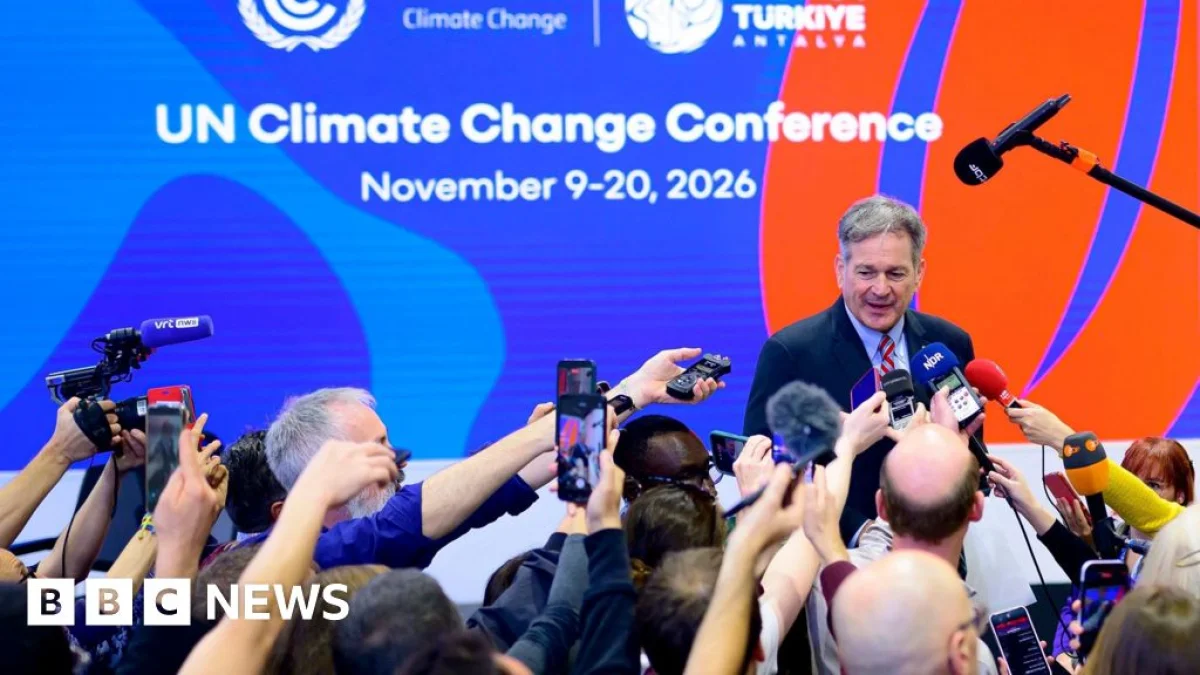
Negotiations at the COP31 UN climate summit in Turkey remained deadlocked after continuing through the night, with countries unable to agree on a new global climate deal, according to the BBC.
In a late intervention on Friday, a group led by France and Panama challenged a draft agreement that made no reference to reducing global demand for fossil fuels. Separately, the Africa Group is seeking commitments to provide more money for adaptation, saying it did not come to the summit “to beg”.
A new agreement, which could be the final one, is expected to be published on Saturday.
Countries push to restore fossil fuel language
Ministers from island states, Panama and several EU countries — including Spain, France, Belgium, Sweden and Finland — said they were pressing for a commitment to move away from oil, gas and coal to be restored to the final text. Fossil fuel producers led by Saudi Arabia had pushed for its removal.
“It is not acceptable to have a COP or a cover decision that does not even mention fossil fuels and we simply will not put up with it,” Panama’s Environment Minister Juan Carlos Navarro said.
France’s Minister of Ecological Transition Monique Barbut echoed his position. She criticised several references in the draft to carbon capture, use and storage — technology that captures emissions when they are released and stores them underground — saying they could give other countries a licence to keep burning oil and gas.
“We cannot be announcing to the world that we are now getting to 1.5 increase in the temperature and do business like nothing was happening,” Barbut said.
For the first time at a COP, the agreement, officially known as the Antalya Accords, acknowledges that the goal of keeping global temperature rise below 1.5C has been missed. The world is entering a period known as “overshoot”. Scientists warn that beyond this point, millions more people will be exposed to sea-level rise and extreme heat.
The BBC understands that several other EU countries were asked to join the pushback but declined, believing it would not help negotiations. One lead negotiator said he sympathised, asking: “How can you have a climate agreement with no mention of the cause.”
Dispute over adaptation funding
Chris Bowen, Australia’s climate change and energy minister, who is leading the negotiations, opposed the push to include the fossil fuel issue. He argued that the summit was about implementation and should focus on the transition to clean energy sources.
One proposal under discussion is to leave fossil fuels off the table in exchange for Saudi Arabia and other petro-states signing a pledge to source 35% of their power from electricity by 2035.
Developing nations have also raised concerns about a lack of funding. Earlier versions of the text included an agreement to increase adaptation finance to $120bn by 2035, but that provision has since been removed.
“We did not come here to beg we came here to claim what is rightfully ours for our people who are suffering the brunt of anthropogenic activities of developed countries,” said Zanetor Agyeman Rawlings, Ghana’s Environment Minister and chair of the African Group of negotiators.