OMM Newsroom

“The Strait of Hormuz will not return to the status quo that existed before the war between the United States and Israel against Iran.”
“Operative Information Center-OMM” reports that Iranian Parliament Speaker and the country’s chief negotiator Mohammad Bagher Ghalibaf made the remarks.
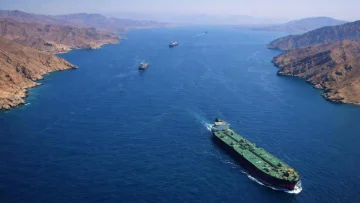
Ghalibaf said Iran and Oman had reached an agreement on joint control of the strategically important waterway.
He said the agreement was part of a seven-point proposal put forward by Tehran to end the conflict, which has continued for eight months.
Ghalibaf claimed that there are no international waters in the Strait of Hormuz and that the 1982 UN Convention on the Law of the Sea does not apply to the strait. In his view, the rules governing the waterway should be determined by the laws of the two coastal states.
The Iranian parliament speaker said Tehran had sent the United States an official response containing seven conditions through Qatar’s mediation and was awaiting Washington’s position:
“The ball is now in the United States’ court,” Ghalibaf stressed.
Iran’s conditions include lifting the US naval blockade and sanctions, unfreezing Iranian assets, ending military operations on all fronts and officially declaring the war over.
Ghalibaf said the demands were part of the Islamabad memorandum of understanding signed in June and that meeting them was a prerequisite for starting talks with the United States.
He added that an agreement was possible if the United States did not make excessive demands and refrained from actions that undermine mutual trust. However, Iran’s distrust of Washington remained one of the main obstacles to negotiations.
According to Ghalibaf, US officials asked Russian President Vladimir Putin during visits to Moscow to mediate the start of direct talks with Tehran.
The Iranian official also warned of the possibility of new US strikes against his country. He claimed such a move would become another defeat for Donald Trump and that members of the new Congress, who will take office in January, would exert political pressure on the president.
Ghalibaf said Iran was determined to move beyond a state of “neither war nor peace” and called for the creation of lasting deterrence mechanisms, including military means.
Addressing the ongoing fighting between government forces and the Houthis in Yemen, Ghalibaf said no one should intervene in the conflict.
“If the Yemeni government and Saudi Arabia ask us for help, we will certainly offer assistance to resolve the conflict,” he said.