 OMM Redaksiyası

Israeli Prime Minister Benjamin Netanyahu has repeatedly said that all hostages taken to Gaza were brought home, but many did not return alive. An investigation by “CNN” examined how 40 people abducted alive on October 7, 2023, were killed or died in captivity, and why some were not released before their deaths.
Hamas-led militants abducted 251 people during the attack, in which more than 1,200 people, mostly civilians, were killed. The hostages’ return took two years of war and three ceasefire agreements. Netanyahu said at the UN General Assembly that Israel had brought back “every last one of them” and made similar remarks at official memorial ceremonies, without usually specifying that some had died.
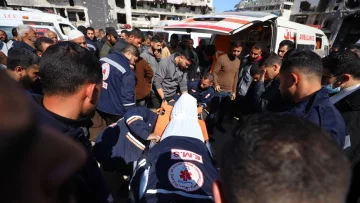
Among the 40 were Youssef and Hamza Ziyadne, a Bedouin father and son who were abducted alive. On May 24, 2024, Israeli forces bombed a tunnel complex in Rafah, targeting Hamas commander Muhammad Shabaneh. Israeli sources said the military believed no hostages were in the area. When ground troops later reached the site, they found the Ziyadnes’ bodies.
According to Israeli military officials and forensic evidence reviewed by families, nearly half of the 40 were killed by their captors. The Israel Defense Forces said four-year-old Ariel Bibas and his nine-month-old brother, Kfir, were killed by their captors’ “bare hands.” A former hostage and autopsy results indicated that 68-year-old Itzhak Elgarat was tortured to death. Hamas did not respond to “CNN”’s request for comment, while Palestinian Islamic Jihad said it “does not kill captives.”
At least 11 hostages were killed directly by Israeli fire or during ground operations. Three young men who had escaped captivity were shot by Israeli troops who mistook them for Palestinian militants; the IDF chief of staff later concluded the shooting should not have happened. A 25-year-old, Sahar Baruch, was killed in a failed rescue operation, while other hostages died in Israeli airstrikes.
“CNN” found that at least 24 of the 40 deaths could be traced to Israeli military actions, including strikes and ground operations that led captors to kill hostages. The IDF said it had no prior knowledge of hostages in cases where they were killed by or near Israeli fire. It said all possible steps had been taken to protect them and described the fighting environment as dense and complex. Any harm caused during combat, the military said, was unintentional and occurred under operational constraints.
Military operations and the risk to hostages
After Israel’s ground offensive began on October 27, 2023, Hamas issued a standing order, according to Israeli military officials: move hostages if Israeli forces approach and kill them if moving them is impossible. Captives were also at risk from strikes and military operations. Eli Sharabi, who later wrote a book about his captivity, said hostages feared a forced rescue attempt could end in their deaths.
Israeli officials said the government initially set goals of dismantling Hamas’s military and governing capabilities. Bringing back the hostages was added about a week after the attack, once the scale of the abductions became clear. Officials said the military expected most captives to return through agreements rather than rescue missions, and believed military pressure could bring Hamas to negotiations. Eight hostages were rescued in IDF operations.
The military created a task force led by Maj. Gen. Nitzan Alon to coordinate intelligence and operations and protect hostages from Israel’s offensive. It used restricted zones, known as “polygons,” around suspected hostage locations. Those areas were adjusted as intelligence changed. Officials said strikes on major targets and rescue operations were sometimes delayed or cancelled over concerns for hostages’ safety, but acknowledged that the system did not prevent every fatal error.
Hostages lost in Khan Younis
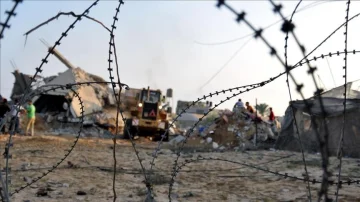
In the first weeks of the war, the IDF believed about 20 hostages were being held in an underground compound in Khan Younis known as “the kingdom.” After a ceasefire collapsed in December 2023, Israeli forces began a major ground offensive in the city and lost track of some of the captives. The military believed they had been moved south, but some had instead been taken to the northern Hamad City neighbourhood.
On February 14, 2024, Israeli aircraft struck a tunnel there, targeting two senior Hamas commanders. The military was unaware that six hostages were inside, an official said. Their bodies were recovered in August. Autopsies found gunshot wounds but could not establish the cause of death. Their captors were also found dead in the tunnel, without wounds. Officials believe toxins from the bombs may have suffocated them, but could not rule out that the hostages died from the gas and were shot afterwards.
Yuval Dancyg, whose father Alex was among the six, said he had warned officers that the Khan Younis offensive could put his father at risk. He told “CNN” that the IDF chief of staff, Lt. Gen. Herzi Halevi, later acknowledged in a private meeting that the military lacked sufficient information before approving the strike and accepted responsibility for the error. Dancyg said Hamas bore primary responsibility, but also argued that his government could have secured the hostages’ release earlier.
Several current and former Israeli officials have said that political decisions delayed negotiations. Nitzan Alon said the war lasted too long and could have ended at least a year earlier, potentially allowing some hostages who died in captivity to return alive. Former senior defence ministry official Dror Shalom said dozens might have returned if negotiations had not been delayed and proposed deals rejected.
Israeli military officials identified the spring and summer of 2024 as the period when delays were most critical. The account is based on interviews with hostage families and Israeli military and government officials.