OMM Redaksiyası

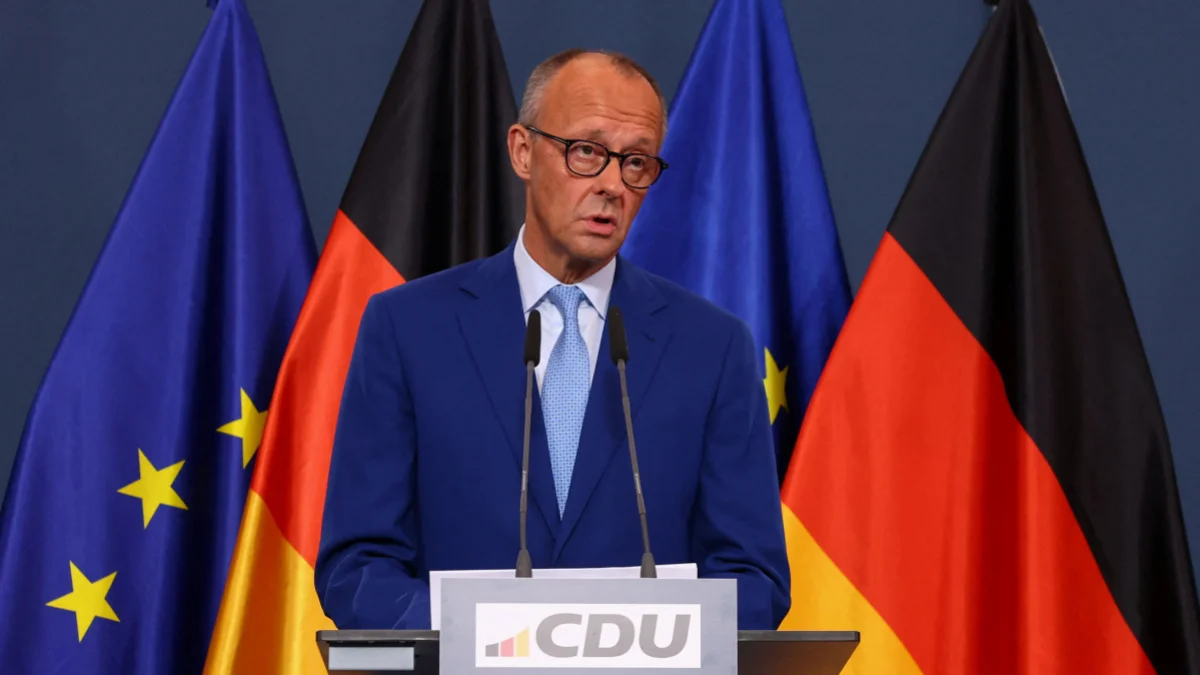
Voters in Germany cast ballots on Sunday in two states. The elections in Mecklenburg-Western Pomerania and the capital Berlin are expected to increase the political pressure facing Chancellor Friedrich Merz.
The vote came just two weeks after the Alternative for Germany (AfD) secured a major success in elections in Saxony-Anhalt. The party’s growing strength in eastern Germany has become one of the main issues on the national political agenda. The country’s major political forces continue to rule out forming coalitions with the AfD.
Public dissatisfaction with Merz government grows
Friedrich Merz came to power promising to revive Germany’s weak economy and implement reforms. However, his government has struggled to win public support. Voters are mainly concerned about rising prices, energy costs and housing.
The state elections are regarded as another test of confidence in Merz’s leadership. Senior figures in his Christian Democratic Union (CDU) continue to support the chancellor despite discontent within the party. Replacing the incumbent chancellor is considered a politically and constitutionally difficult process.
The CDU is expected to perform poorly in Mecklenburg-Western Pomerania. A poll released by Forschungsgruppe Wahlen on September 17 put the party’s support at 6 percent. That figure is close to the 5 percent threshold required to enter the state parliament.
Merz has sought to respond to voters’ concerns. On Friday, he presented a package of measures, including tax cuts on petrol and diesel. Nevertheless, the rising cost of living remains one of voters’ main concerns.
AfD strengthens position in eastern Germany
The AfD has achieved its greatest successes in eastern Germany, where economic discontent and concerns about migration are more pronounced. The party supports tougher measures to deport foreigners who have no right to remain in Germany, restoring energy ties with Russia and abandoning the euro.
The contest intensified during the final weeks of the campaign in Mecklenburg-Western Pomerania. According to a poll published on September 17, the center-left Social Democratic Party (SPD) narrowly led the AfD with 37 percent support. The AfD stood at 36 percent, the Left Party at 9 percent and the Greens at 5 percent.
State Premier Manuela Schwesig was the central figure in the SPD campaign. Her personal popularity is said to have helped the party maintain its position against the AfD. Schwesig called the AfD a dangerous party at the campaign’s final rally.
AfD co-chair Alice Weidel targeted Merz in her speech. She said political pressure on the chancellor would increase after the elections.
Fragmented parliament expected in Berlin election
The political landscape is different in the capital Berlin. The Left Party and the CDU are in a close race for first place. In the latest poll, the Left Party had 22 percent support, followed by the CDU with 20 percent, the AfD with 18 percent, the Greens with 15 percent and the SPD with 12 percent.
The figures point to the possible formation of a fragmented state parliament and difficult coalition negotiations. Support for the AfD in Berlin has risen significantly compared with previous state elections. According to Forschungsgruppe Wahlen, the party won 9.1 percent of the vote in 2023, while its support stood at 18 percent in the latest poll.
State elections do not usually determine the political fate of a German chancellor. However, the AfD’s rapid rise and growing dissatisfaction with Merz’s government have made these votes more significant at the national level.
The AfD’s strong result in Saxony-Anhalt earlier this month was viewed as a warning to Germany’s major political parties. While Sunday’s elections will not determine who leads the country, they may provide fresh indications of voters’ views of the Merz government, the state of the economy and the AfD’s growing influence.