OMM Redaksiyası

The United States imposed sanctions on 27 Iranian airlines on Sept. 8. The list included several carriers operating flights between Iran and Georgia.
Georgia’s Civil Aviation Agency said it would comply with the restrictions, in line with its approach to previous Western sanctions.
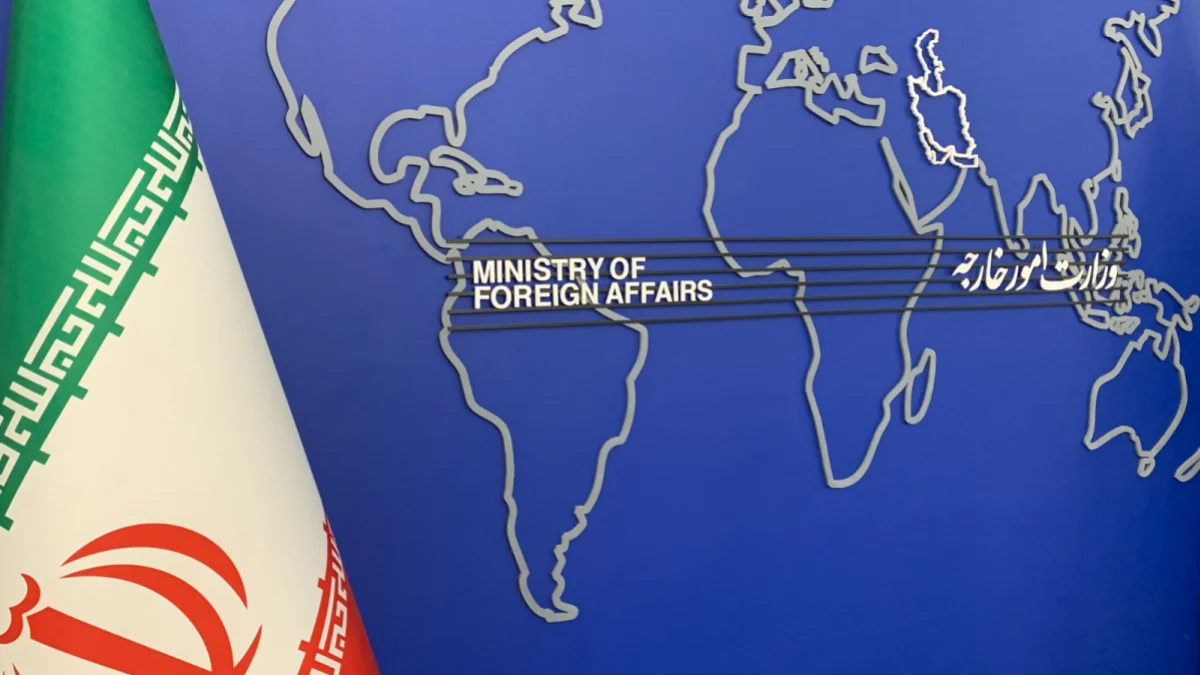
The decision prompted a reaction from Iran’s ambassador to Georgia, Seyed Ali Mojani. The diplomat said Iran “respected” Georgia’s right to make such a choice, but added that Tehran was also free to adopt its own response measures.
Mojani said Iranian tourism operators had already contacted the embassy about the future of tourist trips to Georgia. He noted that Georgia, particularly its Black Sea coast, had become a major destination for Iranian tourists and said travelers could choose other destinations if flights became more difficult.
Georgian Prime Minister Irakli Kobakhidze said disagreements should not be handled through public statements. He said that if Georgia had a message for the Iranian ambassador, it would be delivered directly rather than through an open discussion.
Kobakhidze did not retreat from his position on the substance of the dispute. The prime minister said Georgia complies with existing international sanctions regimes and does not allow them to be circumvented.
Washington steps up scrutiny of Georgia
Although the dispute over the airlines is relatively limited, it comes against a broader backdrop of deteriorating relations between Tbilisi and its Western partners.
One of the clearest signs of growing attention in the US Congress to Georgia’s ties with Iran, Russia and China is the bipartisan “MEGOBARI Act,” a bill aimed at countering the influence of the Chinese Communist Party, the Iranian government and the Russian Federation in the country.
The bill passed the US House of Representatives by a wide margin. It states that Georgia’s current government has adopted an increasingly hard-line position toward independent civil society and traditional Euro-Atlantic partners, while strengthening ties with Russia, China and other authoritarian states.
One proposed measure is the suspension of the US-Georgia Strategic Partnership Commission until Tbilisi demonstrates that it genuinely represents the democratic will of its citizens and is seeking membership in the European Union and NATO.
In June, the US House also adopted a separate measure requiring the administration to prepare a detailed report on Russian and Chinese intelligence activities in Georgia. The move followed the announcement that China and Georgia had elevated their relations to a comprehensive strategic partnership.
Kulevi issue adds to pressure
Georgia’s compliance with sanctions against Iranian airlines carries greater significance amid a separate sanctions dispute surrounding the Black Sea port of Kulevi.
Kulevi is home to an oil terminal owned by Azerbaijan’s state energy company SOCAR and a recently built refinery. Researchers and monitoring groups have raised questions about activities linked to both facilities.
The tanker “Kayseri” sailed from Russia’s Novorossiysk port and unloaded more than 100,000 tons of Russian crude oil at Kulevi. Just three weeks after the delivery, the tanker was added to the European Union’s sanctions list as part of measures targeting Russia’s suspected “shadow fleet.”
The European Union came close to imposing direct sanctions on Kulevi as part of its 20th sanctions package amid allegations that vessels using non-standard and high-risk methods were transporting Russian-origin crude oil.
Georgia avoided the measure after the government and the port operator pledged to prevent sanctioned vessels from using the facility.
Energy researchers have said the Kulevi refinery exploits a loophole by importing crude only from Russia and then selling refined products to European Union and US markets. In their view, this practice could breach EU rules banning imports of Russian-origin oil products after January 2026.
Georgian officials, including Kobakhidze, have repeatedly denied any wrongdoing and stressed that the terminal is not being used to circumvent Western sanctions.
Why compliance with sanctions matters
The issues involving Iranian airlines and Kulevi help explain the broader significance of Georgia’s latest decision. Against the backdrop of months of investigations into Kulevi and US congressional initiatives targeting Tbilisi’s relations with Moscow, Beijing and Tehran, Georgia is seeking to demonstrate clearer compliance with sanctions.
Applying restrictions against sanctioned Iranian carriers gives Tbilisi an opportunity to show that, despite questions surrounding Kulevi, it does not intend to evade sanctions in other areas.
Mojani, meanwhile, portrayed any possible Iranian response as an independent decision rather than a confrontation. He said Iranian tourists and traders could choose other Black Sea destinations if travel to Georgia became more difficult.
It remains unclear whether these changes will occur on a significant scale. Georgia has become an established tourism destination for Iranian visitors in recent years.
The restrictions on Iranian airlines are currently only one part of the larger challenge facing Georgia. Tbilisi is under growing pressure from the US Congress, which believes the country is moving closer to Moscow, Beijing and Tehran, while the Georgian government says it respects international sanctions.