OMM Newsroom

Georgia and Russia have resumed direct official talks. Senior diplomats met in Minsk, the capital of Belarus, on November 19 to discuss trade, economic cooperation and regional security, AnewZ reported.
The meeting took place while diplomatic relations between Tbilisi and Moscow remain severed and Russia maintains a military presence in Abkhazia and South Ossetia. The contact has also raised questions about Georgia’s approach to relations with Russia.
Talks address economic ties and security
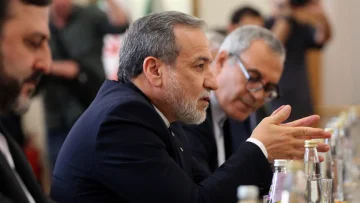
Giorgi Zurabashvili, Georgia’s first deputy foreign minister and the prime minister’s special representative for relations with Russia, met Russian Deputy Foreign Minister Mikhail Galuzin in the Belarusian capital. Moscow described the meeting as part of the renewal of direct Russia-Georgia dialogue.
According to the Georgian government administration, the sides discussed economic ties, cultural and humanitarian cooperation, as well as regional security. They reviewed existing challenges and reached several practical agreements, but their details were not made public.
The delegations agreed to continue contacts. Georgia stressed that the Geneva International Discussions remain the main platform for addressing unresolved security and humanitarian issues.
Russia’s Foreign Ministry also confirmed the meeting, thanked Belarus for helping organize the talks and said it intended to continue bilateral contacts.
Minsk venue draws criticism in Georgia
Some Georgian diplomats and opposition figures criticized the decision to hold the talks in Minsk rather than Prague. Previous meetings under the informal Russia-Georgia dialogue had traditionally taken place in the Czech capital. The choice of Belarus, one of Russia’s closest political and military allies, prompted questions about whether Tbilisi’s approach to relations with Moscow was changing.
The Georgian Diplomatic Society warned that direct talks held without international participation could weaken Tbilisi’s position and questioned the institutional status of the renewed dialogue. Opposition politicians also voiced concern that political ties could draw closer without progress on territorial disputes.
The Georgian government considers direct dialogue important for resolving practical issues and says the Geneva International Discussions remain the main platform for conflict-related matters.
The Minsk meeting took place less than a month after Prime Minister Irakli Kobakhidze appointed Giorgi Zurabashvili as special representative for relations with Russia on October 21. The post had been vacant since December 2025. Unlike his predecessor, Zurabashvili also serves as first deputy foreign minister, bringing the special representative role into Georgia’s senior diplomatic leadership.
Established in 2012, the post formed part of the informal Abashidze-Karasin dialogue, intended to maintain practical cooperation on trade, economic ties, cultural exchanges and humanitarian issues in the absence of formal diplomatic relations. The appointment of a serving senior diplomat has prompted questions among former Georgian officials about whether the format’s mandate and political significance have changed.
When announcing the appointment, Kobakhidze set out three priorities: a peaceful resolution of the conflict with Russia, developing existing economic ties and continuing humanitarian dialogue.
Georgia and Russia severed diplomatic relations after the August 2008 war. Moscow later recognized Abkhazia and South Ossetia as independent states. Georgia and much of the international community have rejected that decision.
Russian forces are stationed in both regions, which Tbilisi considers occupied territories of Georgia. The Geneva International Discussions, established after the war, remain the main international platform for addressing its consequences. The European Union, the United Nations and the Organization for Security and Co-operation in Europe co-chair the process, with the United States also participating.
Representatives of Georgia, Russia, Abkhazia and South Ossetia take part in discussions on security, humanitarian issues, displacement and measures to prevent further escalation. Tbilisi emphasizes the Geneva process’s central role in resolving disputes, while saying the Minsk talks are focused on practical bilateral cooperation.
The November 19 meeting reopened a channel for direct official contact, and both governments expressed readiness to continue talks. However, the agreements reached in Minsk have not been disclosed. Diplomatic relations remain severed, territorial disputes continue, and Russian forces remain stationed in Abkhazia and South Ossetia.