OMM Redaksiyası

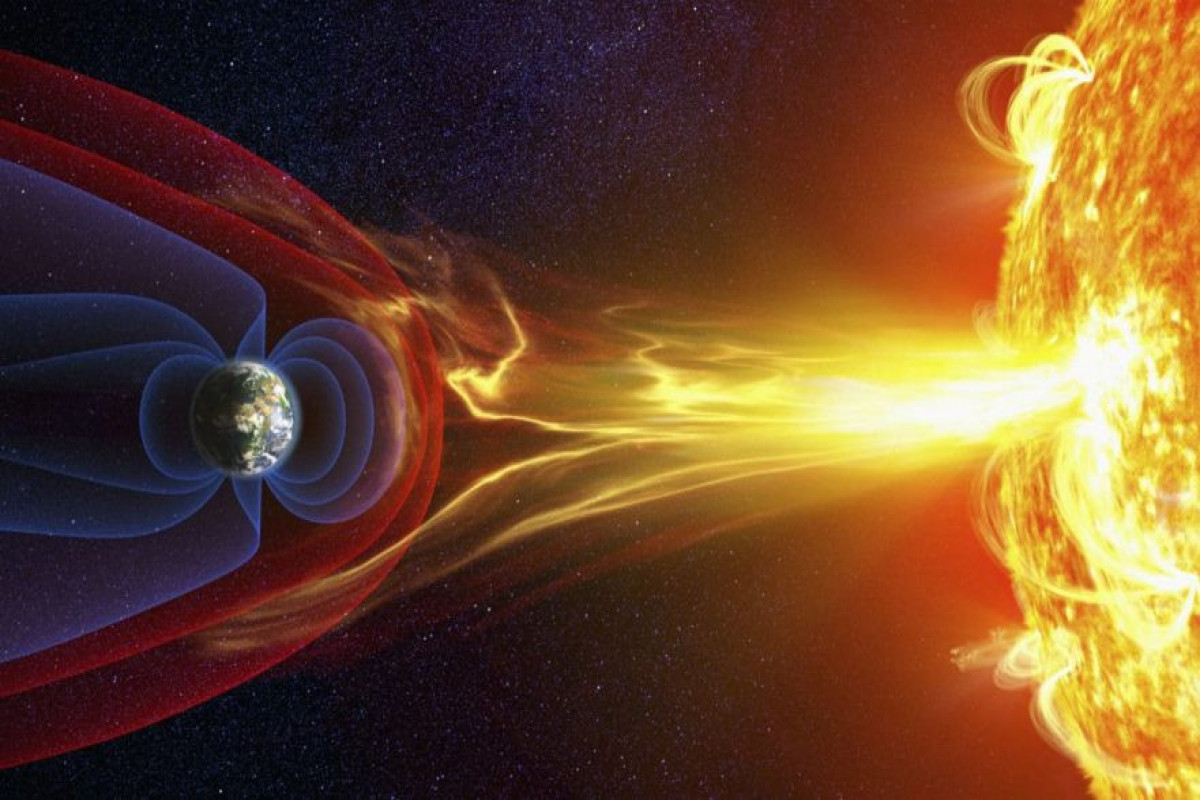
A mass of plasma travelling toward Earth after a powerful solar eruption could trigger a geomagnetic storm.
“Operative Information Center-OMM” reports that the U.S. National Oceanic and Atmospheric Administration’s (NOAA) Space Weather Prediction Center has forecast a G1 to G2 geomagnetic storm, ranging from minor to moderate, for Oct. 9.
The cause is a coronal mass ejection associated with an M1.4-class solar flare that occurred on Oct. 6.
The effects of the solar activity on Earth could continue through the weekend, according to the report.
When will the magnetic storm begin?
A powerful eruption occurred on the Sun’s surface on Oct. 6, according to the report. It sent a large cloud of plasma—a coronal mass ejection (CME)—into space, and observations indicate that it is moving toward Earth.
NOAA forecasts that geomagnetic activity will intensify mainly on Oct. 9. Its outlook gives a chance of G1- and G2-level storm conditions that day.
Experts say it is difficult to determine the CME’s arrival time precisely in advance, and forecasts may change as new observations become available. Current models predict that the plasma stream will reach Earth on Oct. 9.
Possible effects on power and communications systems
Geomagnetic storms cause changes in Earth’s magnetic field. During G1-G2 events, fluctuations in power grids, changes in satellite operations and disruptions to high-frequency radio communications may occur, particularly at high latitudes.
According to NOAA, the main impact zone during a G2 storm is above 55 degrees geomagnetic latitude. Possible effects include voltage fluctuations in power systems, disruptions to satellite orientation and weaker high-frequency radio communications.
Increased geomagnetic activity may also make it possible to see the aurora at lower-than-usual latitudes. Where it can be seen depends on the storm’s strength and the direction of the magnetic field carried from the Sun.
Does it affect the human body?
A report by Sözcü says geomagnetic storms have been linked in some people to headaches, migraines, fatigue, dizziness and sleep disturbances.
However, an important point is that there is no conclusive scientific evidence that geomagnetic storms directly cause these symptoms in healthy people.
The best-documented effects of geomagnetic storms involve technological systems, including satellites, radio communications, navigation and, in some cases, power grids. It would therefore be inaccurate to present the approaching event as a direct threat to human health.
Solar activity is increasing
The current event comes amid a period of increased solar activity. According to NOAA, a CME directed toward Earth was observed after the M1.4-class flare on Oct. 6, and it is expected to cause a geomagnetic storm on Oct. 9.
NOAA also says the likelihood of additional M-class flares from active regions on the Sun is elevated. This means space weather conditions could change again in the coming days.
Based on the current forecast, Oct. 9 is the main date to watch. The storm’s actual strength will become clearer after the plasma cloud reaches Earth.