 OMM Redaksiyası

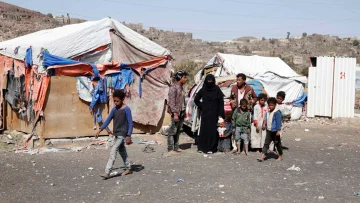
For many families in Gaza, collecting enough water has become a daily struggle. People carry buckets, wait for water trucks and ration what they have for drinking, cooking, bathing and washing.
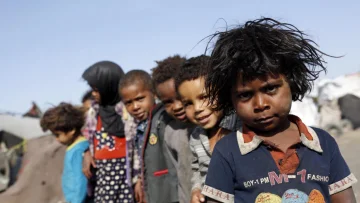
Children are also helping their families obtain water, sometimes spending hours on the task instead of attending school. “Before the war, we did not have this struggle,” displaced Palestinian Hanadi Al Aff told the International Committee of the Red Cross in June.
Al Aff, who lives with her five children opposite a rehabilitated desalination plant in Gaza City, said the family had to reserve water for drinking, cooking and bathing the children. Any surplus was used for dishes and laundry.
Three years after Israel began its war in Gaza in October 2023, the territory’s water, sanitation and electricity systems remain severely damaged. Millions of Palestinians rely on emergency measures and infrastructure operating well below its former capacity, according to figures cited by the United Nations and humanitarian organizations.
Water networks and sanitation remain under strain
A survey cited by the UN Office for the Coordination of Humanitarian Affairs (OCHA) in September found that 91% of households experienced moderate-to-high water insecurity. Water access for 31% of households was below minimum humanitarian standards, while 57% fell short of minimum standards for drinking water.
Some 88% of households reported difficulty accessing safe and clean sanitation facilities. A separate UN-cited report in September said 88% of above-ground water, sanitation and hygiene assets and 76% of underground networks had been damaged.
The International Committee of the Red Cross said in June that water production had fallen to about 40% of pre-October 2023 levels. Independent water production from wells was less than one-third of its pre-war level.
Supplies remain vulnerable to further disruption. A UN humanitarian situation report in late September said three water lines operated by “Mekorot” from Israel delivered about 40% less than contracted quantities during the reporting period, after marine algae affected desalination plants in Israel.
In Deir al-Balah, the Al Basa Desalination Plant was running below capacity because of a brine-pumping failure and heavy reliance on generators. Humanitarian partners were working to increase groundwater production from wells to partly offset the shortfall.
A water well and desalination facility supported by “UNICEF” in Deir al-Balah was severely damaged by a strike in August, disrupting access to safe drinking water for more than 4,000 people, including about 2,000 children.
Power shortages affect water safety and public health
Wells, desalination facilities and sewage pumping stations all need electricity. Yet UN figures for September indicated that 90% of Gaza’s energy infrastructure, including the electricity distribution network and related assets, had been destroyed.
With the electricity system largely unavailable, generators are essential to keep remaining water and sanitation facilities running, but they require fuel. The Red Cross said Gaza had gone more than two-and-a-half years without a regular electricity supply.
Officials cited by the Alliance for Water Justice in Palestine in June estimated that restoring the electricity system could take three to five years, even if reconstruction materials were allowed to enter immediately. The work would require thousands of utility poles, hundreds of kilometres of cables, transformers, heavy equipment and specialized machinery.
Water quality is also a concern. Health partners collected 938 samples across Gaza in August and tested them at the seven water-quality monitoring laboratories still functioning, despite severe operational constraints. More than 73% of samples failed to meet World Health Organization-recommended levels for free residual chlorine, while 18% showed microbiological contamination.
Reinhilde Van De Weerdt, the WHO representative in Palestine, said at a September briefing that more than 6,700 samples had been tested between January and August. Microbiological contamination had nearly tripled, rising from below 6% in January to above 18% in August, while cases of acute watery diarrhoea nearly doubled.
Sanitation problems compound the risks. Among assessed households, 39% reported solid waste accumulating around their shelters and 36% said sewage or sludge was present near where they lived.
Audits of about 230 displacement sites hosting at least 187,400 people reportedly found unsafe latrines, open pits, wastewater hazards and poor drainage in low-lying areas, as well as inadequate lighting and overcrowding. Humanitarian agencies have warned that damaged sewage and stormwater drainage systems could increase flooding and disease risks during the rainy season.
According to a “Doctors Without Borders” (MSF) survey, almost one in four people interviewed between May and August 2025 had experienced diarrhoea in the previous month. Skin diseases accounted for nearly 18% of MSF primary healthcare consultations in 2025, while poor water and sanitation conditions also contributed to the spread of scabies and lice.
MSF said its mental health professionals had observed high levels of distress linked to difficulties obtaining water and hygiene supplies, with children carrying heavy responsibilities. The organization said the inability to maintain hygiene had undermined people’s sense of dignity.
In April, MSF accused Israeli authorities of using access to water as a weapon against Palestinians and described the denial of water as part of a systematic pattern. The organization said attacks on infrastructure, restrictions on humanitarian access and the blocking or delay of essential supplies were among the ways access to water, sanitation and hygiene had been restricted.
MSF said it had documented incidents involving the shooting at or destruction of its clearly identified water trucks and boreholes. It also said that since January 1, 2026, all its requests to bring supplies through a dedicated system requiring Israeli approval had been denied.
Some water infrastructure has been repaired, and humanitarian partners continue to use alternative sources. However, restrictions on equipment, generators, spare parts, chlorine and other supplies, as well as fuel shortages, continue to threaten the operation of remaining systems.
“UNICEF” says water, sanitation and hygiene account for 19.4% of its $746.8 million humanitarian funding requirement for the occupied Palestinian territory.
For families facing the crisis, recovery means access to safe drinking water, functioning sanitation and reliable electricity. It would also allow children to put down water buckets and return to their studies.