OMM Newsroom

The European Commission has proposed a loan of up to 45 billion euros ($49 billion) to keep Ukraine’s economy functioning and support its armed forces through the end of 2027. Brussels plans to borrow on Kyiv’s behalf and cover part of Ukraine’s projected $76 billion budget gap for 2027, AnewZ reports.
The proposal comes less than a year after EU leaders agreed on a $98 billion loan for 2026 and 2027. European Commission President Ursula von der Leyen presented the plan on November 18, saying: “Europe will continue maximum support for Ukraine and maximum pressure on Russia.” She added that this was “the best way to give Ukraine a strong position at the negotiating table.”
Loan allocation and repayment terms
The European Commission has proposed creating a new Ukraine Coordinated Support Instrument to provide up to $49 billion in loans for 2027. Up to $27 billion would go toward military aid to help Ukraine defend itself, while up to $22 billion would provide general budget support to keep public services, schools and hospitals operating.
Budget support would depend on Ukraine meeting EU reform benchmarks, including those related to the rule of law and combating corruption. The Commission estimates that Ukraine will face a financing gap of about $76 billion in 2027. The new loan is intended to cover roughly two-thirds of that amount, with international partners expected to provide the rest.
Intensifying Russian attacks on energy and civilian infrastructure, along with disruption to trade in the Black Sea, are placing growing pressure on Ukraine’s finances. Contributions from countries outside the EU have also fallen short of expectations.
The European Union would raise the funds by borrowing on capital markets, with the “headroom” in the EU budget serving as a guarantee. The Commission said this mechanism has underpinned EU assistance to Ukraine since 2023. To provide the guarantee, the Commission has also proposed changes to the rules governing the EU’s Multiannual Financial Framework.
The Commission describes the loan as having limited repayment obligations: Ukraine would repay the principal only after receiving war reparations from Russia. Windfall proceeds generated by frozen Russian Central Bank assets could help repay the new loan and the previous $98 billion loan once existing G7-backed loans have been paid off.
The Commission also said it reserves the right to use the frozen assets themselves to repay the loans, in line with EU and international law. About $233 billion of those assets are held at Belgium-based clearing house Euroclear, according to the Associated Press. Belgium has vetoed the direct use of the assets to lend to Ukraine.
Previous loan and obstacles to the plan
The new plan builds on the $98 billion Ukraine Support Loan agreed by EU leaders in December 2025 to meet Ukraine’s needs in 2026 and 2027. It was a compromise reached after member states failed to agree on directly using frozen Russian assets. A European Parliament briefing said $65 billion of the loan was intended for defense and $32 billion for budget support. The Czech Republic, Hungary and Slovakia did not take part in the initiative.
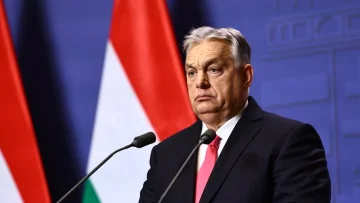
The loan was delayed for months, according to the Atlantic Council. Hungarian Prime Minister Viktor Orban blocked progress, accusing Kyiv of halting Russian oil supplies after an attack on the Druzhba pipeline. The deadlock ended after the pipeline resumed operations and Orban lost Hungary’s parliamentary elections.
The EU gave final approval to the loan on April 23, alongside a new package of sanctions against Russia. The Commission said it would disburse the remaining $49 billion of that loan in 2027, subject to compliance with reform and policy conditions.
The Commission’s plan also includes measures to encourage contributions from partner countries. These include up to $5.5 billion in additional EU lending through the existing Ukraine Facility, backed by guarantees from countries with AAA credit ratings. The EU and its member states have provided Ukraine and Ukrainians with about $260 billion in support since the start of the full-scale war, the Commission said.
The main obstacle to the plan is political agreement: all 27 member states must support it, while Hungary, Slovakia, the Czech Republic and Bulgaria have said they could block the process, according to Euronews. A European Parliament briefing on the previous loan says it could be approved by a qualified majority of countries willing to participate under “enhanced cooperation.” But changes to EU budget rules to provide a guarantee require unanimity, giving each government the ability to veto them.
Some governments are also refusing to contribute to military aid. Von der Leyen said those countries could direct their share of the commitment toward the loan’s civilian component. German Chancellor Friedrich Merz has said he could delay agreement on the EU’s next long-term budget unless all member states undertake a “collective commitment” to Ukraine.
The European Parliament and EU governments must review and approve the proposals. EU leaders will discuss both the loan and the long-term budget at a two-day summit in Brussels next week. EU Commissioner Valdis Dombrovskis said: “Support for Ukraine is an investment in Europe’s security and future.”