OMM Redaksiyası

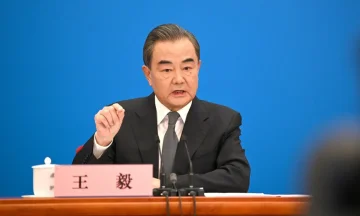
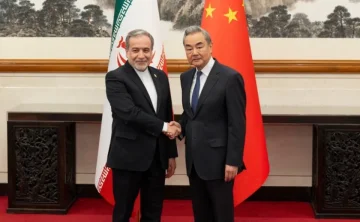
Chinese Foreign Minister Wang Yi has departed on a visit to Azerbaijan, Croatia, Montenegro and Bulgaria. The six-day trip is seen as part of Beijing’s efforts to expand its ties and trade routes in some of Europe’s less prominent regions.
During the visit, which runs from October 14 to 20, Wang will attend the 7th Summit of the Conference on Interaction and Confidence-Building Measures in Asia in Baku as a special representative of Chinese President Xi Jinping. He will then hold bilateral meetings with foreign ministers and senior officials from Balkan countries.
The Middle Corridor is in Beijing’s focus
The itinerary and timing of the visit are strategically significant for China. Each of the four countries lies on or near trade and transport corridors in which Beijing has invested in recent years.
One of the key routes is the Middle Corridor. It links China and Europe via Kazakhstan, the Caspian Sea, Azerbaijan and Georgia, and continues through Türkiye or across the Black Sea. According to the source, it is the shortest overland route between the two regions: cargo takes about two to three weeks to arrive, while shipping by sea can take up to six weeks.
The corridor’s importance is not limited to transit times. By providing an alternative route that does not depend on Russia or Iran, it offers flexibility against geopolitical risks to supply chains.
China joined the Middle Corridor last year as part of its strategy to diversify trade routes. The Port of Baku, on the western shore of the Caspian Sea, is a key logistics hub along the route. Wang is visiting Azerbaijan for the first time in seven years.
Ties with Balkan countries also on the agenda
Croatia and Bulgaria’s membership in the European Union gives China an opportunity to engage with them through bilateral channels at a time of strained relations with the bloc.
Montenegro, which is not an EU member, is a candidate country. Located on the Adriatic coast, it holds a significant position for transport links extending from the Black Sea to Western Europe.
Wang will be the first Chinese foreign minister to visit Montenegro since the country gained independence 20 years ago. The two countries are also marking the 20th anniversary of the establishment of diplomatic relations this year. Beijing has highlighted the jointly implemented North-South highway as a major project.
Wang visited Bulgaria in 2015 as foreign minister. This will be his first visit to the country in more than a decade.
Analysts link China’s growing interest in the Middle Corridor not only to logistics but also to managing geopolitical risks. In their view, Beijing is turning transit countries into key connecting hubs and giving supply-chain resilience as much weight as cost efficiency.
Beyond individual meetings, Wang’s itinerary reflects China’s strategy of gradually deepening ties across Eurasia and building partnerships in areas less affected by growing disputes in U.S.-China and EU-China relations.