OMM Redaksiyası

On the sidelines of the summit of the Conference on Interaction and Confidence Building Measures in Asia (CICA), leaders arriving in Baku were brought together not only by trade and regional policy, but also by the threat posed by mines and unexploded ordnance.
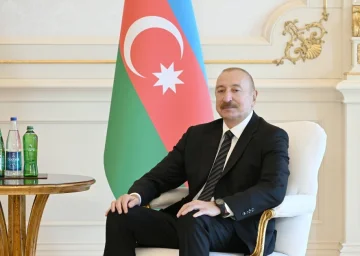
Cambodian Prime Minister Hun Manet and Lao President Thongloun Sisoulith met with Azerbaijani President Ilham Aliyev before the summit. Their discussions included efforts to tackle the mine threat. Although the countries have different histories of conflict, all three are working to make contaminated areas safe.
The scale of the mine threat in Laos and Cambodia
Laos is one of the countries most affected by unexploded ordnance. According to the Landmine and Cluster Munition Monitor, more than two million tonnes of bombs were dropped on the country during the Vietnam War, from 1964 to 1973. These included more than 270 million cluster-munition submunitions.
Despite clearance work continuing for decades, about 1,500 square kilometres of land was still considered hazardous at the end of 2024. That year, 75 square kilometres were cleared. Lao officials say the work will need to continue beyond the current 2030 target.
In Cambodia, the problem of mines and explosive remnants dates back to conflicts that lasted from 1970 to 1998. The Associated Press estimates that four to six million mines and other explosive remnants of war were scattered across the country. Since the fighting ended, mines and other explosives have killed about 20,000 people and injured 45,000.
Although the threat persists, Cambodia has built internationally recognized expertise in humanitarian mine clearance. The country now provides specialists and technical knowledge to support clearance operations abroad.
Mine clearance is a priority for Azerbaijan’s reconstruction
For Azerbaijan, the mine threat is a more recent problem, and clearance work in the Garabagh region has become one of the country’s key reconstruction priorities.
President Ilham Aliyev has said that since 2020, mines have killed or injured 437 people, including 73 fatalities. Azerbaijani officials estimate that more than 13% of the country’s territory is contaminated by mines or unexploded ordnance.
The bilateral discussions between the leaders of Azerbaijan, Laos and Cambodia in Baku showed that countries facing different security conditions encounter similar technical and humanitarian challenges in mine clearance.
For mine-action specialists, the main challenge is not only to neutralize explosives, but also to accurately identify where they are located. Surveying contaminated land is among the most important and costly stages of the process. It helps prevent resources from being directed to areas that do not pose a threat.
Azerbaijan’s mine-action agency, ANAMA, signed a memorandum of understanding with the ASEAN Regional Mine Action Center (ARMAC), based in Phnom Penh, in September. The two organizations have also worked with Lao officials as part of efforts to exchange experience and best practices.
International mine-clearance organizations are also involved. The humanitarian organization APOPO previously sent a Cambodian team to Azerbaijan for a mine-detection and clearance project. Its training centers in Cambodia support operations around the world.
No separate mine-clearance agreement was signed during the Cambodian delegation’s visit to Baku. The documents signed between the two countries covered economic cooperation, taxation and education.
However, statements by both sides point to growing interest in practical cooperation on mine clearance. Aliyev spoke of exchanging “experience, knowledge and training.” Azerbaijani officials have repeatedly highlighted their experience in coordinating mine clearance with reconstruction and resettlement work.
A possible outcome of the meetings may be expanded cooperation through training programs, study visits, institutional exchanges and technology-sharing, rather than a new large-scale initiative.
Funding remains a major obstacle for all three countries. Azerbaijan says it finances much of its clearance work from national resources while also seeking access to specialized equipment and modern technologies. Cambodia’s mine-action sector depends on international donors, while Laos relies significantly on foreign assistance.
Humanitarian organizations warn that when funding is uncertain, the pace of work can slow considerably, even when technical expertise and experience are available.
The discussions in Baku highlighted a common reality: although the countries have different histories of war, removing the explosive legacy of conflict poses similar challenges for all three.