OMM Newsroom
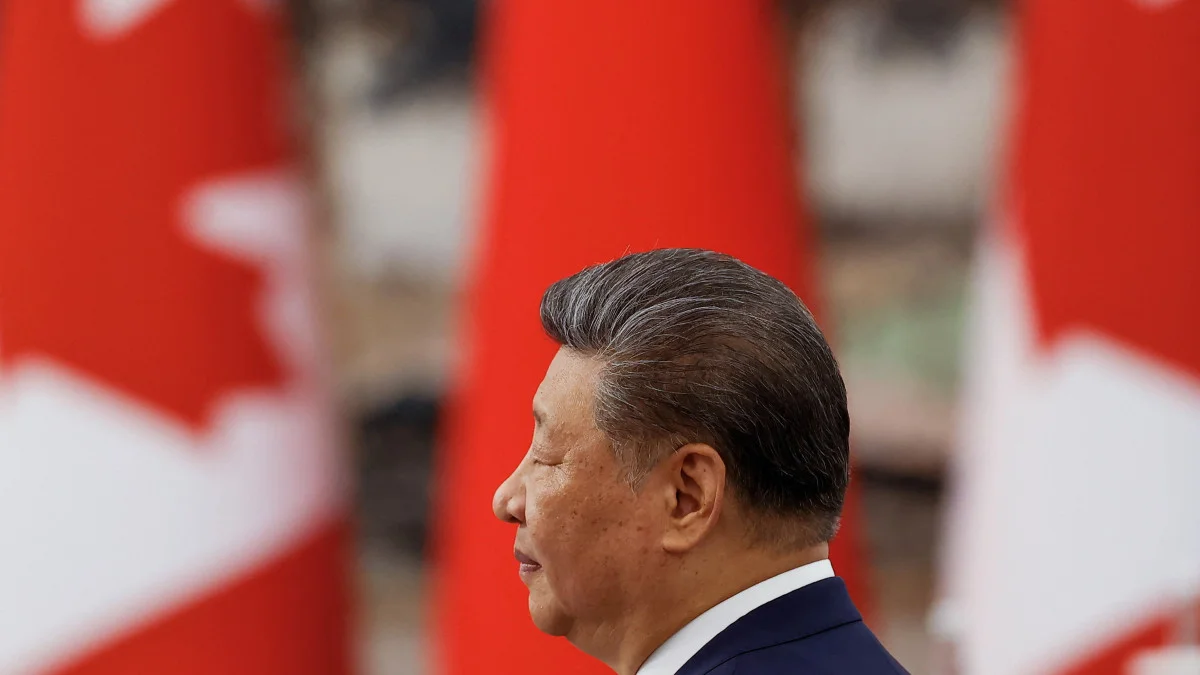
China will cut tariffs on Canadian goods, including pork and seafood, following a meeting between Chinese leader Xi Jinping and Canadian Prime Minister Mark Carney.
The leaders met on Nov. 17 in Shenzhen, southern China, ahead of the Asia-Pacific Economic Cooperation (APEC) summit, AnewZ reported. It was their third meeting since Carney took office.
Carney’s office said the additional concessions will cover about $280 million in Canadian exports, including frozen pork cuts, fish and seafood. In return, Canada will extend tariff relief on some Chinese steel and aluminum products, which was due to expire at the end of 2026.
Carney welcomed “greater predictability and stability” in relations. He said Canada was well ahead of schedule in pursuing its goal of increasing exports to China by 50% by 2030.
Relations between the two countries deteriorated sharply in late 2018 after Meng Wanzhou, Huawei’s chief financial officer, was arrested in Vancouver at the request of the United States for extradition. Beijing later detained Canadian citizens Michael Kovrig and Michael Spavor on suspicion of espionage.
In September 2021, the U.S. Department of Justice withdrew its extradition request for Meng. She returned to China, while Kovrig and Spavor were released and returned to Canada.
In March 2025, China imposed 100% tariffs on Canadian canola oil and peas, and 25% tariffs on pork and seafood. Beijing said the measures were in response to Canada’s 100% tariffs on Chinese electric vehicles.
Carney and Xi held their first formal talks since 2017 in South Korea in October 2025. Carney met Xi again in Beijing in January. Ottawa subsequently agreed to reduce over five years the 100% tariff it had imposed on tens of thousands of Chinese electric vehicles. Beijing, in turn, cut tariffs on Canadian canola seed and meal.
Calculations based on data from the London Stock Exchange Group show that shipments of Canadian crude oil to China have risen by about 37% this year. Since becoming prime minister, Carney has sought to reduce Canada’s heavy economic dependence on the United States, which imposes high tariffs on many Canadian goods.
Xi Jinping’s proposals for cooperation
Xi said contacts and cooperation in various fields had been fully restored since the two countries agreed in January to advance their China-Canada strategic partnership.
According to the official Xinhua news agency, Xi put forward four proposals to develop bilateral ties. They include deepening cooperation in trade, energy, agriculture and finance, as well as expanding cooperation in the green economy, digital sector and e-commerce.
“Stronger communication and cooperation between China and Canada will benefit not only our two countries, but also the Asia-Pacific region and the whole world,” Xi told Carney in Shenzhen.
Security analysts and human rights organizations have warned that closer ties with Beijing could undermine Canada’s security and values.
Critics cite the arrest in Hong Kong of pro-democracy media entrepreneur Jimmy Lai, China’s secret execution of four Canadian citizens last year, and Canadian intelligence findings that Beijing interfered in at least two federal elections. China has said it has no intention of interfering in Canada’s domestic affairs.