OMM Newsroom

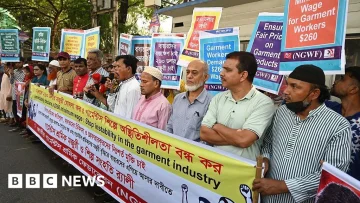
Garment workers in Bangladesh have secured a 36% increase in the minimum monthly wage after weeks of protests. The demonstrations led to factory closures and blocked highways, disrupting global fashion supply chains.
The government-appointed wage board approved the increase on Nov. 25 after negotiations lasting about 12 hours, AnewZ reported. The minimum monthly wage has risen from 12,500 taka ($100) to 17,000 taka ($137).
Despite the concession, the increase falls short of workers’ revised demand and is the smallest percentage rise recorded in more than a decade.
Workers demanded higher wages
Rising food, housing and transport costs have added to the financial burden on garment workers. They initially demanded a minimum monthly wage of 32,000 taka ($257), then lowered their demand to 18,000 taka ($145).
Factory owners, meanwhile, raised their initial offer from 15,000 taka ($121) to 17,000 taka ($137). Under the approved wage scale, workers’ monthly pay will range from 17,000 taka to 21,500 taka ($137-$173), depending on their grade.
Protests hit production and orders
Bangladesh is the world’s second-largest garment exporter after China. The industry employs more than 4 million people and accounts for over 80% of the country’s export earnings. Factories supply major retailers around the world, including H&M, Zara, Walmart, Target and Gap.
According to the Bangladesh Garment Manufacturers and Exporters Association (BGMEA), an 18-day disruption cost 317 factories about $428 million in lost production. International buyers redirected orders worth $254 million to other countries.
Factory owners say higher wages could undermine Bangladesh’s competitive advantage amid rising production costs and weak global demand. Labor rights groups, however, stress that better pay is vital to protecting workers’ living standards and ensuring the industry’s long-term stability.
The latest increase is well below the 56% rise in 2023, 51% in 2018 and 77% in 2013. The new wage structure will take effect on Dec. 1, with workers receiving their revised pay from January.