 Afət Ziyadqızı

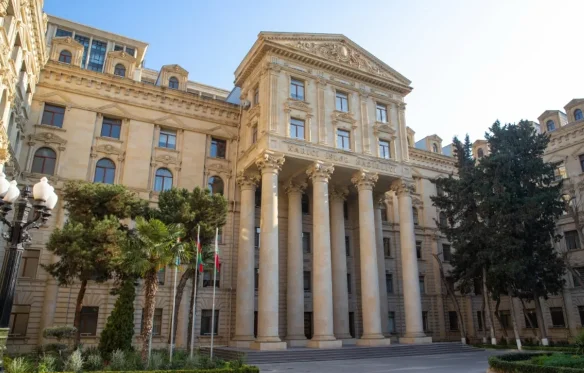
The Ambassador Extraordinary and Plenipotentiary of the Russian Federation to the Republic of Azerbaijan, Mikhail Yevdokimov, has been summoned to the Ministry of Foreign Affairs (MFA).
According to information provided to the "Operative Information Center-OMM" by the MFA, during the meeting, the Azerbaijani side expressed serious concern and a firm protest regarding the recent provocative, insulting, and threatening statements made against the Republic of Azerbaijan, the Azerbaijani people, and the country's leadership within the Russian media and information space.
Specifically, attention was drawn to statements made against the country, the people, and the leadership of the Republic of Azerbaijan during a broadcast aired on August 13, 2026, within the framework of the "Chastota Ponimaniya" project.
Furthermore, the meeting addressed absurd claims made on August 7 during a program on "Sputnik" radio regarding the inclusion of the Azerbaijani leadership in a "list of terrorists and extremists," as well as the broadcast of insulting material and provocative remarks against the Azerbaijani leadership on the "YouTube" platform on August 9 and the "Spas" TV channel on August 16.
It was emphasized that discussions regarding potential interference in the internal political processes of the Azerbaijani state, as well as calls for physical violence against the Azerbaijani people and leadership, are unacceptable.
Despite repeated calls by the Azerbaijani side to prevent such activities and discussions of the matter at various political levels, it was noted that the continuation of similar rhetoric in an even harsher form causes serious concern.
During the meeting, the expectation for the Russian side to take urgent and effective measures to put an end to the anti-Azerbaijani provocation, threats, and rhetoric of violence in the Russian information and media space was once again brought to the attention of the other party.
Diplomatic summons of this nature are a standard procedure in international relations, used by states to formally register grievances regarding bilateral relations or media conduct. Such actions underscore the importance of maintaining respectful discourse between neighboring nations and adhering to the principles of non-interference in internal affairs.