OMM Newsroom

Armenia’s voting rights and its ability to nominate candidates for certain posts in the Russian-led Collective Security Treaty Organization (CSTO) were suspended at a summit in Moscow on November 11, AnewZ reported. The decision came amid long-running tensions between Yerevan and the organization.
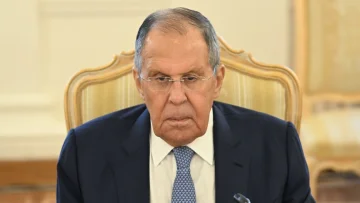
Kremlin spokesman Dmitry Peskov said the measure complied with the CSTO charter, citing Armenia’s failure to meet its obligations to the organization. Russian Foreign Minister Sergey Lavrov had earlier said that Yerevan had not paid its membership fees for more than two years.
Under Article 25 of the charter, unpaid membership fees may lead to the suspension of voting rights and the ability to nominate a country’s citizens for certain posts until the debt is settled.
Armenia remains a member of the organization. CSTO Secretary General Taalatbek Masadykov confirmed at the summit that Armenia’s expulsion had not been discussed. Lavrov said Moscow did not want to terminate Yerevan’s membership.
Armenia also retains its rights under the Collective Security Treaty, including the right to collective defense.
Why relations between Armenia and the CSTO have deteriorated
The CSTO was established in 2002 under a collective security treaty signed a decade earlier. The organization has six members: Armenia, Belarus, Kazakhstan, Kyrgyzstan, Russia and Tajikistan.
The CSTO coordinates military cooperation and collective defense. Under one of its key provisions, an armed attack on one member state is considered an attack on all members. Armenia has increasingly questioned the organization’s commitment to this principle.
Armenian Prime Minister Nikol Pashinyan announced in February 2024 that his country was suspending its participation in the CSTO, saying the organization had failed to meet its obligations to Yerevan.
The Armenian government’s criticism has focused on the organization’s response to regional security developments in the South Caucasus. Armenia subsequently suspended its participation in CSTO meetings and withdrew from joint activities and military exercises. Despite the prolonged disagreement, Yerevan has not formally left the treaty.
Pashinyan does not attend Moscow summit
Pashinyan did not attend the Moscow summit. The Armenian prime minister traveled to Antalya, Türkiye, for the UN COP31 climate conference.
On November 5, he said Armenia had exhausted its interests in the CSTO. Pashinyan had earlier ruled out a return to active participation in the organization for at least five years.
Before the summit, Lavrov confirmed that Yerevan had not formally applied to leave the organization.
Security priorities and defense plans announced at summit
In addition to the dispute involving Armenia, the summit addressed the CSTO’s broader security priorities.
Leaders approved 19 documents, including a declaration setting out common positions on international and regional security issues.
According to the Kremlin, the declaration opposes the deployment near the organization’s area of responsibility of weapons that pose a threat to collective security.
Russian President Vladimir Putin announced plans to strengthen the CSTO’s aviation capabilities and create mobile air defense units for joint military operations.
Leaders also discussed a counterterrorism strategy through 2030. They confirmed that Tajikistan will take over the organization’s rotating chairmanship from Russia on January 1, 2027.