OMM Newsroom

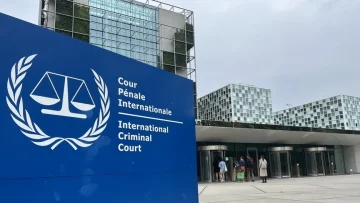
Former Philippine president Rodrigo Duterte is going on trial at the International Criminal Court (ICC) in The Hague, facing charges of crimes against humanity, according to the BBC.
The case against the 81-year-old stems from his war on drugs, in which thousands of people were killed. Duterte is the first Asian leader to be indicted by the ICC. If convicted, he would be the first former head of state or government to be found guilty by the court.
The trial is being viewed as a test of the ICC, a court intended to hold powerful people accountable when domestic courts are unable or unwilling to do so.
Duterte and the drug war
Duterte was president of the Philippines from 2016 to 2022. He won office promising to eliminate street crime by cracking down on illegal drugs. As mayor of Davao, a large city in the south, he had developed a reputation for taking a tough stance on crime and said peace and order were needed to encourage investment.
Despite his contentious legacy, his strongman approach proved popular in a country with widespread drug problems. Duterte presented himself as an outsider and promised to represent Filipinos in the provinces who felt marginalised by Manila’s elite.
He is also known for provocative remarks. He made sexist comments, swore at the late Pope Francis and former US president Barack Obama, and once compared himself to Hitler.
Duterte has continued to defend his drug war. In a video filmed as he was being taken to The Hague, he asked: “What is the law and what is the crime that I committed?”
He remains popular despite being jailed abroad, particularly in Davao, where he won the 2025 mayoral race by a landslide.
Duterte leads a powerful political family. His daughter Sara is the Philippines’ vice-president, while his son Sebastian is Davao’s vice-mayor and is serving as acting mayor. His eldest son, Paolo, is a congressman.
Charges and the route to The Hague
Duterte faces three counts of murder and attempted murder, as well as other offences, relating to the period from 1 November 2011 to 16 March 2019. The period covers his final years as Davao mayor and the first half of his presidency.
The court’s case will examine dozens of incidents it considers representative of the alleged use of death squads to target drug users and sellers.
As president, Duterte openly encouraged police to shoot and kill suspected drug dealers and users. The killings, often involving people shot in streets or alleys by unidentified men, provoked outrage.
Human rights monitors say the campaign targeted small-time dealers in poor urban communities while failing to bring major dealers and kingpins to justice. They also say suspects were summarily executed.
The total number of people killed is unknown, although some rights groups believe as many as 30,000 died in the campaign. One of its bloodiest nights was in August 2017, when 32 suspects were killed overnight in Bulacan, a suburb of Manila.
Duterte has denied the allegations, calling the charges “an outrageous lie”. His officials have also rejected them. Police have maintained that they killed only in self-defence.
Duterte was immune from prosecution while president. After his term ended, his family continued to wield considerable political power.
For a time, the family was allied with his successor, President Ferdinand Marcos Jr, who ran with Sara Duterte as his vice-president. Marcos said he would not allow the ICC to arrest his predecessor.
The alliance began to unravel soon after the 2022 elections as the two families pursued different political agendas. Sara Duterte, widely viewed as a likely successor to Marcos, became the subject of corruption investigations. Allies of Duterte then began criticising Marcos.
Marcos eventually changed his position and allowed the ICC to arrest Duterte at Manila airport in March 2025, when the former president returned from Hong Kong. He was served with an arrest warrant and extradited, then flown to The Hague on a “Gulfstream” jet.
The trial will give families of people killed in the drug war an opportunity to be heard, the BBC reported. Many had remained silent for years while Duterte and his allies were in power. Some widows and orphans are attending the trial’s opening on 30 November.
The proceedings will also affect the future of one of the country’s most powerful political dynasties, as its high-stakes feud with a rival approaches its climax.
The trial is taking place as Sara Duterte’s impeachment trial over alleged corruption is weeks from conclusion. If convicted, she will be disqualified from running for president in 2028.
For the ICC, the case is a test of its ability to operate amid increasingly polarised geopolitics. Duterte’s high-profile arrival in The Hague last year was a significant success for the court, which has also issued arrest warrants for Russian President Vladimir Putin and Israel’s then prime minister Benjamin Netanyahu over the war in Gaza. Neither of those warrants has been enforced.
Trial hearings and verdict
The trial is due to open on 30 November at 10:00 local time (09:00 GMT). Judges will first ask Duterte whether he understands the charges and how he pleads.
The prosecution and legal representatives of victims will then make opening statements. The defence may also make a statement. The prosecution’s first witness will be called after the opening statements, with the defence presenting its witnesses after the prosecution.
Public livestreams of the trial will be delayed by 30 minutes.
The ICC has not given a date for its judgment, saying only that it will issue one “within a reasonable amount of time”. The charges must be proven “beyond reasonable doubt” for a conviction, and a final judgment could take years.