OMM Newsroom

Albertans are voting ahead of Monday’s provincial referendum, which asks them to answer 10 yes-or-no questions on immigration, public services, constitutional reform and the province’s future in Canada, Anadolu Agency reported.
More than 174,000 people voted on the first day of advance polling and more than 186,000 on the second, Elections Alberta media spokesperson Michelle Gurney told CTV News. The average daily turnout during advance voting in Alberta’s 2023 provincial election was about 151,000, she said.
Ten questions on immigration, services and provincial powers
The first question asks whether Alberta should take greater control over immigration to reduce numbers, prioritize economic migrants and give Albertans priority for new jobs. Immigration is a shared responsibility between the federal government in Ottawa and the provinces, so Alberta cannot change the system on its own.
Three questions concern access to public services. Voters are asked whether programs such as health care and education should be limited to citizens, permanent residents and people with an “Alberta-approved” status; whether temporary residents should wait 12 months before receiving social support; and whether they should pay fees for health care and schooling.
The government has not defined what qualifies as “Alberta-approved” status. Critics say the proposed measures could conflict with the charter.
The fifth question asks whether voters should have to show proof of citizenship. Only citizens can already vote, and officials report very few cases of ineligible voting.
Questions six to nine ask whether Alberta should work with other willing provinces to amend the Constitution so provinces, rather than Ottawa, choose judges for provincial superior courts; abolish the Senate; allow provinces to opt out of federal programs while retaining the funding; and give provincial laws priority over federal laws in provincial or shared areas.
Most of the proposed changes would require approval from seven provinces representing half the population, as well as Parliament. Abolishing the Senate would require approval from all provinces. No other premier has endorsed the proposals on the Senate, judicial appointments or opting out of federal programs.
The tenth question asks voters to choose between remaining in Canada and beginning the legal process toward a binding separation referendum. It does not directly ask whether Alberta should leave Canada.
Leaders’ positions and legal limits
The referendum follows decades of Western grievances and a sense of alienation from Ottawa. Alberta Premier Danielle Smith has previously blamed past federal governments for harming the fossil fuel industry on which the province relies.
Fiscal and constitutional powers are also at issue. Ottawa’s “spending power” allows it to attach conditions to funding for provinces; health-care funding under the Canada Health Act is one example. The question on opting out of federal programs targets that power.
Smith announced nine questions in February and added the tenth in May, following competing citizen petitions and a court ruling against the separatist petition.
Smith says she wants Alberta to remain in Canada and told residents she voted to stay in an advance poll. She presents the other nine questions as a means of securing greater autonomy, pointing to an energy agreement with Ottawa and work toward a new West Coast pipeline.
She has said there will be no second separation referendum while she is premier if voters choose to remain in Canada.
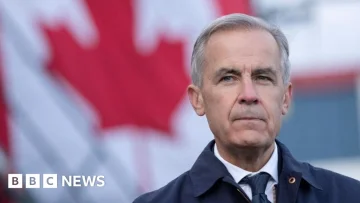
Canadian Prime Minister Mark Carney urged Albertans on Thursday in Calgary to stay in Confederation and reject the other nine questions. “Hard to think of a worse time for a referendum,” he said. Carney is due to attend a “Forever Canadian” rally in Edmonton on Friday.
Conservative Leader Pierre Poilievre, who represents an Alberta riding, has said his caucus will campaign for the province to remain in Canada. Opposition NDP Leader Naheed Nenshi is also urging voters to reject the nine proposals and stay. Alberta separatist leader Jeffrey Rath, meanwhile, said they are “never giving up.”
An Ipsos poll conducted from Sept. 18 to 22 found that 70% of Albertans want to remain in Canada, 20% want a binding referendum and 14% would vote to leave.
Alberta cannot secede unilaterally. A judge this year quashed a separatist petition, ruling that separation would violate First Nations treaty rights. The government and the petition’s organizer are appealing the decision.
Carney said in May that Ottawa was reviewing the separation question under the Clarity Act, the federal secession law passed after the 1995 Quebec referendum.
First Nations chiefs from Treaties 6, 7 and 8 unanimously passed a non-confidence vote in the Alberta government earlier this year, citing the separatist movement and unfulfilled treaty promises.
Polls open at 9 am on Monday.