OMM Newsroom

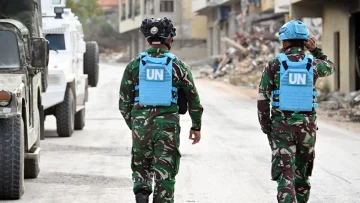
The United States and France disagree over how to ensure security in southern Lebanon after the mandate of the United Nations Interim Force in Lebanon (UNIFIL) expires on Dec. 31, 2026. The two sides have yet to agree on the format of a force to replace the mission.
France wants a large multinational force made up mainly of troops from European countries, while Washington supports a smaller observer mission and giving the Lebanese army greater responsibility for security, AnewZ reports.
The disagreement comes as Israel continues military activity in southern Lebanon. UNIFIL recorded about 2,840 Israeli artillery shells fired, 870 airspace violations and 90 airstrikes in October.
Under UN Security Council Resolution 2790, UNIFIL’s mandate will end and its forces will begin withdrawing from the area on Jan. 1, 2027. The withdrawal is expected to continue throughout the year.
Peacekeepers from 45 countries will monitor the Blue Line through Dec. 31, report violations, maintain communications between Israel and Lebanon, and support the Lebanese army and humanitarian operations.
US and French proposals for a successor mission
During a visit to Beirut on Nov. 15, Mike Waltz, the US ambassador to the UN, discussed security arrangements after UNIFIL’s departure with Lebanese President Joseph Aoun, Prime Minister Nawaf Salam and Parliament Speaker Nabih Berri.
Waltz said Washington was working on a new framework that would redistribute responsibilities and involve fewer international forces. He also stressed the need to review UN Security Council Resolution 1701.
France presented its proposal to the Security Council in a closed-door meeting on Nov. 19. Paris is considering a multinational force operating alongside the Lebanese army and made up mainly of French, Italian and Spanish troops. The proposal also includes a mechanism to take over some of UNIFIL’s monitoring duties.
The main disagreements concern the size and mandate of a successor force and whether it would operate directly under UN leadership.
The United States and France are considering keeping about 3,000 international troops in southern Lebanon for several months after UNIFIL’s mandate ends, Erem News reports. Some of the current peacekeepers could remain temporarily while talks continue on a longer-term arrangement.
The proposal has not received official approval, and France has not said whether it would send additional troops. Lebanon prefers an extension of UNIFIL’s mandate; if that is not possible, Beirut wants a successor mission to have Security Council support.
Prime Minister Nawaf Salam said future international assistance should focus on monitoring, reporting and coordination, while also supporting the deployment of the Lebanese army across the country.
Israel and the United States have questioned the effectiveness of the current peacekeeping mission. They argue that UNIFIL failed to prevent Hezbollah from building military infrastructure in southern Lebanon.
Lebanese army capacity and risks in the region
Shortages of equipment, funding and personnel could limit the Lebanese army’s ability to ensure security in the south after UNIFIL withdraws. Under Resolution 1701, the area between the Blue Line and the Litani River must be free of armed personnel and weapons other than those belonging to the Lebanese state and UNIFIL.
The Lebanese government has committed to establishing control over the area and dismantling unauthorized military infrastructure. However, the issue of Hezbollah’s weapons remains unresolved.
Israel maintains a military presence at five positions inside Lebanon. Beirut is demanding the withdrawal of Israeli troops. The dispute is complicating implementation of security arrangements reached between the two countries with US mediation.
The European Union is implementing a three-year program to strengthen the Lebanese army and police, including training, equipment and border security assistance. Germany is also contributing by sending police officers, customs officials and a small military contingent. However, the EU program is not intended to replace UNIFIL’s monitoring role along the Blue Line.
Without an agreement on a successor force, UNIFIL’s withdrawal could leave a gap in international monitoring and make it harder to document military violations and maintain communications between Israel and Lebanon. The work of a smaller observer mission would depend on agreement over its mandate and cooperation between the two countries. A European-led multinational force would require Security Council approval and Lebanon’s consent; its relationship with the Lebanese army has yet to be determined.
Continued Israeli military operations, the unresolved issue of Hezbollah’s weapons and possible missile attacks could raise the risk of renewed fighting. Without independent monitoring, it could become harder to establish the circumstances of incidents, potentially increasing the risk of retaliatory attacks. Wider regional tensions involving the United States, Israel and Iran could also affect Hezbollah’s military decisions.
Lebanese officials say Israeli military operations and the continued presence of Israeli troops in the country’s south are preventing Lebanese forces from deploying fully in the area and delaying the return of displaced residents. In his meeting with Waltz, Berri cited Israeli attacks and the military presence in Lebanese territory as major obstacles to implementing security arrangements.
With weeks remaining before UNIFIL’s mandate ends, the Security Council faces three options: support a smaller observer mission, authorize a multinational force or leave border security primarily to the Lebanese government.