OMM Newsroom

More than 150,000 tents purchased by humanitarian partners and member states are waiting outside the Gaza Strip for Israeli permission to enter, the United Nations said Wednesday, according to Anadolu Agency.
The figure does not include 117,000 tents from the Egyptian Relief Committee in El Arish, UN Deputy Spokesperson Farhan Haq told reporters.
Asked what was needed to bring the tents into Gaza, Haq said Israeli authorities had to cooperate by granting permission. He said that while transport funding can pose problems in some cases, the issue with these tents was the required approvals.
How quickly the tents could reach people in need would depend on access to crossing points and how quickly they could be processed, Haq said. He added that the tents were just across the border and the UN was ready to bring them in once permission was granted.
UN chief calls for winter supplies to enter Gaza
UN humanitarian chief Tom Fletcher said Wednesday that waiting for a new Israeli government to form was “not an acceptable excuse” for delays in delivering essential winter supplies to Gaza.
Foreign ministers and partners had assured him of their support but had repeatedly said progress would be difficult before Israeli elections, Fletcher said in a statement. He added that the UN had now been told to wait for a government to form, and said this was not an acceptable excuse under international humanitarian law.
Fletcher said the UN had set out a plan covering durable shelter, warm clothes, blankets, bedding and safe heating solutions, as well as generators, fuel, engine oil, spare parts and equipment to pump out water, remove debris and clear explosive ordnance.
“No more delay. Open all the crossings, not just one. Let our vital NGO partners work. Allow the commercial markets to function. Stop this collective punishment. Fund the plan. End this predictable, preventable suffering. The world is not powerless here,” he said.
Flooding adds to Gaza’s sanitation crisis
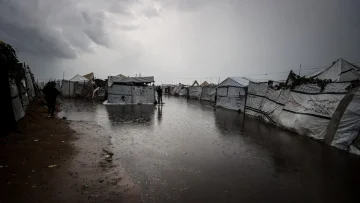
Haq said weekend flooding was worsening a sanitation crisis caused by the war, citing UNICEF. No wastewater treatment plant in Gaza was operational, he said.
In Gaza City, rainwater mixed with sewage was threatening to overflow from the Sheikh Radwan stormwater basin, where only two of six pumps were still working, Haq said.
UNICEF had been seeking Israeli approval for more than a year to bring in equipment needed to repair the facility.
“Humanitarian funding and Israeli approvals are urgently needed so that enough supplies and machinery can be brought into Gaza,” Haq added.