OMM Newsroom

Russian, Ukrainian and U.S. delegations held their first official talks in nine months in Abu Dhabi on Tuesday, AnewZ reported. They failed to reach agreement on the terms of a ceasefire or which side should retain territories currently under Russian control.
U.S. expectations are limited. U.S. envoy Jared Kushner told journalists that “differences are narrowing” in almost daily contacts with the parties. He said the Americans had “a few good ideas to bridge the gap” and hoped the two days of discussions would be “open and candid.” Kushner, however, did not promise a deal.
Sequence of ceasefire and security discussions
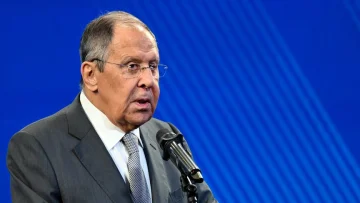
Russian Foreign Minister Sergey Lavrov set out the order in which issues on the agenda should be discussed. Speaking after the day’s session, he said Russia would not agree to an immediate ceasefire without knowing what would happen afterward. According to Lavrov, the parties should first agree on the broad framework of a future European security system and then consider halting the fighting in Ukraine.
This approach is the opposite of the sequence sought by Kyiv and its European partners. Ukraine wants binding assurances that Russia will not attack again and is calling for the fighting to stop. European Commission President Ursula von der Leyen said on Monday that meaningful discussions about Europe’s security system could take place only after a ceasefire in Ukraine. The positions are pulling the talks in opposite directions.
Lavrov softened Moscow’s position on one point, saying Russia would not prevent Washington from discussing Ukraine with European countries. He added, however, that Russia did not consider this the best approach.
Rustem Umerov, who leads Ukraine’s delegation and heads the country’s Foreign Intelligence Service, described the atmosphere at the talks as constructive. He said his team had spent about two months preparing and that President Volodymyr Zelenskyy’s mandate to Kyiv covered “all issues.” Umerov said security guarantees were a priority and that he wanted the meeting to end with results, rather than another round of discussions.
No progress on territorial issues
The territorial question remains the most difficult item on the agenda, and statements made in Abu Dhabi offered no sign of progress. Moscow wants Ukraine to withdraw from parts of the Donetsk, Luhansk, Zaporizhzhia and Kherson regions that Russia claims to have annexed. Kyiv rejects territorial concessions and has proposed freezing the conflict along the current front line.
U.S. officials have said in private contacts that both sides showed “some flexibility.” This is the U.S. side’s characterization of closed-door discussions; the Russian and Ukrainian governments have made no similar public statements. President Donald Trump has openly said Ukraine would be “a little different.” Kyiv has not responded positively to the idea.
Europe’s role in the talks has been disputed throughout the week. Kremlin spokesman Dmitry Peskov said the format was strictly trilateral. Kushner said Europeans were being kept informed from the sidelines and that a broader format could be possible only after progress had been made. Before the talks began, German Foreign Minister Johann Wadephul set out Berlin’s position, saying Europe did not need to create a new security system.
Nevertheless, officials from the United Kingdom, France, Germany and Italy, as well as NATO and the European Commission, met with U.S. and Ukrainian representatives in Abu Dhabi. A joint statement said any agreement must respect Ukraine’s sovereignty, territorial integrity and right to make independent decisions. It also said a strong NATO would continue to play a central role in collectively ensuring Euro-Atlantic security. This position conflicts with Moscow’s stance, which has repeatedly described NATO enlargement as a threat to its security.
Fighting continues during talks
Russian attacks overnight damaged Ukraine’s energy infrastructure. Officials reported damage and power outages in several regions. Russia’s Defense Ministry said its forces had struck cargo ships and a tanker in the Black Sea, including a vessel east of the city of Odesa.
A small step was taken on humanitarian issues: a six-day local ceasefire around the Russian-occupied city of Oleshky in late October and early November allowed civilians to leave the area and humanitarian aid to be delivered. The United States said it would continue work on prisoner exchanges and other humanitarian matters.
UAE Foreign Minister Sheikh Abdullah bin Zayed Al Nahyan attended the opening of the talks. He said Abu Dhabi supported diplomacy and hoped practical steps would be taken to end the war.
Wednesday’s session will show whether the talks can establish a workable agenda or confirm that the parties remain far apart. Washington has indicated that separate meetings with Vladimir Putin and Volodymyr Zelenskyy could follow the Abu Dhabi talks. If they take place, they would signal that the main negotiations are still being conducted elsewhere.