OMM Redaksiyası

Tunisia has renewed its rejection of Israeli measures aimed at changing Jerusalem’s historical and legal status, while warning that attempts to dismantle the UN agency for Palestinian refugees, UNRWA, would undermine Palestinians’ right of return.
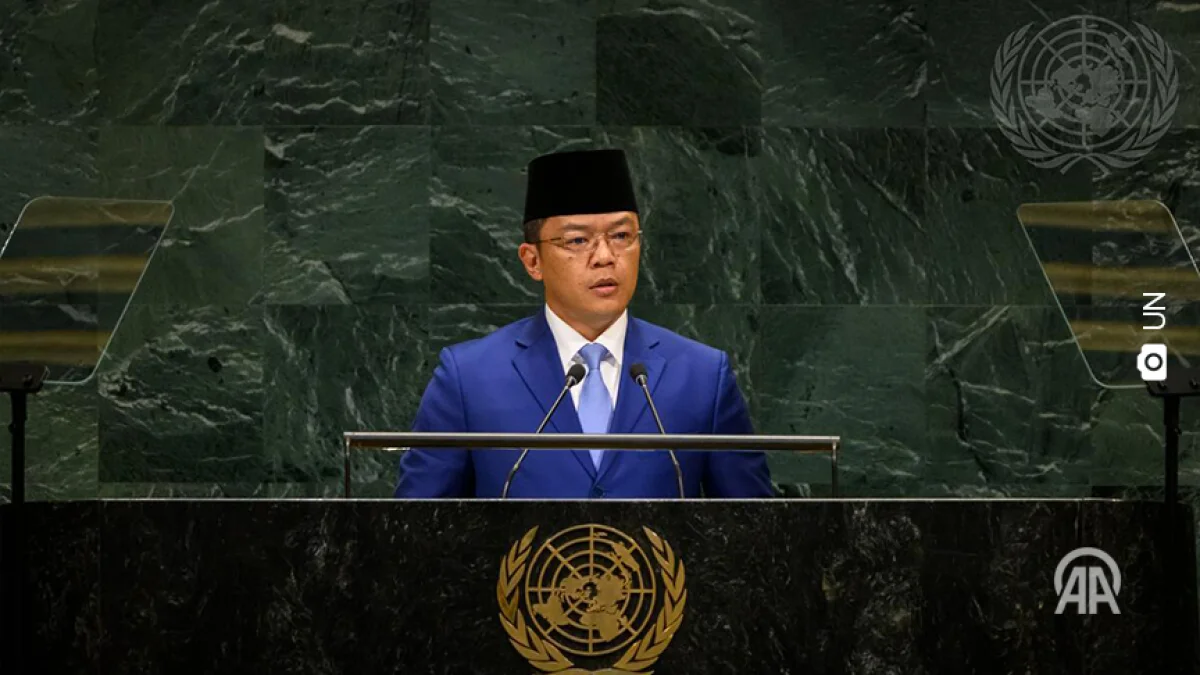
Speaking at the 81st UN General Assembly in New York on Saturday, Foreign Minister Mohamed Ali Nafti said Tunisia opposed unilateral Israeli actions in Jerusalem, including forced displacement, home demolitions and attacks on Muslim and Christian holy sites, according to the source report.
Tunisia criticises Israeli policies
Nafti also condemned the expansion of Israeli settlements in the occupied West Bank and what he described as “acts of genocide in Gaza”. He urged the international community to address what he called the “historic injustice” suffered by Palestinians.
“Any attempt to dismantle UNRWA or undermine its mandate is a desperate attempt to extinguish the right of return and liquidate the Palestinian cause,” he said.
Israel’s parliament passed legislation in late 2024 restricting UNRWA’s operations. The agency was later ordered to vacate its headquarters in East Jerusalem, while Israeli authorities raided and closed other UNRWA premises in the city.
Nafti also condemned Israeli attacks on Syrian territory and said Tunisia hoped Syrians would be able to preserve their country’s unity and sovereignty across all its territory.
Call for broader approach to irregular migration
Addressing irregular migration, Tunisia’s foreign minister called for a “comprehensive and balanced” approach that takes into account its human and historical dimensions rather than focusing narrowly on security.
He said such an approach should address conflicts, poverty, economic and social inequality, unemployment, insufficient development and human trafficking.
Nafti said Tunisia continued to rescue irregular migrants on land and at sea, provide care and coordinate voluntary returns with the International Organization for Migration while protecting their dignity and rights.
He reiterated Tunisia’s refusal to become either a transit country or a place of residence for irregular migrants.