OMM Newsroom
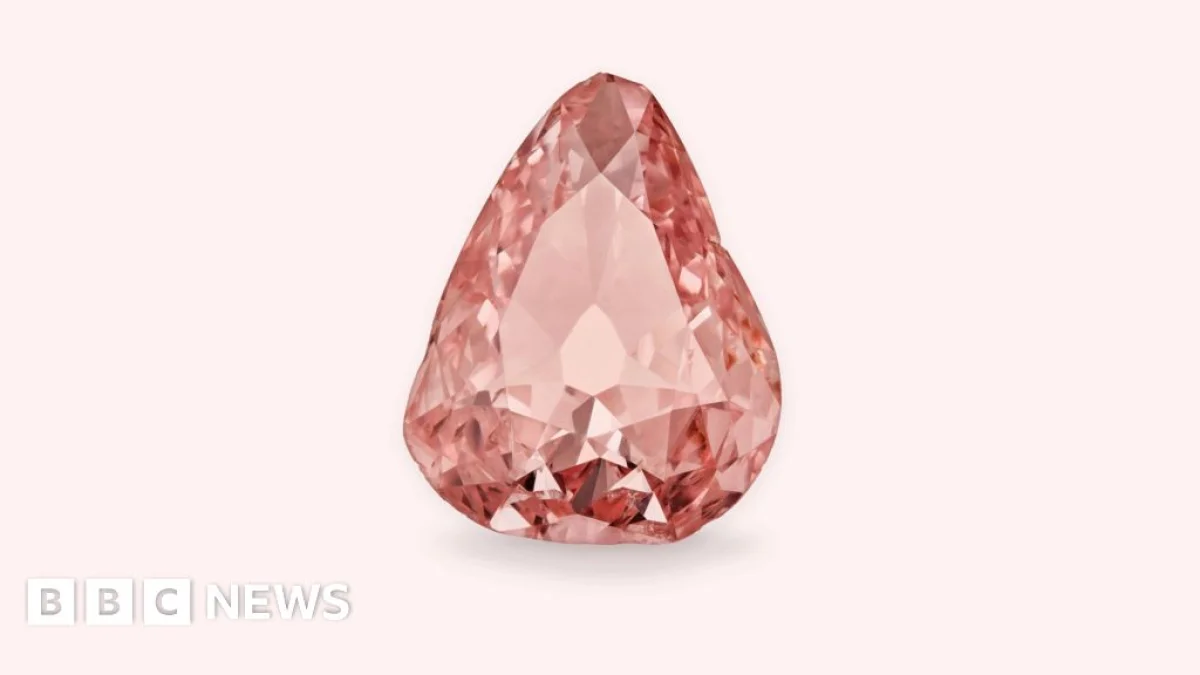
A rare pink diamond has gone on display in France for the first time since it was stolen almost 100 years ago, when it was last shown to the public, according to the BBC.
The nine-carat, pear-shaped stone, known as the “Grand Condé”, was taken during an overnight raid on the Château de Chantilly in October 1926 and hidden inside a hollowed-out apple.
The diamond, one of the few royal jewels to survive the French Revolution, was recovered a few weeks later after a hungry maid at the hotel where the thieves were staying bit into the apple.
It is on display at the Condé Museum in the Château de Chantilly until 3 January.
Museum director Mathieu Deldicque said the story about the apple might sound far-fetched, but newspapers widely reported it at the time.
Deldicque has been asked whether the exhibition could be tempting fate, amid a series of heists at European cultural institutions over the past 12 months, including the daylight robbery of jewellery from the Louvre in Paris.
He declined to tell CNN how much the diamond was insured for, but said extensive academic research had been carried out to identify the stone uniquely. The exhibition includes the findings, along with previously unseen archive material about the diamond’s history and theft, the museum said.
Naturally occurring pink diamonds are exceptionally rare and often sell for tens of millions of dollars. The highest price paid for one at auction was $71.2m (£53.6m) in 2017, according to Sotheby’s.
The Grand Condé’s exact origins remain unknown. The Château de Chantilly says the diamond was first mentioned in 1740 in an inventory of Louis Henri de Bourbon, Prince of Condé, drawn up after his death.
It later became part of the collection of Queen Marie-Amélie of Bourbon-Sicily, wife of French King Louis Philippe I, and then passed to her son, Prince Henri of Orléans, the Duke of Aumale.
He bequeathed it to the Institut de France, which now owns the Château de Chantilly, 50km (31 miles) north of Paris, as well as thousands of artworks and manuscripts that became part of the Musée Condé collection.