OMM Newsroom

Morocco has welcomed the end of the UN peacekeeping mission in Western Sahara after a diplomatic clash between the United States and Russia left the Security Council unable to agree on its future, according to the BBC.
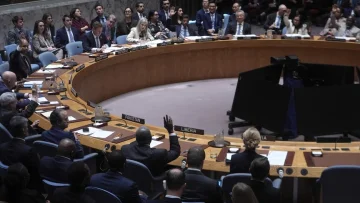
The council failed on Friday to renew the mandate of the UN Mission for the Referendum in Western Sahara (Minurso) after Russia vetoed a US-backed proposal. A separate Russian draft to extend the mission also failed to win enough votes.
The decision has raised questions about the future of Africa’s longest-running territorial dispute and the fragile ceasefire between Morocco, which claims Western Sahara, and the Polisario Front, which has fought for the territory’s independence for more than 50 years.
Western Sahara’s disputed status
Western Sahara, on Africa’s north-west coast, was a Spanish colony until 1975. It has significant phosphate reserves and valuable fishing grounds along its Atlantic coast. As Spain prepared to withdraw, Morocco and Mauritania both claimed the territory.
The International Court of Justice found historical ties of allegiance but no territorial sovereignty that overrode the Sahrawi people’s right to self-determination. Morocco’s then King Hassan II responded by organising the Green March. On 6 November 1975, about 350,000 Moroccan civilians entered the territory in a mass demonstration intended to put pressure on Spain.
Days later, Spain signed the Madrid Accords with Morocco and Mauritania, agreeing to transfer administrative control. Morocco took the northern two-thirds and Mauritania the southern third, but the agreement did not settle the question of sovereignty.
The Polisario Front, an independence movement founded in 1973, opposed the deal, viewing it as a replacement of Spanish colonial rule with Moroccan and Mauritanian control. Mauritania renounced its claim in 1979, but Morocco continued fighting the Polisario Front.
Algeria became the Polisario Front’s main regional ally, providing military support and hosting its leadership and thousands of Sahrawi refugees in camps near Tindouf. Algeria says its position is based on the right to self-determination, while Morocco considers Western Sahara an integral part of its territory.
Morocco and Algeria fought a brief border war in 1963 over disagreements about territory inherited from French colonial rule. Relations between the two countries have remained tense, with Western Sahara at the centre of their dispute.
Minurso’s mandate and the Security Council vote
After 16 years of fighting, Morocco and the Polisario Front agreed to a UN-brokered ceasefire in 1991. A sand wall, or berm, divided the territory to keep the rival forces apart.
The UN established Minurso to monitor the ceasefire and organise a referendum on the territory’s future, in which Sahrawis were meant to choose between independence and integration with Morocco. The vote was scheduled for 1992 but never took place: the parties could not agree on who would be eligible, and disputes over voter identification became a major obstacle.
Morocco proposed autonomy in 2007, under which Sahrawis would manage internal affairs while Rabat retained control over defence and foreign relations. The Polisario Front and Algeria rejected the plan, insisting on a referendum that included independence as an option. Years of UN-sponsored negotiations produced no breakthrough.
The ceasefire broke down in November 2020, when the Polisario Front said it was resuming armed struggle. After a long diplomatic campaign by Morocco, the Security Council voted in 2025 for a resolution supporting the autonomy plan as the “most feasible” solution for the disputed territory.
Most Sahrawis live in the part of Western Sahara controlled by Morocco, while tens of thousands are estimated to be in refugee camps in Algeria.
The United States proposed extending Minurso’s mandate for another year, but its draft went beyond a routine renewal. It would have removed the word “referendum” from the mission’s name and made Morocco’s autonomy proposal the sole basis for further negotiations.
The draft received the support of 11 of the Security Council’s 15 members, including France and the United Kingdom. Russia vetoed it, arguing that it was too favourable to Morocco. Russia then proposed extending Minurso’s mandate without changing its terms; that draft received only two votes in favour.
Minurso’s mandate expired at the end of Saturday, 31 October. The UN said the following day that the mission had entered a liquidation period, with a reduced team overseeing the transfer of military equipment and other assets.
UN Secretary-General Antonio Guterres said the Sahrawi people’s right to self-determination must be respected and warned of the risk of renewed hostilities. The Polisario Front condemned the US proposal. Its representative, Sidi Omar, thanked Russia for vetoing it, saying it would “torpedo the foundations of the UN peace process” and threaten regional and international peace.
Morocco said Minurso personnel and equipment should leave the territory in the coming days, arguing that the Western Sahara issue should no longer be considered by the Security Council. The mission had 155 military personnel and was expected to cost $62m (£46m) in the financial year beginning in June, according to a UN report.
Morocco’s response and risks of renewed fighting
Morocco’s royal palace welcomed the failure to renew Minurso’s mandate. In Laayoune, the territory’s largest city, footage showed people celebrating, waving Moroccan flags and displaying portraits of King Mohammed VI.
Issam Laaroussi, a Moroccan expert in international relations, said the decision offered Rabat an opportunity to challenge what it sees as an international mechanism that has failed to resolve the dispute. He said Morocco could have more room to promote its autonomy proposal and shift negotiations from a referendum on independence to autonomy under Moroccan sovereignty.
The decision does not change Western Sahara’s legal status or amount to international recognition of Moroccan sovereignty. Western Sahara remains on the UN list of non-self-governing territories, while the African Union officially recognises its independence as the Sahrawi Arab Democratic Republic (SADR).
The outcome comes after several countries backed Morocco’s position. In recent years, securing international support for its claim has been a central part of the country’s foreign policy. In 2020, the United States recognised Moroccan sovereignty over Western Sahara as part of an agreement to establish diplomatic relations between Morocco and Israel. France backed Morocco’s autonomy plan as the basis for resolving the dispute in 2024.
Morocco rejoined the African Union in 2017, more than three decades after leaving its predecessor, the Organisation of African Unity, in protest at the SADR’s admission. Since returning, Rabat has sought support for its position within the organisation. At least 10 African countries have opened diplomatic missions in the territory in support of Rabat.
Laaroussi said Morocco was not necessarily seeking to abandon the UN process, but to change the framework for negotiations and draw greater support from regional organisations.
Addressing a special joint session of parliament on Monday, House of Representatives Speaker Ahmed Touizi called the end of Minurso a victory for the country’s diplomacy. He said Morocco should move from “managing the dispute to implementing its autonomy plan under Moroccan sovereignty, while pressing ahead with development projects in the territory.”
Minurso’s departure could lead to renewed fighting, as the mission had monitored military developments and helped reduce the risk of escalation. Aid organisation Oxfam warned that losing its monitoring and de-escalation role could undermine stability, with serious consequences for civilians.
Laaroussi said Minurso’s departure could create security gaps. “Minurso’s departure does not create the original conflict, because the conflict is already there, but it could aggravate an already fragile security environment,” he said.
The UN decision has also fuelled nationalist rhetoric online. Several Moroccan users have shared AI-generated images of themselves in military uniform, declaring their readiness to fight for Morocco’s sovereignty over Western Sahara. In Morocco, Western Sahara is widely regarded as a national cause, and political parties that are often divided on other issues are united in supporting the country’s claim to sovereignty over the territory.
Foreign Minister Nasser Bourita said the end of the mission did not mean the end of the ceasefire and that Rabat remained committed to it “within respect of its security and sovereignty.” The Polisario Front has not said what it will do next.
Any resumption of fighting could draw in Algeria, as tensions with Morocco remain high. According to the Stockholm International Peace Research Institute (SIPRI), both countries significantly increased military spending last year, with the institute citing their dispute over Western Sahara as a key driver. Algeria spent an estimated $25.4bn, more than four times Morocco’s $6.3bn.