OMM Newsroom
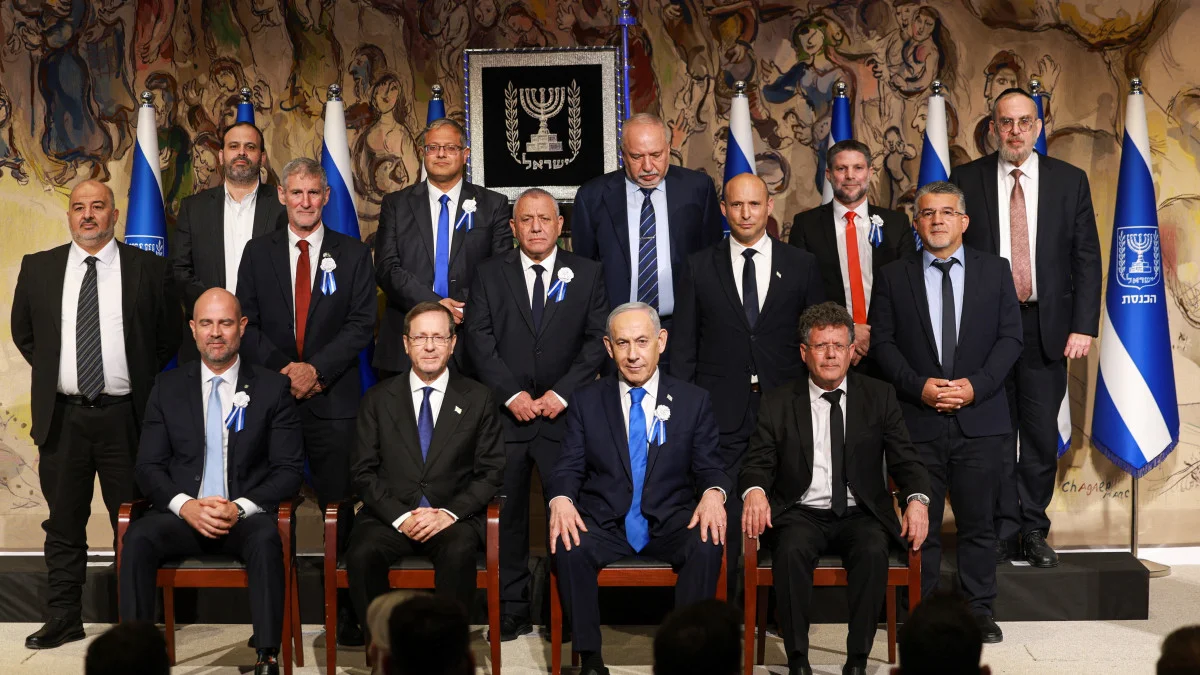
Efforts to remove Israeli Prime Minister Benjamin Netanyahu from power have become more difficult after an opposition party suspended coalition talks. AnewZ reports that the move has exposed divisions among Netanyahu’s opponents just days before the deadline to form a government.
Yashar party leader Gadi Eisenkot has until Dec. 6 to form a coalition government. Efforts to unite the opposition after the Oct. 27 election have failed amid disagreements over cooperation with Likud, Arab parties and ultra-Orthodox parties.
Divisions within the opposition deepen
On Tuesday, Yair Golan, leader of the left-wing Democrats party, said he had frozen talks with Eisenkot. Golan opposes secret negotiations between Yashar and Likud and said the possibility of a unity government with Netanyahu would weaken efforts to remove him from power.
Netanyahu’s right-wing and ultra-Orthodox allies hold 53 of the 120 seats in Israel’s parliament, the Knesset. The main opposition bloc, including eight seats held by the Democrats, has 48 seats. Arab parties hold 19 seats. None of the blocs has the 61 seats required for a parliamentary majority.
On Tuesday, Eisenkot signed a coalition agreement with Avigdor Lieberman’s right-wing Yisrael Beiteinu party. Lieberman is expected to become defense minister. On Wednesday, he said a majority government could be formed next week. His remarks have raised speculation that he may soften his long-standing opposition to cooperation with Arab parties.
Military service and tensions with Iran affect talks
Exemptions from military service for ultra-Orthodox men remain one of the main obstacles in the negotiations. Lieberman has long opposed such exemptions, arguing that every citizen should serve. However, he has recently signaled a willingness to negotiate with United Torah Judaism.
Any concessions risk breaking the opposition parties’ election promise to end service exemptions. Ultra-Orthodox leaders, meanwhile, are demanding legal guarantees that people engaged in religious studies will not be drafted.
The Arab parties Ra’am and the Joint List could also determine the government’s fate. Golan supports their joining a coalition, while Lieberman and others oppose it. Another option is a minority government supported by Arab lawmakers without offering them cabinet posts. That would require some opposition lawmakers to allow the government to secure parliamentary approval.
The political impasse comes amid rising tensions with Iran. On Tuesday, acting Defense Minister Israel Katz alleged that Tehran was expanding its weapons capabilities and seeking to resume its nuclear program. Iran denies the allegations.
Katz said Israel would carry out military strikes if necessary, regardless of external pressure. Netanyahu’s critics have accused the caretaker government of exaggerating the threat of war to gain a political advantage.
The opposition is also preparing two bills: one to establish a state inquiry into failures surrounding Hamas’ Oct. 7, 2023, attacks, and another to limit the prime minister’s term in office.
If Eisenkot fails to form a government by Dec. 6, President Isaac Herzog could give him an additional 14 days. If the talks fail, the mandate could be returned to Netanyahu or Israel could hold an early election. Netanyahu would remain caretaker prime minister during that period.