OMM Newsroom

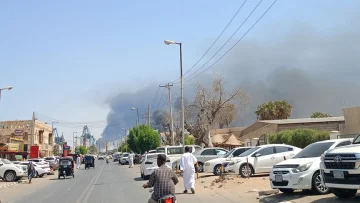
Security concerns in Kuwait are growing amid Iran’s claim that its drones struck US military equipment on Kuwaiti territory. Oman, meanwhile, is continuing diplomatic efforts to ease tensions with Tehran and protect shipping in the Strait of Hormuz.
The developments highlight a dilemma facing Gulf states: how to protect their territory and critical infrastructure without being drawn into a wider regional conflict, AnewZ reports.
Iran says it targeted US military equipment in Kuwait
Iran’s military said on Wednesday that it had struck US military equipment at a base in Kuwait, including Patriot missile systems. The statement was broadcast on Iranian state television.
Tehran portrayed the operation as a strike against US military capabilities in the Gulf. For Kuwait, it raises the risk of being directly drawn into a confrontation the country is seeking to avoid.
Kuwait condemned Iran’s attacks, calling them violations of sovereignty and threats to national security. Its Ministry of Foreign Affairs cited Article 51 of the UN Charter, which recognizes states’ right to self-defense.
The reference reflects Kuwait’s position: the presence of US forces in the country does not mean attacks on its territory will be accepted.
The country faces a difficult choice. Its long-standing security partnership with Washington plays an important role in its defense, but hosting US forces also leaves Kuwait vulnerable to possible Iranian retaliatory strikes.
For Tehran, targeting US facilities in the Gulf is a means of putting pressure on Washington. For Kuwait, the consequences are more direct: its territory and infrastructure are at risk.
Oman steps up diplomatic efforts with Iran
As Kuwait faces a security threat, Oman is seeking through diplomacy to prevent further escalation.
Iranian Foreign Minister Abbas Araghchi met his Omani counterpart, Sayyid Badr bin Hamad Al Busaidi, in Muscat on November 17. Maritime security and tensions around the Strait of Hormuz were central to the discussions.
The talks are part of efforts to sustain dialogue between Oman and Tehran and prevent the crisis from affecting one of the world’s most important shipping routes.
During Araghchi’s visit, Oman’s Sultan Haitham bin Tariq also received a message from Iranian President Masoud Pezeshkian. The sides discussed bilateral ties and broader regional developments.
The Strait of Hormuz is a vital route for global energy supplies and international trade, carrying oil, liquefied natural gas and commercial vessels. Ships were seen in the strait from Oman’s Musandam region on November 17, 2026.
A prolonged disruption to shipping could raise freight and insurance costs, delay deliveries and put pressure on global energy markets.
Oman has previously discussed with Iran measures to improve maritime security, including stronger coordination, mine clearance and the possible establishment of a designated navigation corridor.
However, the defensive value of such measures remains limited while the threat of military confrontation persists. Muscat’s immediate priority is to keep diplomatic channels open and reduce the risk of a maritime incident triggering new military operations.
Gulf states face growing security risks
Kuwait and Oman have adopted different approaches, but both are facing the consequences of rising tensions between Iran and the United States. Kuwait is seeking to protect its sovereignty and military facilities, while Oman is working to safeguard shipping through the Strait of Hormuz and preserve a path to de-escalation.
The risks extend beyond the two countries. A strike on a military base could quickly become a sovereignty dispute, while an attack on a commercial vessel could disrupt energy exports, shipping schedules and international markets.
So far, there are no signs that the latest talks between Oman and Iran have produced diplomatic progress. Iran’s claims that US military equipment was damaged in Kuwait have also not been independently verified.
The developments point to increasingly fragile security in the Gulf, where military tensions threaten both regional stability and vital trade routes.
Oman’s diplomatic efforts could help avert a crisis, but progress will depend on whether the talks lead to concrete security measures.
For Kuwait, the more immediate concern is preventing another Iranian strike from reaching its territory.