OMM Newsroom

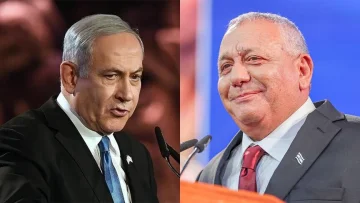
The leader of Israel’s centre-right Yashar party, Gadi Eisenkot, held a two-hour meeting with Prime Minister Benjamin Netanyahu in Tel Aviv on Nov. 29. After the meeting, Eisenkot appeared to play down the prospects of forming a unity government with Netanyahu, AnewZ reported.
Political analysts say former military chief Eisenkot is more likely to form a coalition with parties seeking to remove the long-serving prime minister from power than to join forces with Netanyahu.
This was the two men’s second meeting this month. The first was presented as a security briefing for Eisenkot. The meetings followed an election on Oct. 27 that gave neither side a clear path to power.
In a joint statement, Netanyahu and Eisenkot said their talks had taken place in a “businesslike atmosphere” and that both sides were trying to bridge significant differences. They provided no further details.
Channel 12 later reported that the two were not planning another meeting. According to the broadcaster, Eisenkot told Netanyahu: “I am committed to my partners in the bloc. You can join after a government is formed.” Eisenkot’s spokesperson confirmed the report.
Deadline to form government approaches
On Saturday, Netanyahu said he was prepared to temporarily step back from power in a unity government led by Eisenkot. Israel’s longest-serving prime minister proposed taking the second position in a division of roles under any agreement between his Likud party and Eisenkot’s Yashar party.
The proposal marked a retreat from Netanyahu’s earlier position that Likud should lead the government because it was the largest party. Eisenkot, meanwhile, is moving closer to forming a coalition backed by the opposition and removing Netanyahu from power.
Neither Netanyahu’s Likud nor Eisenkot’s political bloc secured a clear advantage to form a government in the Oct. 27 election. Likud emerged as the largest party with 27 seats, while Eisenkot’s Yashar won 21. However, President Isaac Herzog tasked Eisenkot with forming a coalition after he secured broader support from members of parliament.
Eisenkot has until Dec. 6 to form a government, with a possible 14-day extension. His position has strengthened after he reached coalition agreements with the left-wing Democrats and right-wing Yisrael Beiteinu parties. Bringing together parties with differing political priorities remains difficult.
Disagreements complicate coalition talks
Israel’s parliament, the Knesset, has 120 seats. A government coalition generally needs the support of at least 61 lawmakers to secure a majority.
Eisenkot’s efforts have been complicated by disagreements among potential partners over military conscription, religious issues and cooperation with Arab political parties. His possible coalition includes groups from across the political spectrum, and support from ultra-Orthodox or Arab parties could prove important.
Eisenkot has previously said he would not join a government dependent on parties that reject key security principles. Differences among potential partners, alongside growing support for parties seeking an alternative to Netanyahu’s leadership, have made the talks more difficult.
Some opposition representatives have said they are willing to consider talks with Likud, while others have opposed joining any other political arrangement led by Netanyahu. Eisenkot has called for serious negotiations on policy and governance and said his party is ready to assess whether Netanyahu’s proposal represents a sincere commitment to unity.
Eisenkot is a former chief of staff of the Israel Defense Forces. He entered politics after a 41-year military career and founded the Yashar party in 2025. After the Hamas-led attacks on Oct. 7, 2023, he served as an observer in Netanyahu’s war cabinet. He left the post eight months later, criticizing the prime minister’s handling of the war in Gaza.
Although Eisenkot has presented himself as an alternative to Netanyahu’s leadership, the two share several security priorities. Eisenkot opposes the establishment of a Palestinian state, supports dismantling Hamas’ military capabilities and has called for preventing Iran from acquiring nuclear weapons. At the same time, he has criticized violence by Israeli settlers against Palestinians and opposed plans to expand some settlements in the West Bank. His political approach aims to build a broader coalition while maintaining a strong focus on Israel’s security.