OMM Newsroom

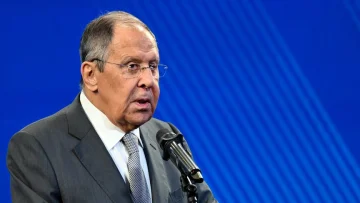
Armenia could lose its voting rights in the Collective Security Treaty Organization (CSTO) on November 11 because it has not paid membership fees for more than two years, Russian Foreign Minister Sergey Lavrov said after a meeting in Moscow.
The restrictions could also apply to Armenia’s right to nominate candidates for positions allocated by quota within the Russian-led organization, AnewZ reported. Lavrov said the matter would be considered under Article 25 of the CSTO Charter.
The meeting was attended by the foreign and defense ministers of CSTO member states, as well as secretaries of their security councils. Armenian representatives did not attend. Lavrov said that even if the proposal is approved by the organization’s other five members — Russia, Belarus, Kazakhstan, Kyrgyzstan and Tajikistan — Armenia will retain access to collective security guarantees.
Armenia’s participation in the CSTO
CSTO Secretary General Taalatbek Masadykov said Armenia had effectively withdrawn from the organization’s activities, suspending its participation in discussions and decision-making, major events and joint military exercises.
Yerevan froze its participation in the organization in February 2024 but has not formally withdrawn under Article 26 of the CSTO Charter.
Russian Foreign Ministry spokeswoman Maria Zakharova and Deputy Minister Alexander Pankin have described the proposed restrictions as an administrative measure over unpaid membership fees, rather than a politically motivated expulsion.
Armenian Prime Minister Nikol Pashinyan said on November 5 that his government’s relations with the CSTO had “passed the point of no return.” Yerevan is seeking to diversify its international security partnerships and infrastructure cooperation.
CSTO summit agenda
The ministers’ meeting took place ahead of the CSTO Collective Security Council summit on November 11, to be chaired by Russian President Vladimir Putin.
At the International Collective Security Forum on November 10, Masadykov said threats to global stability were growing amid major geopolitical changes and rising military spending. He also marked the 85th anniversary of the start of the Great Patriotic War and the 80th anniversary of the Nuremberg Tribunal’s verdict.
Masadykov expressed concern over the militarization of Western economies and the weakening of international arms control agreements. Space security was also a key topic: participants warned about the deployment of strike weapons in orbit and the growing military use of civilian satellites for surveillance and targeting.
Participants also drew attention to gaps in international rules governing artificial intelligence and lethal autonomous weapons systems, saying advanced military technologies could fall into the hands of criminal or terrorist groups.
Other topics included what participants described as the politicization by Western countries of conventions on chemical and biological weapons, security risks related to Iran near CSTO borders, and NATO plans to expand nuclear infrastructure near the organization’s borders in Eastern Europe.
Despite rising global tensions, participants cited progress in Central Asia, where member states have resolved longstanding border disputes through diplomacy. Afghanistan was also on the agenda: the CSTO Secretariat continues to coordinate economic and security assistance through a special working group.
One of the main priorities is the Targeted Interstate Program for Strengthening the Border, aimed at improving security along the Tajikistan-Afghanistan border.
The Moscow meeting also discussed advancing the “Eurasian Charter on Diversity and Multipolarity in the 21st Century,” an initiative of Belarus and Russia supported by other CSTO members. Talks on the draft document began in September 2026 on the sidelines of the 81st session of the UN General Assembly. The initiative aims to create a more inclusive continental security framework bringing together the CSTO, the Commonwealth of Independent States, the Shanghai Cooperation Organization and the Conference on Interaction and Confidence-Building Measures in Asia.
At the November 11 summit, leaders are expected to adopt a CSTO Counter-Terrorism Strategy through 2030. Russia will transfer the organization’s chairmanship to Tajikistan, effective January 1, 2027.
Lavrov discusses talks on Ukraine
Lavrov also said Moscow supports a U.S. proposal discussed in Abu Dhabi to establish a framework for future security arrangements before formal negotiations on ending the war in Ukraine.
Calling the approach “logical,” Lavrov reiterated that Russia would not agree to a temporary ceasefire without binding clarity on how the next steps toward a settlement would be taken. He also accused European states of seeking a pause in fighting to give Kyiv time to restore its military capabilities.