 OMM Redaksiyası

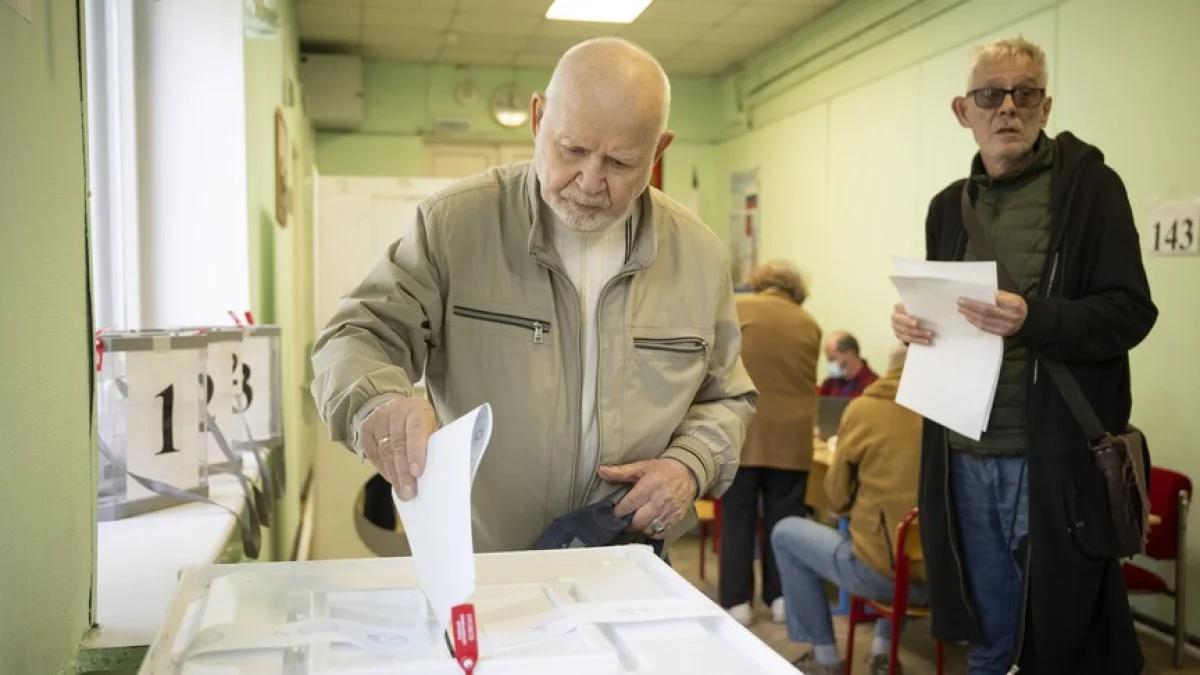
Voting began on Sunday in Bosnia and Herzegovina’s general elections, with 3,414,364 registered voters eligible to choose leaders and lawmakers at several levels of government.
Polling stations opened at 7am local time (0500 GMT) and are due to close at 7pm, according to the Central Election Commission. A total of 518 officials will be elected in the four-yearly vote.
Presidency and assembly seats at stake
Voters will choose the Bosniak, Croat and Serb members of the country’s three-member presidency, as well as representatives to the state-level Parliamentary Assembly.
They will also elect members of the Federation of Bosnia and Herzegovina’s House of Representatives, the president and vice presidents of Republika Srpska, and members of the Federation’s 10 cantonal assemblies. The National Assembly of Republika Srpska is also part of the country’s legislative system.
Ten candidates are competing for the three presidency seats. Voters in the Federation may choose either the Bosniak or Croat member, while voters in Republika Srpska elect the Serb member.
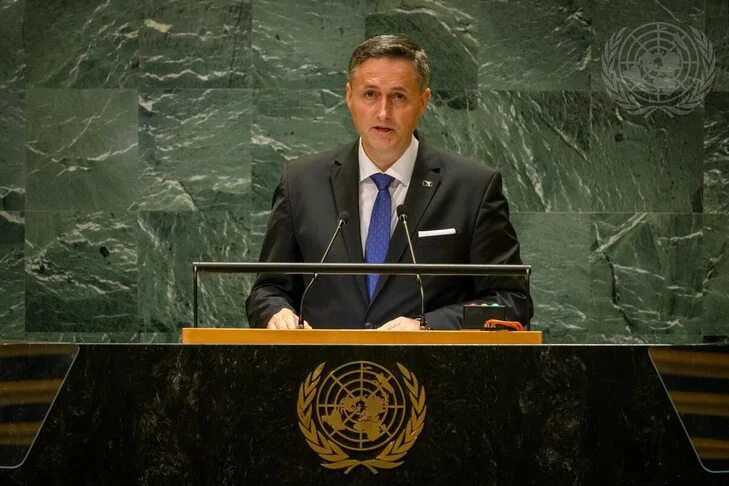
Incumbent Denis Becirovic, Bakir Izetbegovic, Semir Efendic and Fahrudin Radoncic are seeking the Bosniak seat. Darijana Filipovic, Zdenko Lucic and Slaven Kovacevic are competing for the Croat seat. Incumbent Zeljka Cvijanovic, Marinko Bozovic and Nebojsa Vukanovic are running for the Serb seat.
Twelve candidates are also competing for the presidency of Republika Srpska. The election commission approved 75 political parties, 29 coalitions and four independent candidates. More than 7,000 candidacies have been registered across all levels of government.
New voting technology introduced nationwide
For the first time, new voting technology is being used nationwide to support voter identification, ballot counting and the transmission of results. Biometric verification, ballot scanners and video surveillance systems are in use at about 4,500 polling locations.
After their identities are checked, voters undergo fingerprint verification. They cast paper ballots, which are scanned before being placed in ballot boxes. Scanned ballot data will be sent directly to the election commission, allowing preliminary and incomplete results to be announced at around 8pm, earlier than in previous elections.
Ballots will also be counted by hand. The commission has said additional checks will be carried out if scanned and manual counts differ significantly. If a discrepancy remains, the manual count will be treated as the official result.
Voting abroad and election background
Bosnians living abroad are also voting. A total of 48,078 registered to cast ballots by mail, one of the lowest diaspora registration figures in recent election cycles. Voting is also taking place at 20 diplomatic and consular missions in 13 countries, including Germany, Austria, Croatia, Serbia, Slovenia, Switzerland, Belgium, Denmark, Sweden, the Netherlands, Norway, the United States, Qatar and Jordan.
The number of registered voters is slightly higher than in the 2022 general elections, when 3.37 million people were on the electoral roll. In that election, Becirovic won the Bosniak presidency seat, Zeljko Komsic the Croat seat and Cvijanovic the Serb seat.
Bosnia and Herzegovina’s political system was established under the 1995 Dayton Peace Agreement, which ended the 1992-1995 war. The country consists of the Federation of Bosnia and Herzegovina, Republika Srpska and the self-governing Brcko District. Bosnia and Herzegovina declared independence in 1992, and its first post-war elections were held in September 1996.