 OMM Redaksiyası

UN special rapporteur Francesca Albanese says Palestinians cannot yet be described simply as survivors of genocide because destruction in Gaza is continuing, despite a ceasefire.
“The genocide is not over,” Albanese told Anadolu Agency in an interview ahead of the third anniversary of the war. “The situation on the ground is catastrophic. It’s really beyond what words can say.”
Albanese, an Italian human rights lawyer who has served as the UN special rapporteur on the occupied Palestinian territory since 2022, said the devastation raised questions about the international response and the policies of governments supporting Israel.
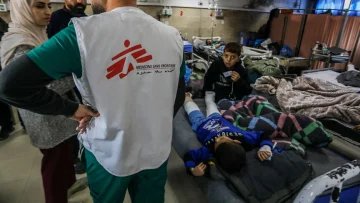
According to Palestinian figures, more than 74,000 Palestinians have been killed and over 175,000 injured since October 2023. Israeli attacks have continued since a ceasefire took effect on Oct. 10, 2025; Palestinian figures put the toll since then at 1,454 killed and 5,090 injured.
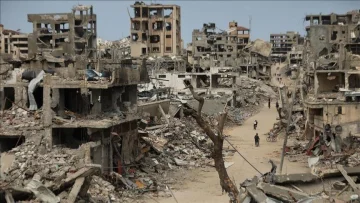
Albanese said calling Palestinians survivors could imply that the danger had passed. She said 70% of Gaza remained under the control of the Israeli army, which she accused of continuing to level the territory.
Asked how Gaza might be remembered alongside past genocides, Albanese compared the question with the historical treatment of Indigenous peoples during colonialism. She said the outcome depended on who wrote history and described the present as “a crossing point.”
She characterized the situation as a struggle between those seeking to continue what she called the genocide, exploitation and erasure of Palestine, and those seeking to stop it. Albanese associated the first group with the US, Israel and their allies, and said it included advocates of increased militarization and state surveillance.
Albanese said the war had shaped public opinion and criticized Israeli leaders and some European politicians for presenting Israel as a victim while children were being killed.
She also warned of worsening conditions in the occupied West Bank, citing killings, arbitrary arrests, detention and restrictions on Palestinian communities.
Albanese welcomed plans by 12 countries to restrict trade with illegal Israeli settlements, while questioning the scope of the measures. France, the UK, Canada, Denmark, Spain, Finland, Ireland, Iceland, Norway, Poland, Portugal and Sweden said in a joint statement in September that they would introduce or support further restrictions, or were actively considering them.
She singled out the UK’s announced restrictions on settlement goods and financial support for settlement construction and infrastructure, calling the policy change long overdue. However, she said the measures were focused heavily on settlements and questioned the lack of an explicit reference to East Jerusalem. She also welcomed efforts to prevent the advertising and sale of Palestinian property from British territory.
Albanese argued that the war had exposed the costs of Europe’s dependence on Washington. She said the US threatened countries it described as partners and characterized the relationship as one of “servitude and subalternity.”
She also urged Middle Eastern governments to consider what she described as connections between US foreign policy and ambitions for a “Greater Israel.” The term refers to differing visions of expanded Israeli territory, based on biblical or historical claims; some interpretations include the occupied Palestinian territories, while more expansive ones extend to parts of neighboring countries.
Albanese said such ambitions were already being pursued, and urged governments in the region to take seriously claims by some proponents that invoke biblical territory extending into Jordan, Syria and Iraq.
The US imposed sanctions on Albanese in July 2025. Secretary of State Marco Rubio accused her of conducting a “campaign of political and economic warfare” against the US and Israel. The Trump administration placed her on its Specially Designated Nationals list, which bars US citizens and businesses from dealing with her.
Albanese said the sanctions had affected her access to banking and other financial services beyond the US, as well as her ability to work, travel and cover everyday expenses. She said she could no longer use credit cards, had been denied health insurance and remained barred from entering the US.
The sanctions followed a UN report by Albanese examining companies she said were sustaining Israeli activities in Palestine. The report alleged that major technology companies, including “Microsoft,” “Alphabet” and “Amazon,” profited from and facilitated the occupation and conflict.
A federal judge temporarily blocked the sanctions in May, but an appeals court later allowed them to be enforced while the legal challenge continued. Albanese said the restrictions prevented her from receiving payments for other projects, leaving her dependent on relatives. Her UN role is unpaid.
“The sanctions prevent me from functioning as a UN person, as a UN expert and as a mother. Everything is compromised,” she said. “I cannot earn a penny.”