OMM Redaksiyası

Residents of Kfar Aza gathered at the kibbutz’s armoury at dawn on Wednesday, three years after Hamas-led attackers killed 64 people and abducted 19 from the community.
Among those killed were half of Kfar Aza’s 14-member civil defence squad. Inbar Goldstein, whose brother and niece were killed and four other relatives were taken hostage, said she wanted Israel to take responsibility for the security failure. Reuters reported that calls for accountability are growing as the country approaches an election.
The October 7, 2023, attack was the deadliest Israel had experienced since its establishment in 1948. About 1,200 people were killed across southern Israel, and 251 were taken to Gaza as hostages. Three years later, Israel has not opened an independent state inquiry into how the attack happened.
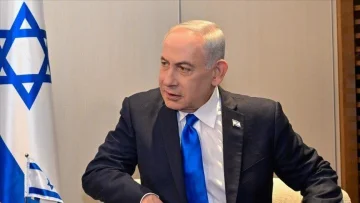
Questions include whether intelligence warnings were shared with political and military leaders, what Prime Minister Benjamin Netanyahu knew and how the country’s security services failed to anticipate the assault.
Young female soldiers monitoring activity along the Gaza border had warned their superiors about possible preparations for an attack, according to the report. One of them, Roni Eshel, was killed when attackers overran her base at Nahal Oz.
Eshel’s uncle, Elad Levy, said an inquiry should examine warnings from regional neighbours as well as events in the months and years before the attack. “If we don’t inquire into this, it will happen again and again,” he said.
Dispute over warnings and responsibility
Reports over the past three years have alleged that Netanyahu received warnings from security officials and regional leaders. He has denied such claims.
Last month, Israel’s Haaretz newspaper published excerpts from a book alleging that the leader of the United Arab Emirates had called Netanyahu 10 days before the attack to warn of Hamas plans for a major operation. Netanyahu’s office called the report “an absolute lie” and said he would sue the newspaper.
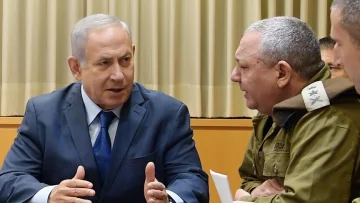
Netanyahu has blamed security chiefs for the failure, saying they chose not to wake him in the hours before the attack because they feared he would order a large-scale deployment of the Israel Defense Forces. In an interview with Channel 14, he suggested that waking him would have prevented the attack.
Journalist and author Yaacov Katz said military and intelligence officials had expected, at worst, a limited incursion. He also argued that Netanyahu faced questions about the policy he set towards Hamas, which for years focused on containment rather than confrontation.
Israel’s then-chief of staff, Lieutenant General Herzi Halevi, apologised publicly for the failure to protect civilians and later resigned. Several military commanders were dismissed, while the head of Israel’s domestic intelligence service also left his post. Netanyahu has not accepted personal responsibility.
Inquiry proposal becomes election issue
Campaigners have asked Israel’s Supreme Court to compel the government to establish a state commission of inquiry. Yizhar Shai, a former minister whose son Yaron was killed on October 7, said voters were heading into the election without a detailed account from Netanyahu under oath.
Netanyahu has rejected an inquiry led by the Supreme Court, arguing that the judiciary would be biased against him. His government proposed an alternative commission whose members would be appointed by political parties, but said it ran out of time to pass the required legislation before parliament’s session ended in July.
Netanyahu’s handling of the attack has become an election issue as he prepares to seek another term later this month. His main opponent, Gadi Eisenkot, has used a video game called “Sleepy Bibi” to portray the prime minister as evading responsibility by dodging warnings.
Polls suggest a close contest, with the October 7 attacks weighing heavily on voters’ choices. Netanyahu’s supporters say his record since the attack has made Israel safer, while critics argue that his refusal to accept responsibility puts the country at risk.