OMM Newsroom

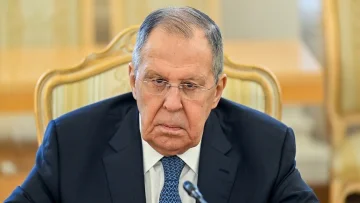
Iran and Russia have renewed calls for a diplomatic resolution to the ongoing conflict in the region. The remarks came after talks during Russian Foreign Minister Sergey Lavrov’s visit to Tehran on Monday, AnewZ reported.
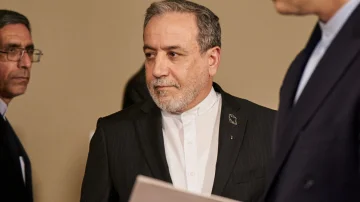
Iranian Foreign Minister Abbas Araghchi said at a joint news conference with Lavrov that Tehran and Moscow agreed military operations could not resolve regional tensions. He stressed the importance of political and diplomatic contacts.
Araghchi blamed the United States and Israel for the instability, citing their military campaign against Iran and the economic blockade imposed on the country. “We know that this unstable situation is a direct result of the military aggression launched by the United States and Israel against Iran,” he said. According to Araghchi, war and the economic blockade are among the main causes of instability in the region.
He said Tehran and Moscow oppose what they described as the United States’ “aggressive unilateral policy.” Araghchi said they would cooperate to strengthen multilateralism internationally and uphold international law. He called for a security mechanism led by countries in the region and operating without the involvement of foreign military forces.
Cooperation in economic and nuclear energy fields
Lavrov described his talks with Araghchi as “productive, transparent and sincere.” He noted that economic ties between the two countries were growing, saying: “We are seeing rapid and sustained growth in bilateral trade.”
The Russian foreign minister said Russian technical specialists and experts were gradually returning to the Bushehr Nuclear Power Plant project in southern Iran. He said this demonstrated the continuation of cooperation in the nuclear energy field.
Lavrov also discussed opportunities for cooperation in hydrocarbon production and transit, adding that Russia supports stability in global energy markets.
In a post on the social network X, Araghchi wrote that he and Lavrov had discussed various issues from Europe to West Asia, including Lebanon, Palestine, Ukraine and Yemen. He said they had also discussed expanding economic and nuclear cooperation, adding: “Iran and Russia have never cooperated as closely as they do now.”
Pezehskian names energy, transport and trade as priorities
Lavrov also met Iranian President Masoud Pezeshkian during his visit. According to the Iranian Presidential Administration, the sides discussed bilateral relations, strategic cooperation and the situation in the region.
Pezeshkian stressed the importance of accelerating implementation of existing agreements and identified energy, transport and trade as key priorities. He said his planned visit to Moscow could help turn existing commitments, particularly in energy, infrastructure and transport, into tangible results.
The Iranian president criticized the United States and Israel’s military campaign against Iran. He said attacks on Iran’s infrastructure, as well as the deaths of senior officials, scientists and schoolchildren, violated international norms.
Pezeshkian thanked Russia for its support during the conflict and reiterated the importance of establishing a regional security mechanism based on mutual respect, dialogue and cooperation. He also said US military bases in the region contribute to rising tensions and instability.
In addition to meetings with Araghchi and Pezeshkian, Lavrov held talks with Mohsen Rezaei, secretary of Iran’s Supreme National Security Council. The Russian Foreign Ministry said Lavrov reaffirmed Moscow’s readiness to help resolve the situation surrounding Iran. He also briefed Iranian officials on discussions he held on Sunday in Bahrain with representatives of countries on the Arabian Peninsula.