 OMM Redaksiyası

Protests demanding the resignation of India’s Chief Election Commissioner Gyanesh Kumar continued in the capital, New Delhi, on Sunday. Police detained hundreds of demonstrators during the rallies. A court ordered the release of Abhijeet Dipke, founder of the youth-led Cockroach Janta Party (CJP), and two other senior party officials.
Dipke and the two party officials were detained on Saturday as they disembarked from a plane in Delhi, ahead of a planned protest at Jantar Mantar. The CJP said the court ordered their release on the condition that they maintain public order. Ratna Singh, the party’s head of legal affairs, announced the decision on the social media platform X.
After Dipke’s release, the party posted the words “Cockroaches never die” on its account.
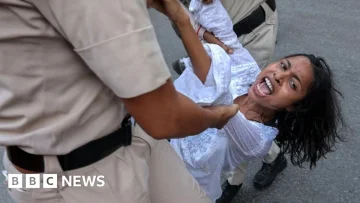
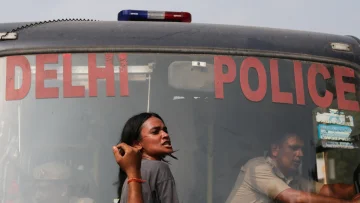
Protests resumed in parts of the city on Sunday. Young demonstrators, including members of student groups linked to communist parties, were detained by police and taken away in vehicles.
The All India Students’ Association alleged on X that some of those detained had been beaten in police vehicles. Reuters could not independently verify the allegation. Delhi police did not immediately respond to requests for comment.
2,400 people detained on Saturday
Delhi police said 2,400 people were detained on Saturday. Reports also said access to some areas of central Delhi had been restricted to prevent the protest.
Thousands of police and paramilitary personnel were deployed across the city on Sunday. However, metro stations reopened and mobile internet services were restored. Police said most of those detained on Saturday were released that night.
Action against the protesters has drawn criticism from opposition parties and government critics, who accused the authorities of using excessive force. The United Nations human rights office called on Indian authorities to ensure respect for the right to peaceful assembly.
India’s Ministry of External Affairs rejected the UN’s intervention, describing its approach as “selective” and its statement as an “unwarranted interference” in the country’s internal affairs.
Protesters are staging one of the most prominent demonstrations in recent years against the government of Prime Minister Narendra Modi, who has been in power since 2014. They are demanding Gyanesh Kumar’s resignation, alleging that changes to voter rolls could give an undue advantage to the ruling Bharatiya Janata Party (BJP), led by Modi.
Up to 130 million names removed from voter rolls
The dispute centers on a review of voter rolls. According to Election Commission data cited by the BJP, about 130 million names have been removed from the lists as a result of the process. About 63 million people are said to have changed their place of residence, while 30 million could not be located.
Opposition parties and other critics allege that the changes disproportionately affect Muslim voters and other minority groups who are less likely to support the BJP. The Election Commission denies favoring any political party. The BJP, in turn, accuses its rivals of undermining democracy by casting doubt on lawful election procedures.
The dispute intensified after the Indian Express reported in late September that two election commissioners had raised internal concerns about changes to voter rolls, registration procedures and digital systems. The commission said disagreements in internal discussions were normal.
The CJP began as a satirical online project before becoming an advocacy group. It previously held protests over allegations that examination questions had been leaked. Those demonstrations also prompted calls for India’s education minister to resign. The CJP calls its campaign against Kumar “Season Two” and says it will continue its efforts until the electoral system is reformed.
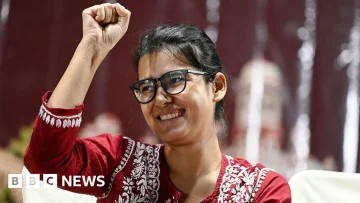
One prominent figure in the protests is 29-year-old doctoral student Neha Bora, national president of the left-wing All India Students’ Association. She was detained on Saturday after police prevented protesters from reaching Jantar Mantar. Bora urged supporters to regroup at the Dilli Haat crafts market, about 10 kilometers away, and called for protests to continue while she was in custody. She was released later that day.
In a video posted online, Bora said her detention would not stop the movement: “I have been detained. The movement continues.”
Bora told Reuters she became an activist through theater and student protests. She took part in protests against India’s citizenship law in 2019 and 2020, and has also campaigned on unemployment, examination scandals and police operations against protesters.
She said the current mobilization reflected public anger that had accumulated over the years, and that hope helped people overcome their fears. “Fear, of course, is contagious. But hope is contagious too,” Bora said.
Protests continued on Sunday despite detentions and restrictions imposed by the authorities. The CJP said it would keep up pressure for changes to the electoral system. The Election Commission and the ruling BJP deny allegations that the voter-roll revision process has been manipulated.